The Ultimate Guide to Tencha Processing: Inside a Fully Automated Production Line
While the global demand for premium matcha continues to surge, the secret to its vibrant color and rich umami flavor actually lies in its precursor: Tencha.
Tencha is a primary processed steamed green tea that serves as the raw material for matcha. Unlike sencha, which is rolled to prioritize shape and glossiness, tencha production requires the precise separation of stems and leaves. The focus is entirely on preserving maximum color and developing a deep aroma. Because the processing flow is highly complex, it relies on a complete set of automated production lines to ensure consistency and quality.
Here is an inside look at the complete tencha manufacturing process, engineered by the experts at Quanzhou Deli Agroforestrial Machinery Co., Ltd.
The Crucial First Step: Tea Garden Shading
Before the leaves even reach the factory, quality control begins in the field. Shading the tea plants is the most critical first step in tencha production. Using shade nets that block out 90% of the sunlight achieves three vital things: it prevents excessive tea polyphenols from forming (reducing bitterness), encourages amino acid buildup for a sweeter taste, and heavily boosts chlorophyll production to give the leaves that signature emerald green color.
Phase 1: Primary Processing & Preparation
Once the fresh leaves arrive at the facility, they must be prepped rapidly to prevent oxidation.
-
Fresh Leaf Storage: Handling several tons of leaves at once requires a temporary storage machine equipped with a powerful fan that blows cold air to keep the leaves cool and prevent spoilage. It then feeds the leaves into the next stage at a controlled rate.
-
Cutting: Tencha is often machine-picked, leading to long leaves (sometimes over 30cm in summer) that can jam downstream equipment. The fresh leaf cutter standardizes the size.
-
Sifting & Dehydrating: A rotary sifter removes small stones, dirt, and broken pieces picked up during transport. If the leaves are wet from rain or dew, a fresh leaf dehydrator removes surface moisture to protect the tea's quality during the steaming process.
Phase 2: Ultra-High Temperature Steaming
This is the key to locking in the vibrant green color of both tencha and matcha. Standard steam (around 100°C) is too cool; it creates condensation that turns leaves yellow.
Instead, a specialized Ultra-High Temperature Steaming Machine utilizes "superheated steam" reaching 350-500°C. By blasting the leaves with this intense heat, the steaming process is completed in a mere 10-20 seconds, perfectly preserving the color. Immediately after, a High-Airflow Cooling Machine scatters the moisture-heavy leaves and rapidly drops their temperature to maintain that emerald hue.
Phase 3: The Baking Furnace (Developing the "Furnace Aroma")
The Tencha Baking Furnace is the largest and arguably most important machine on the line. It uses infrared heat radiation and high-temperature hot air convection across multiple temperature zones.
This is where the magic happens: the amino acids and sugars in the tea undergo the "Maillard reaction," creating a unique flavor profile featuring seaweed or roasted notes, known in the industry as "furnace aroma".
-
Initial Stage: High heat (150-200°C) triggers the Maillard reaction.
-
Middle Stage: Moderate heat (100°C) dries the leaves evenly.
-
Final Stage: Low heat (80°C) dries the leaves while allowing the stems to retain some moisture, a crucial trick for the next step.
Phase 4: Stem & Leaf Separation and Final Drying
If stems and fibers make it into the matcha grinder, the resulting powder will be coarse, yellowish, and low quality.
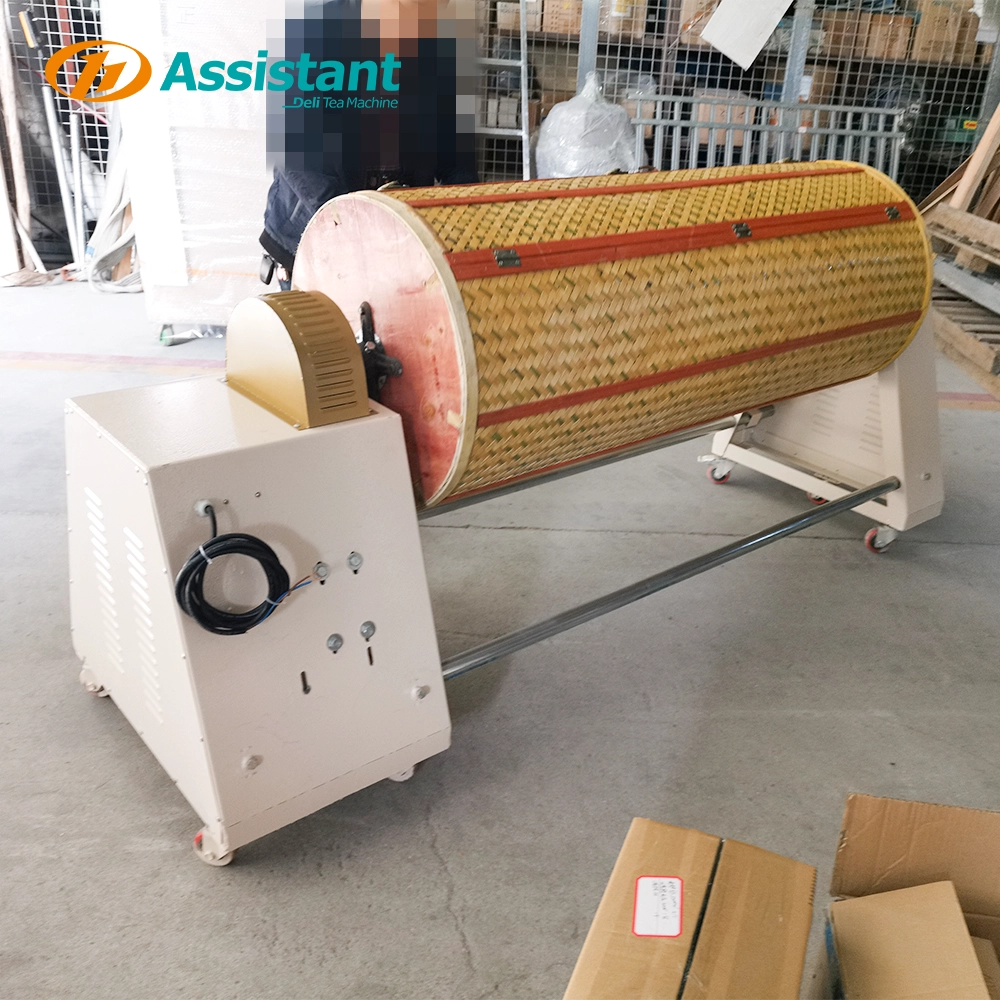
Because the baking furnace leaves the leaf blades brittle but the stems slightly moist, running them through a rotating drum allows the leaves to break apart and sift out while the stems remain intact. After this initial separation, the two components are dried separately. The leaves require only room-temperature air, while the stems need medium-to-high heat to remove residual moisture. Finally, a second separation process is performed to recover any remaining tencha leaves that were stuck to the stems, maximizing yield.
Ready for Milling
The finished tencha is now ready to be packed in waterproof, moisture-proof bags and kept in cold storage (0-5°C) away from light until it is ready to be milled into premium matcha powder.
A fully automated line like this can process over 300 kg of fresh leaves per hour, yielding roughly 37 kg of final tencha. Because no two factories are exactly alike, these automated lines do not have fixed parameters; they are customized based on the facility's CAD drawings to ensure maximum operational efficiency.