





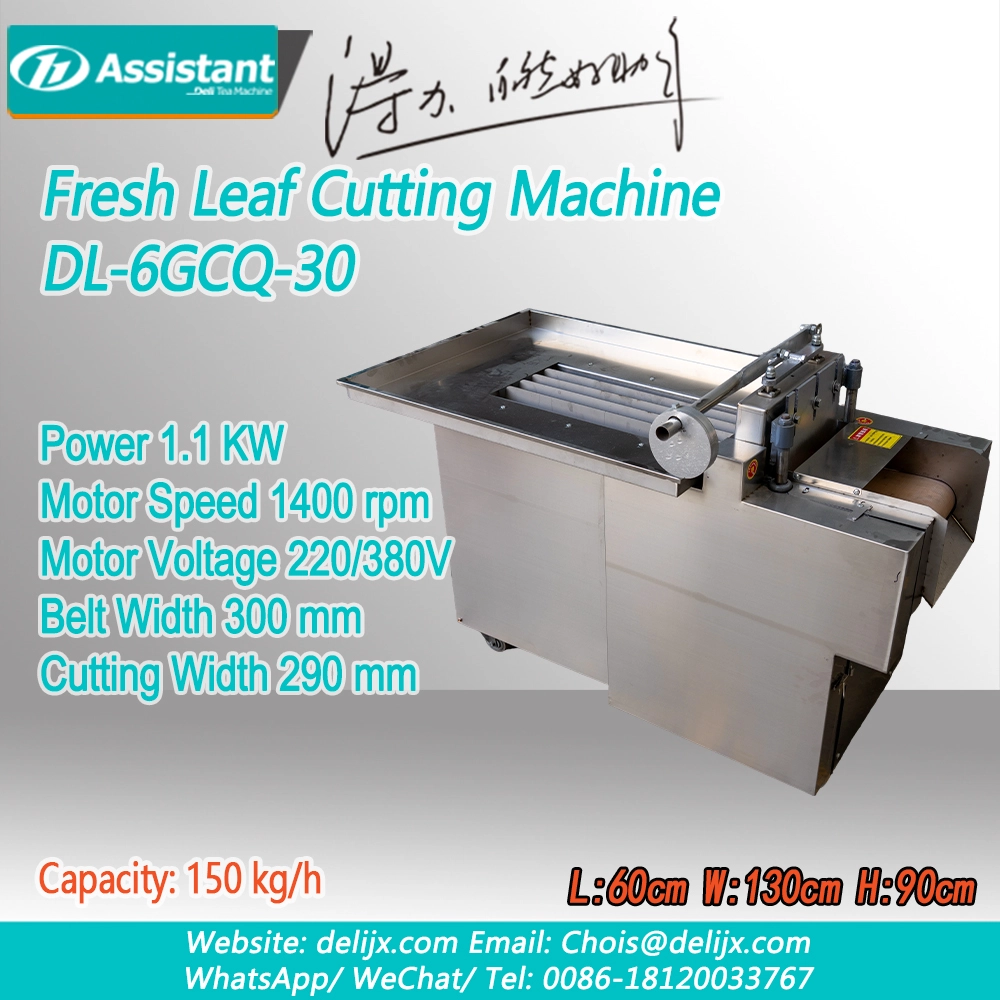
This fresh leaf cutting machine cuts large fresh leaves into uniform small pieces. Two models available: DL-6GCQ-30 (150kg/h) and DL-6GCQ-50 (250kg/h). It adopts conveyor feeding, works for tea, lotus leaf, mulberry leaf and herbal raw materials for tea production.
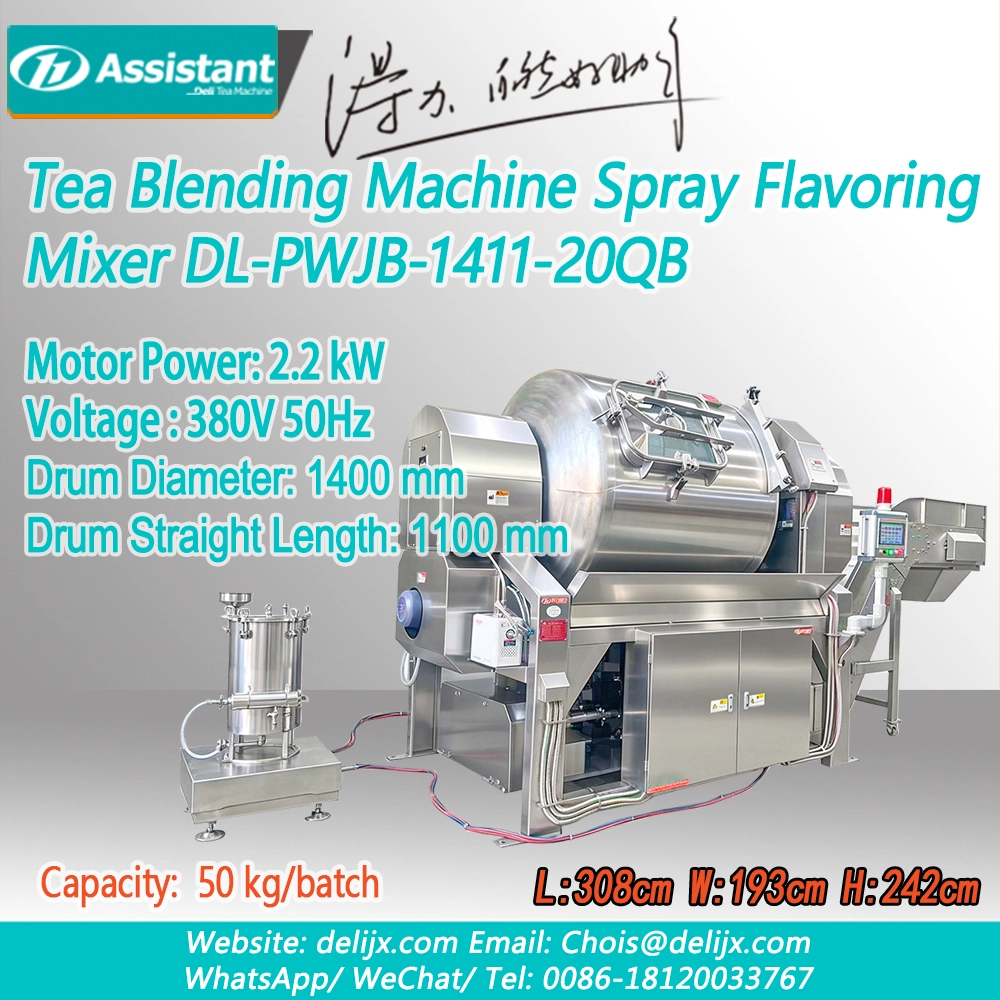
This DELI ASSISTANT spray mixer is a dual-function tea blending & aroma spraying machine, used for homogenizing tea piles and atomized flavor adding in tea factory production, with 1400mm drum, 2.2kW motor and 380V power supply.
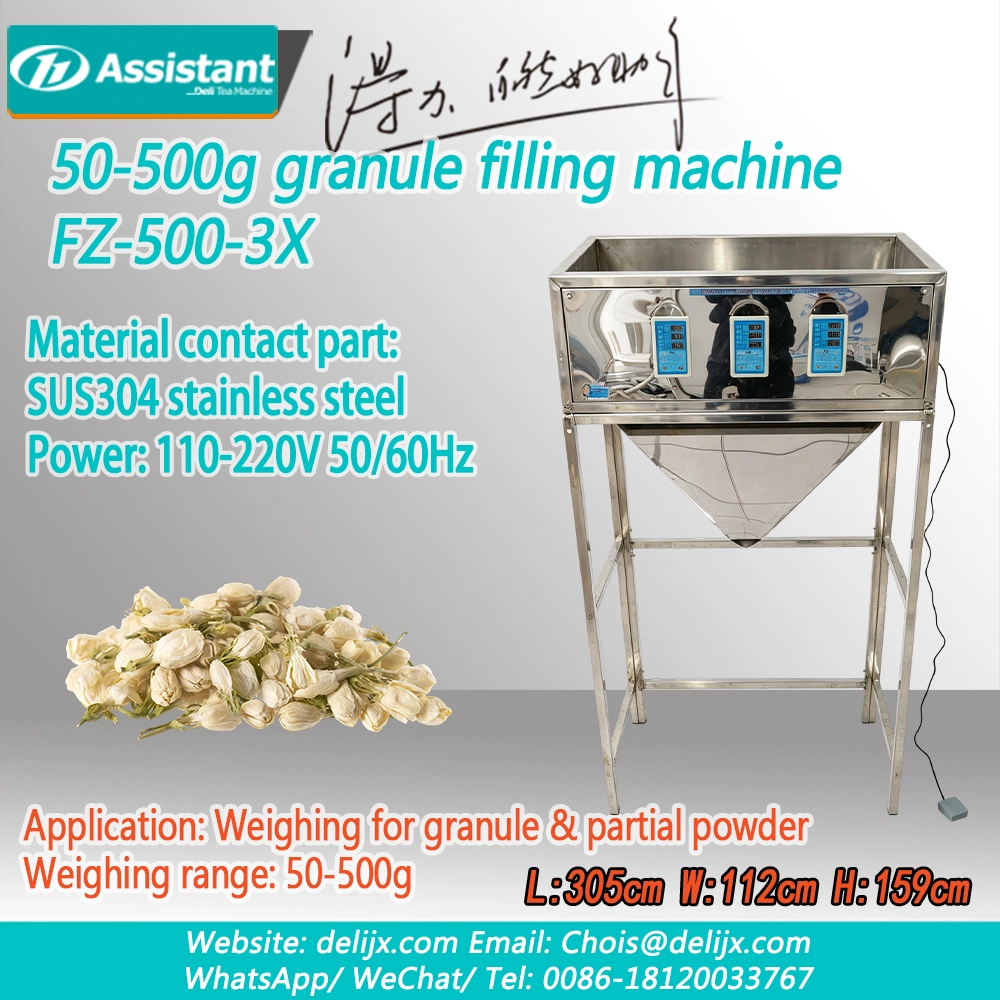
FZ‑500‑3X Automatic Quantitative Filling Machine 50‑500g Granule Powder Weighing Dispenser For Tea Grain Coffee Bean
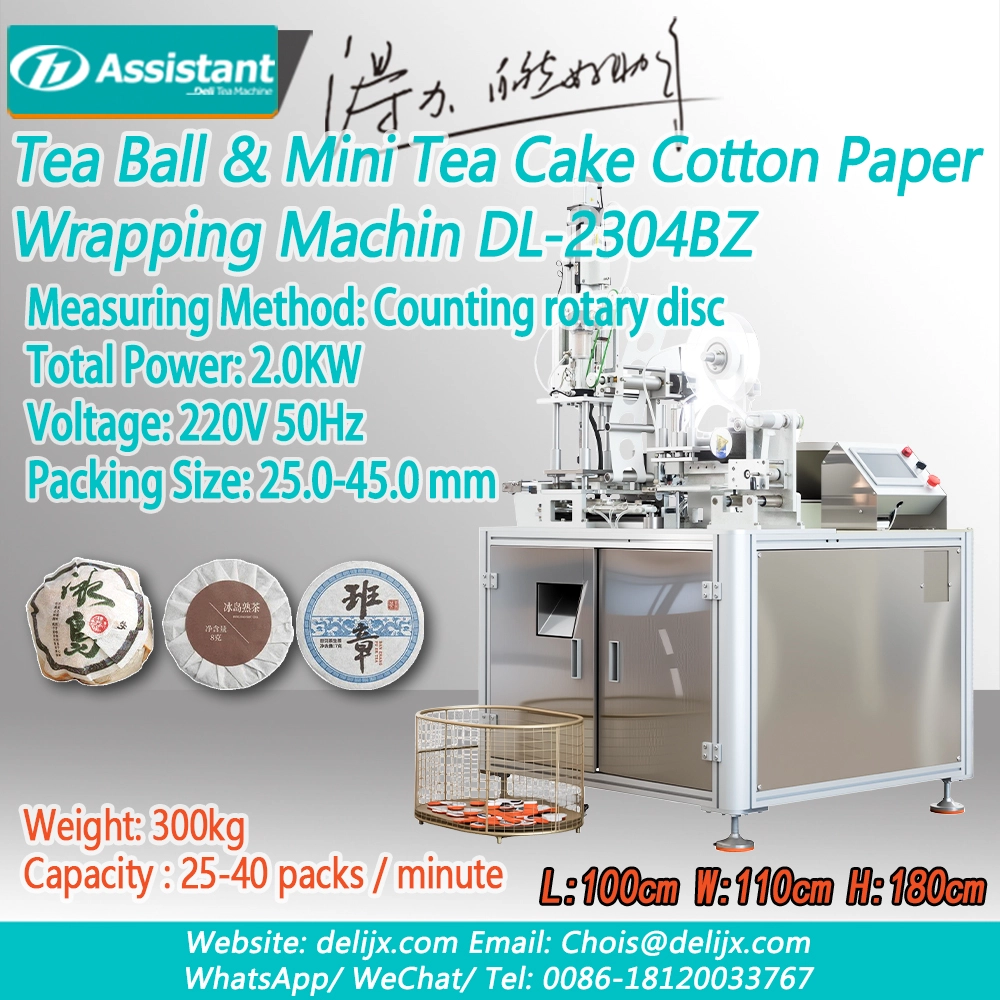
Automatic cotton paper wrapping machine for Pu‑er dragon pearl tea and mini tea cake. PLC control, 25‑40 pcs/min speed, one‑key switch for tea ball & small cake, stable pneumatic‑servo operation for compressed tea packaging.
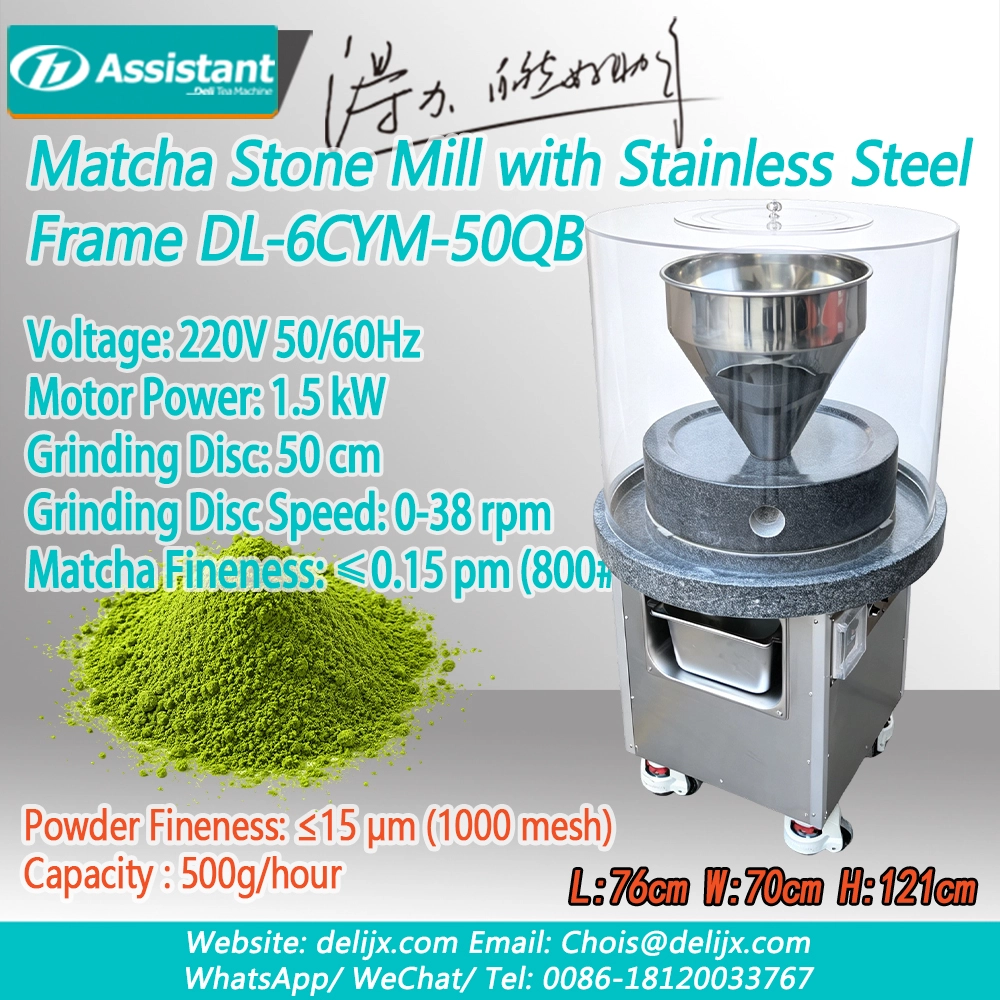
6CMJY-50QB stainless steel custom base matcha green stone mill, natural granite stone plate, low-speed cold grinding. Preserve tea aroma, produce ultra-fine matcha powder. Stainless steel frame with casters, suitable for tea shops, labs and small-batch matcha production.
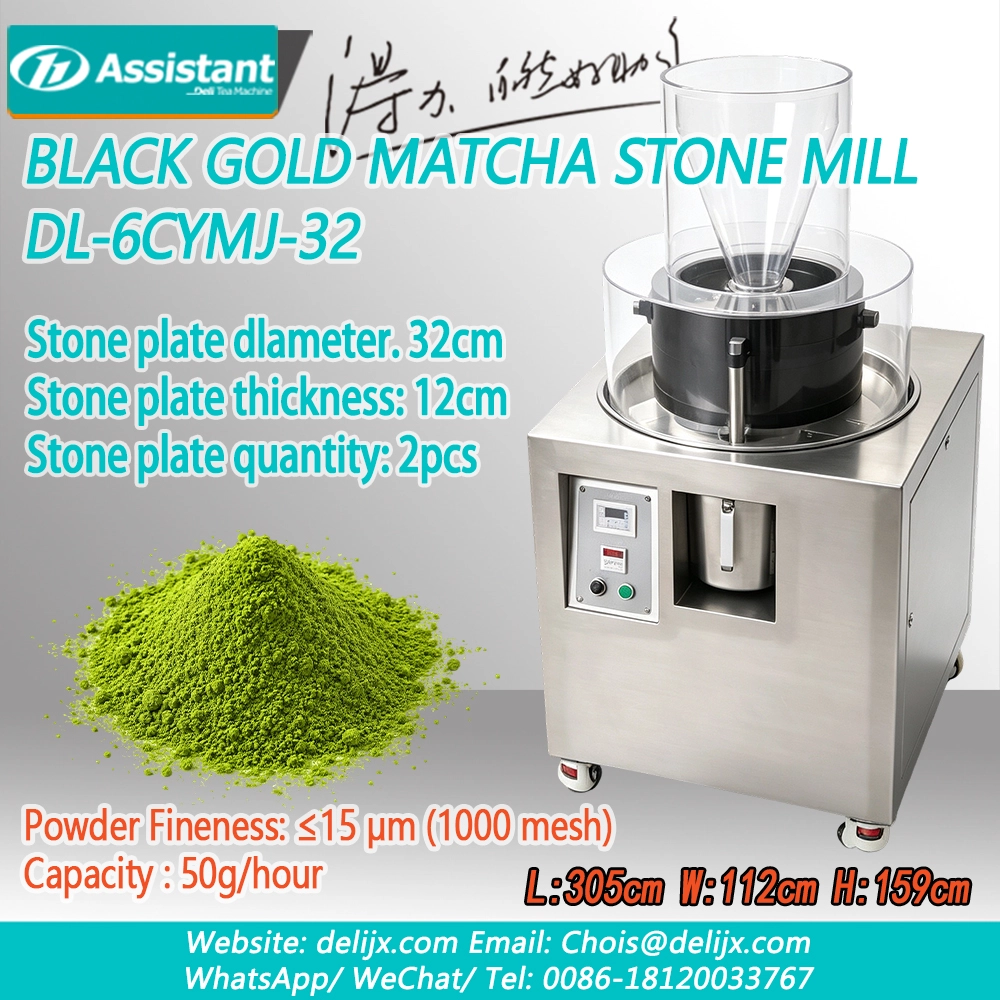
Custom heightened small matcha stone mill DL-6CYMJ-32M, equipped with 30cm natural stone plates. Low-speed low-temperature grinding, produce ultra-fine matcha powder ≤15μm. 50g/h capacity, stainless steel body, ideal for boutique tea shops & small-batch matcha production.
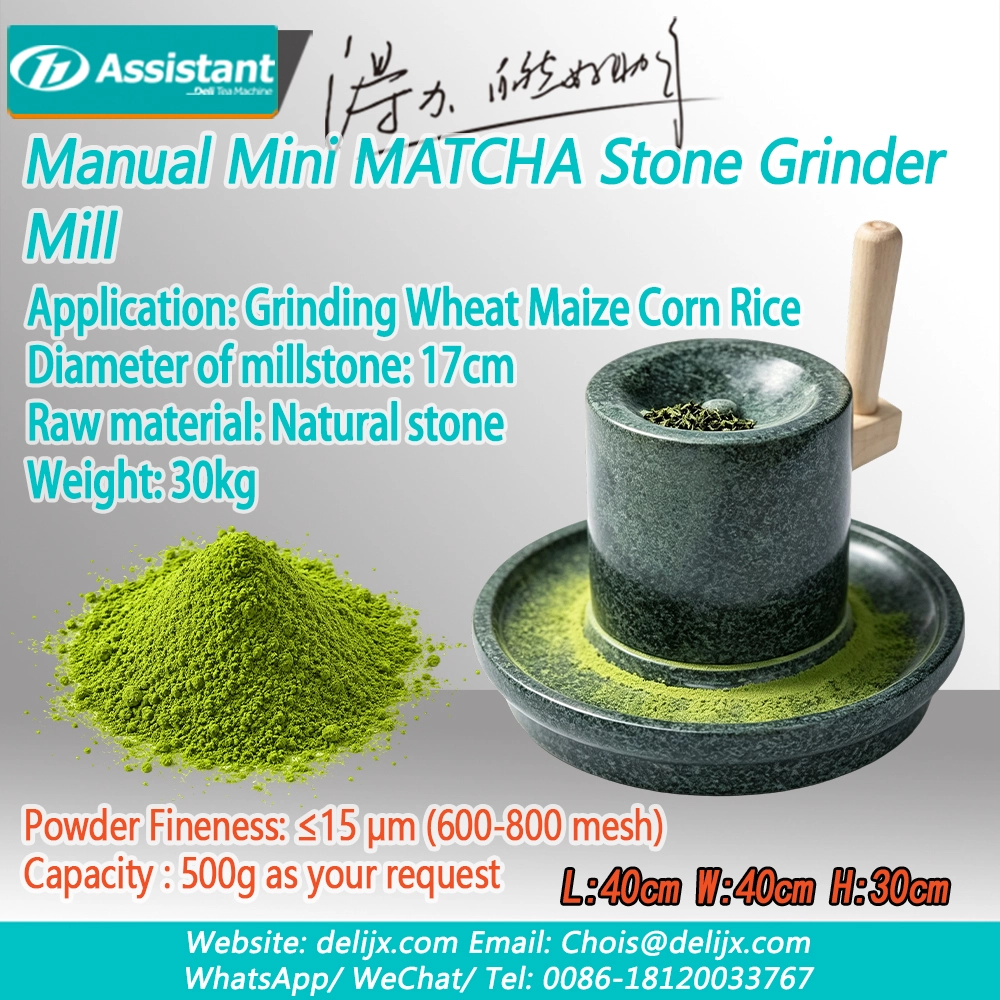
Manual Matcha Stone Mill is a traditional hand-operated grinder made from natural stone, designed for producing fresh and authentic matcha powder. With a slow grinding process and low heat generation, it helps preserve the natural color, aroma, and flavor of tea leaves. Compact and durable, it is ideal for matcha cafes, tea houses, restaurants, cultural experience shops, and small-batch matcha production.
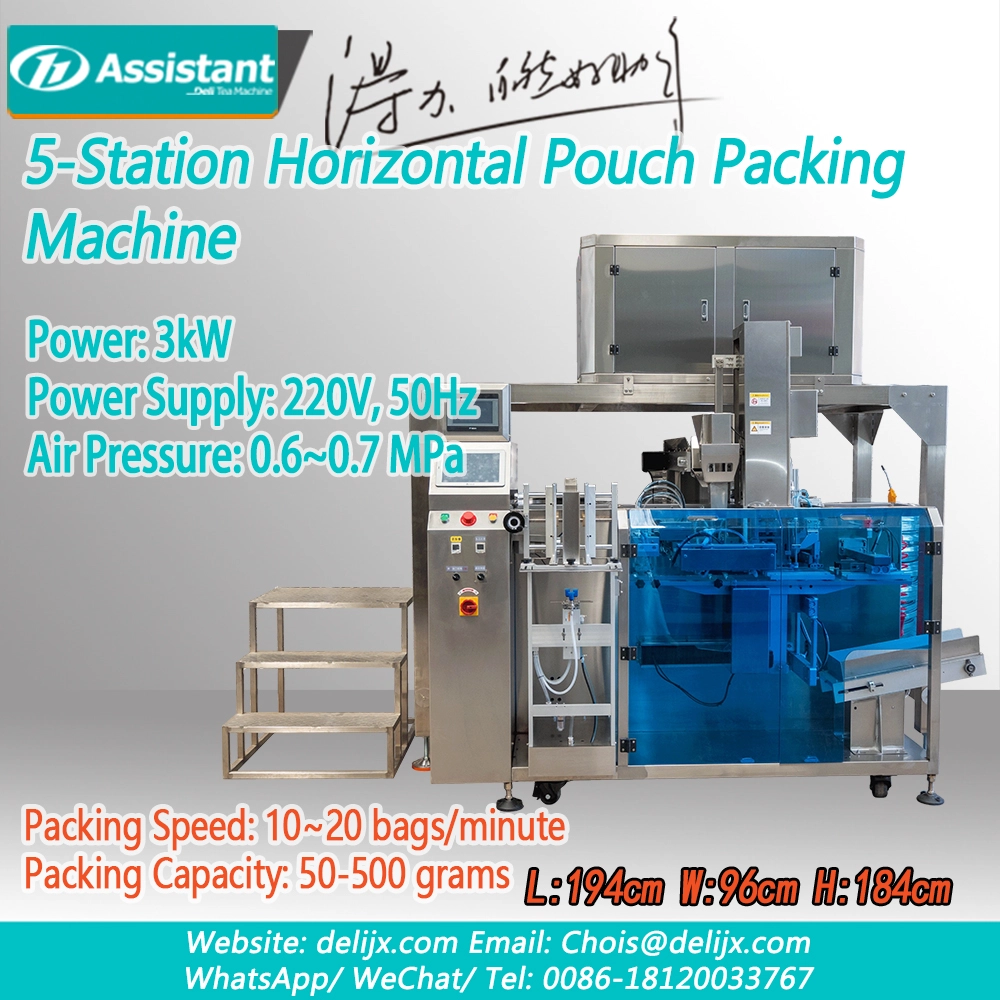
This 5-station horizontal pouch packing machine handles M bags, flat pouches and zipper pouches for 50–500g granular materials like tea. It automatically finishes weighing, filling, vacuuming and sealing with servo control, supporting multiple optional accessories.
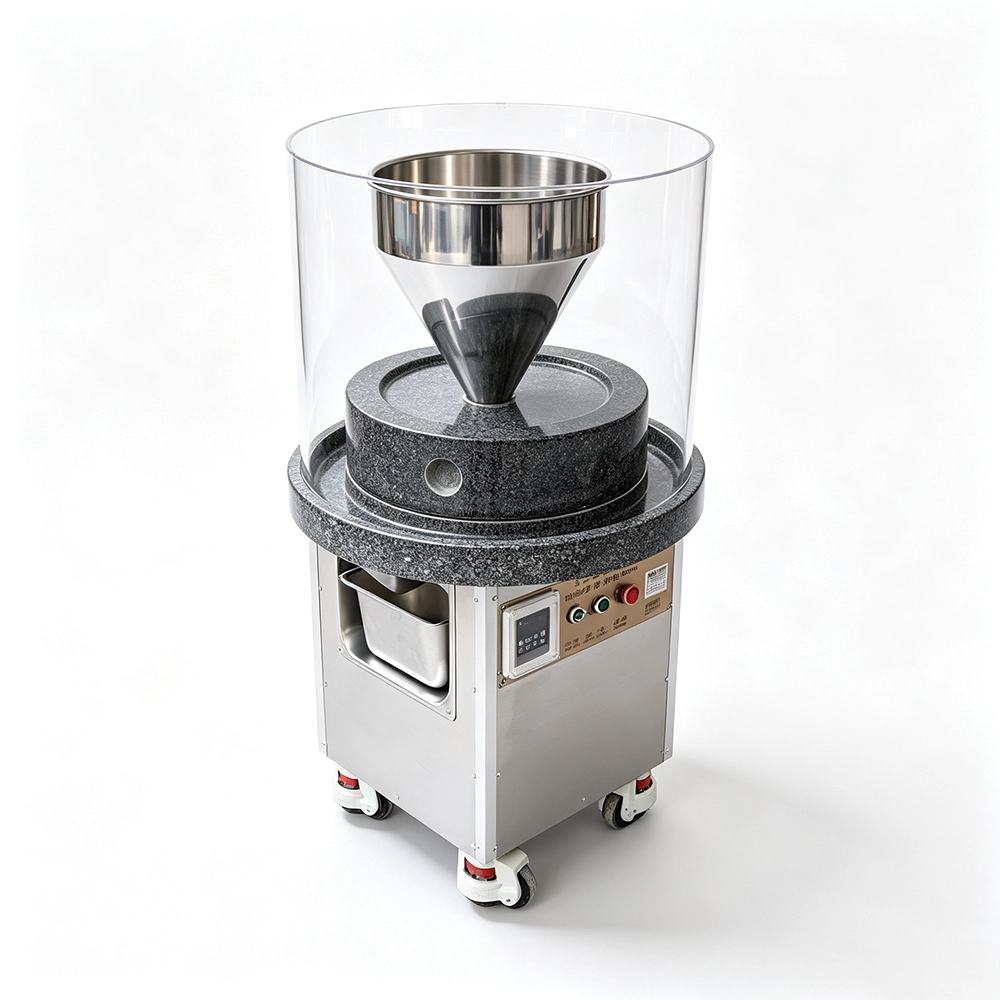
Looking for the right matcha grinding equipment? Read our in-depth comparison of 4 matcha grinders, including Black Gold Stone Mills, Blue Stone Mills, Batch Ball Mills, and Continuous Ball Mills. Learn their efficiency, particle size distribution, and ideal applications.
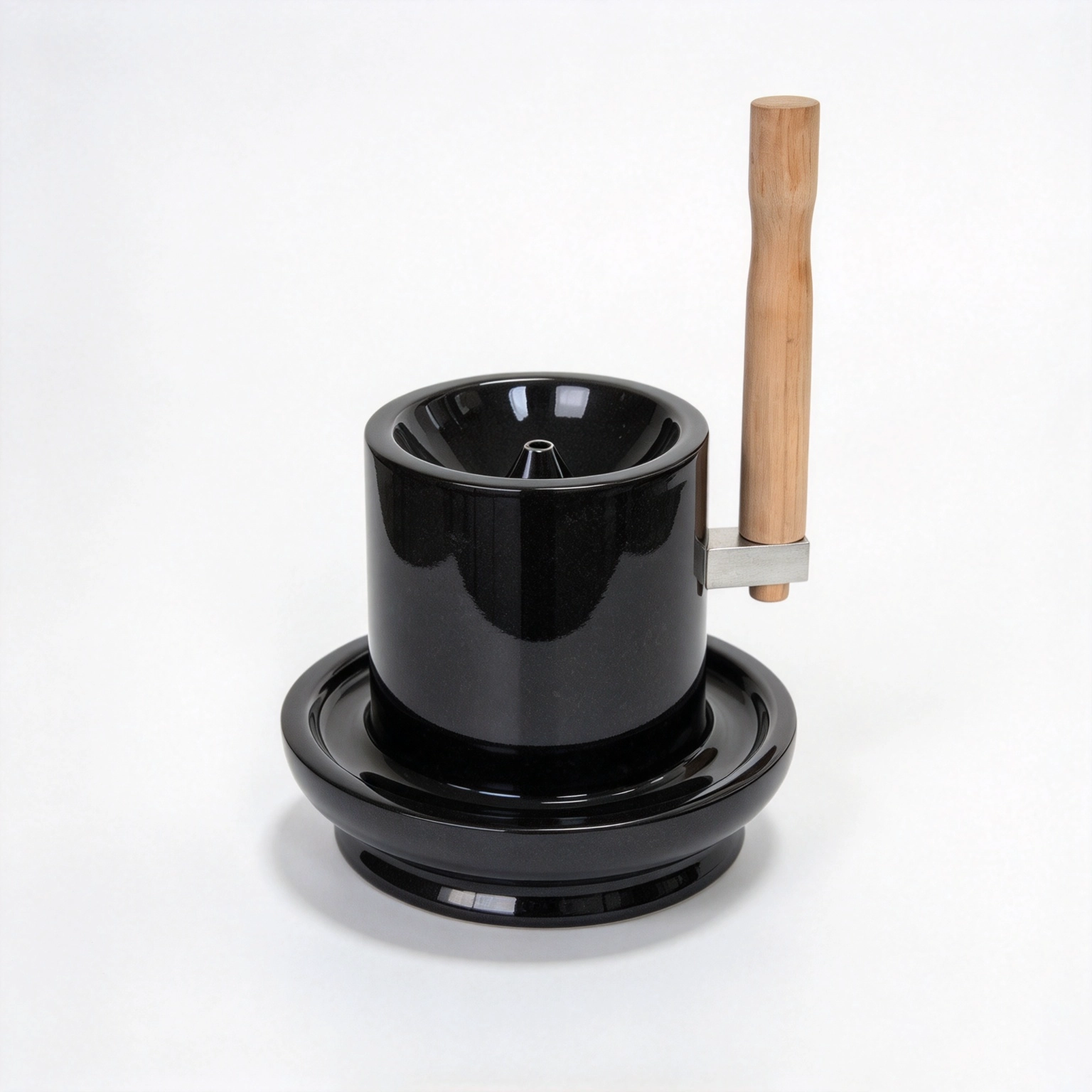
Experience the true flavor of freshly ground matcha. Our mini black stone manual matcha mill brings traditional Japanese stone grinding craft to your home, hand-cranked for fine, aromatic matcha powder.
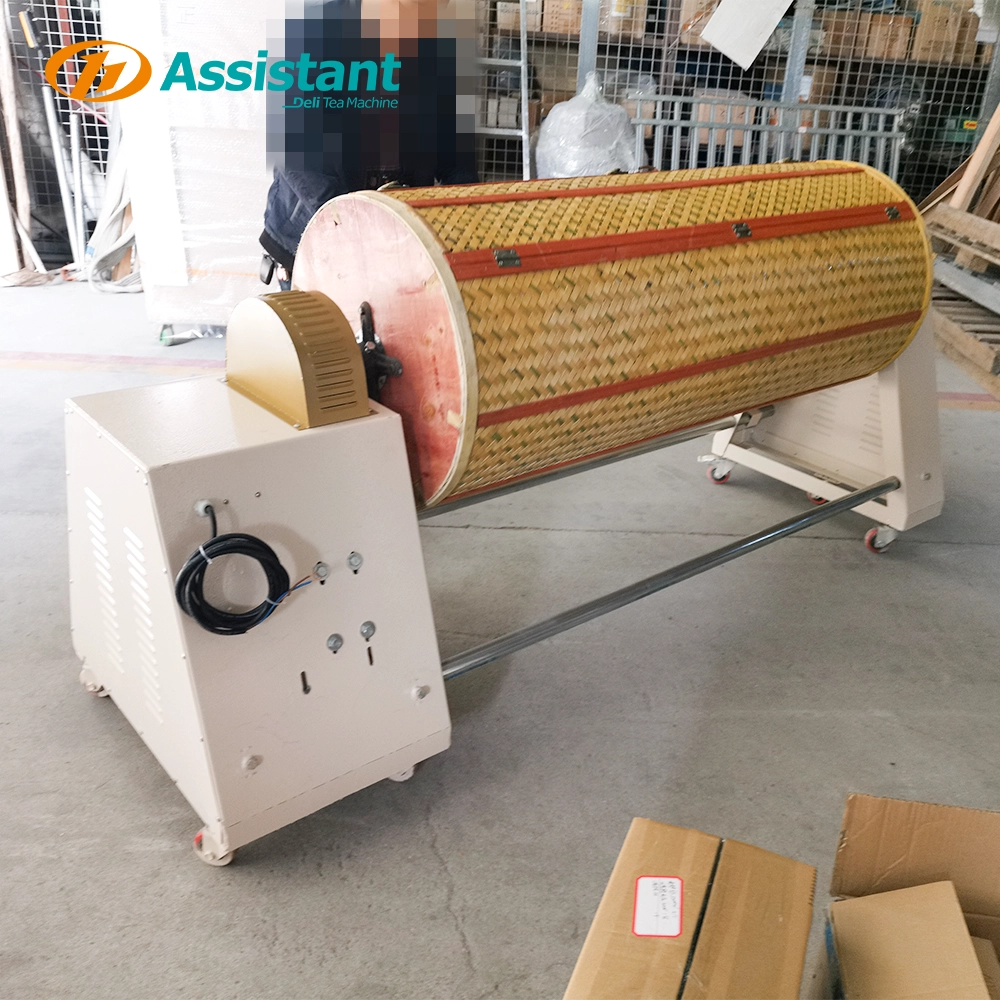
Our bamboo drum oolong tea shaking machine, also known as tea leaf shaker, simulates manual tea shaking to achieve uniform leaf oxidation. Multiple models available for small & large tea factories, stable speed control for premium oolong tea production.

Our DL-6CYMJ-32W stone mill grinder is specially designed for processing matcha and tea leaves. It adopts natural stone plates & SUS304 stainless steel frame, capable of producing ultra-fine tea powder up to ≤15μm (800 mesh). With adjustable rotating speed and automatic operation, it is ideal for tea factories and food workshops. We will introduce its specifications, core advantages, operation workflow and daily cleaning tips below.
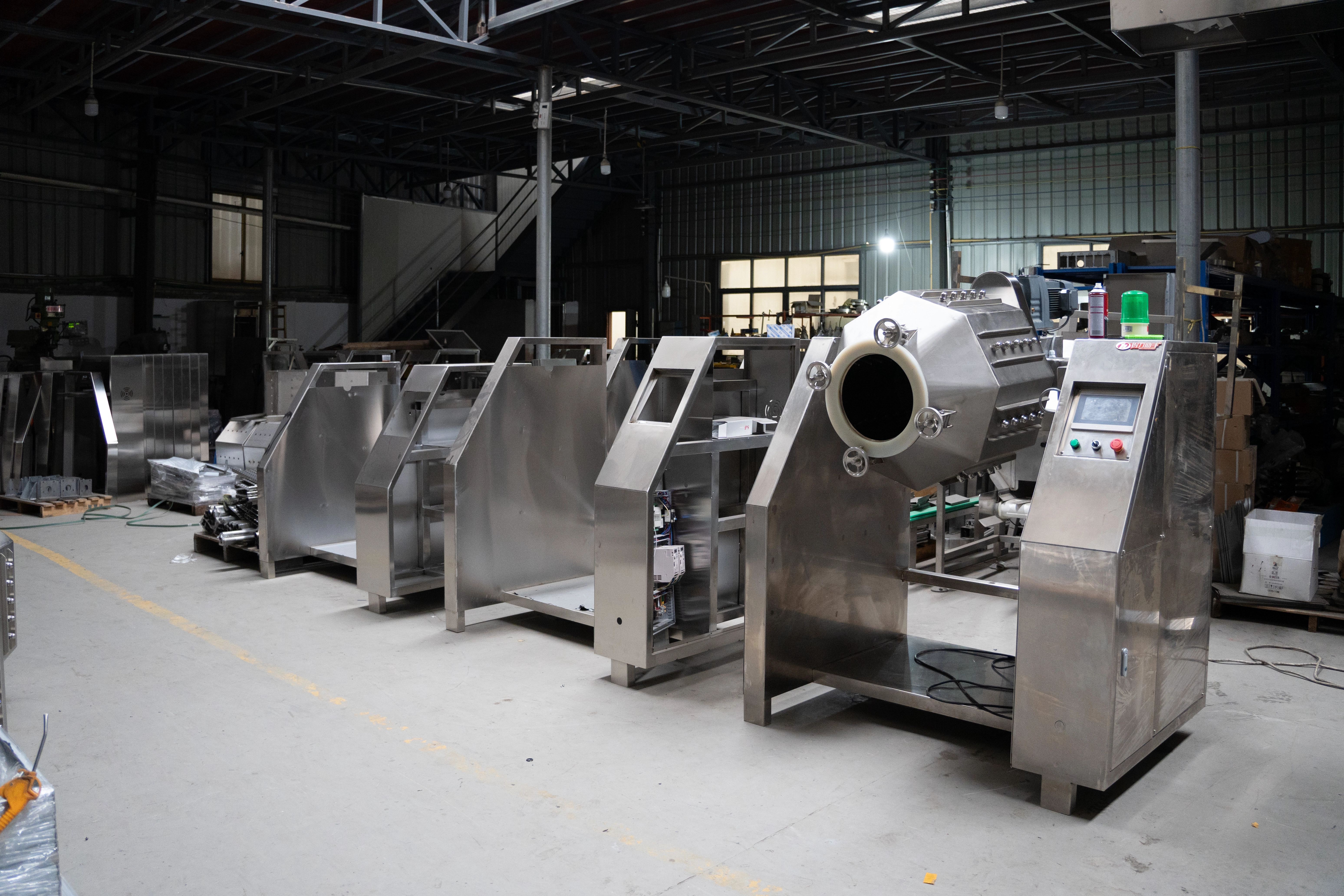
Traditional stone milling is closely associated with premium matcha, but its low output can become a major limitation when production requirements increase.
Food manufacturers producing matcha for beverages, bakery products, ice cream, chocolate, instant drink mixes, noodles, supplements, or bulk ingredient supply often need a grinding system that can process larger quantities with stable and repeatable results.
For these applications, a food-grade matcha ball mill can be a more practical solution.
Stone mills usually operate at low rotational speeds to limit heat generation and preserve tea quality. This method is suitable for small-batch and premium drinking matcha, but output is commonly measured in grams per hour.
A factory requiring tens or hundreds of kilograms of matcha powder cannot rely on a large number of small stone mills without increasing:
A ball mill is designed for manufacturers that place greater emphasis on production capacity, consistent particle size, closed processing, and lower labor requirements.
A matcha ball mill uses grinding media inside a rotating or agitated chamber to reduce dried tea material into fine powder.
During operation, the tea is repeatedly subjected to impact, compression, friction, and shear forces. Compared with a conventional blade grinder, the material remains inside the grinding chamber for a longer and more controlled processing period.
Depending on the machine design and operating parameters, the final powder fineness can be adjusted through:
This makes the machine suitable for standardized industrial production.
A commercial ball mill can process substantially more material than a traditional stone grinder. It is therefore better suited to factories supplying matcha powder as a food ingredient.
Actual output depends on the machine size, tea condition, target fineness, and production process.
Stable operating settings help reduce differences between production batches. Consistent particle size is especially important for matcha used in premixed drinks, bakery fillings, chocolate, confectionery, and other formulated foods.
An enclosed grinding chamber helps reduce airborne tea dust, product loss, and exposure to the surrounding environment.
This is important because fine matcha powder can easily absorb moisture and external odors.
A food-processing matcha mill should use suitable food-contact materials in areas that come into direct contact with the tea.
Stainless steel is commonly selected because it is durable, relatively easy to clean, and widely used in food-processing equipment.
Buyers should confirm the specific stainless-steel grade, surface finish, sealing materials, and applicable food-contact requirements before ordering.
Ball-milled matcha powder can be used in:
The required fineness should be selected according to the final application rather than using one specification for every product.
Before choosing an industrial matcha grinding machine, clarify the following requirements:
Define the expected output per hour, per shift, or per day. Capacity should be tested at the required final fineness, not only with coarse powder.
Ask the supplier how particle size is measured. Average particle size, maximum particle size, sieve mesh, and particle-size distribution are different specifications.
Matcha is sensitive to heat. Excessive temperature may affect color and aroma.
For long production cycles, ask whether the machine includes or supports a cooling system.
The grinding chamber, media, feeding system, and powder outlet should be accessible for cleaning.
Manufacturers processing different tea grades or ingredients should also consider the risk of cross-contamination.
Fine tea powder can become airborne during discharge and packaging. A suitable powder-collection or dust-control system can improve product recovery and workplace cleanliness.
The most reliable evaluation method is to grind the buyer’s own raw material.
Tea variety, moisture, fiber content, and initial particle size can all affect output and final powder quality.
Our food-grade matcha ball mill is developed for tea processors and food manufacturers that require higher production capacity than traditional stone mills can provide.
It is suitable for large-batch production of matcha and other fine tea powders. The enclosed grinding structure helps control dust and product loss, while adjustable operating parameters allow manufacturers to optimize the process according to raw material and target fineness.
The machine can be considered for:
Available machine configuration should be selected according to required capacity, grinding fineness, cooling requirements, electrical standards, and local food-processing regulations.
Before purchasing a matcha ball mill, send us the following information:
We can evaluate the material, recommend a suitable machine configuration, and arrange a grinding test.
Need a food-grade grinding solution for large-scale matcha powder production? Contact us for machine details, test results, videos, and a quotation.
A ball mill is generally selected for higher-output culinary or industrial matcha production. Premium ceremonial matcha is more commonly associated with slow stone milling. However, final suitability should be evaluated through particle-size, color, aroma, and sensory testing.
This depends on the specific machine structure, cooling method, feeding system, and discharge design. Buyers should confirm whether the selected model is batch-operated, semi-continuous, or continuous.
No. Fineness is only one quality factor. Raw-material grade, color, aroma, taste, grinding temperature, and particle-size distribution are also important.
Many ball mills can process green tea, black tea, herbal materials, and other dry food powders, but each material should be tested separately. Cleaning and cross-contamination requirements must also be considered.