





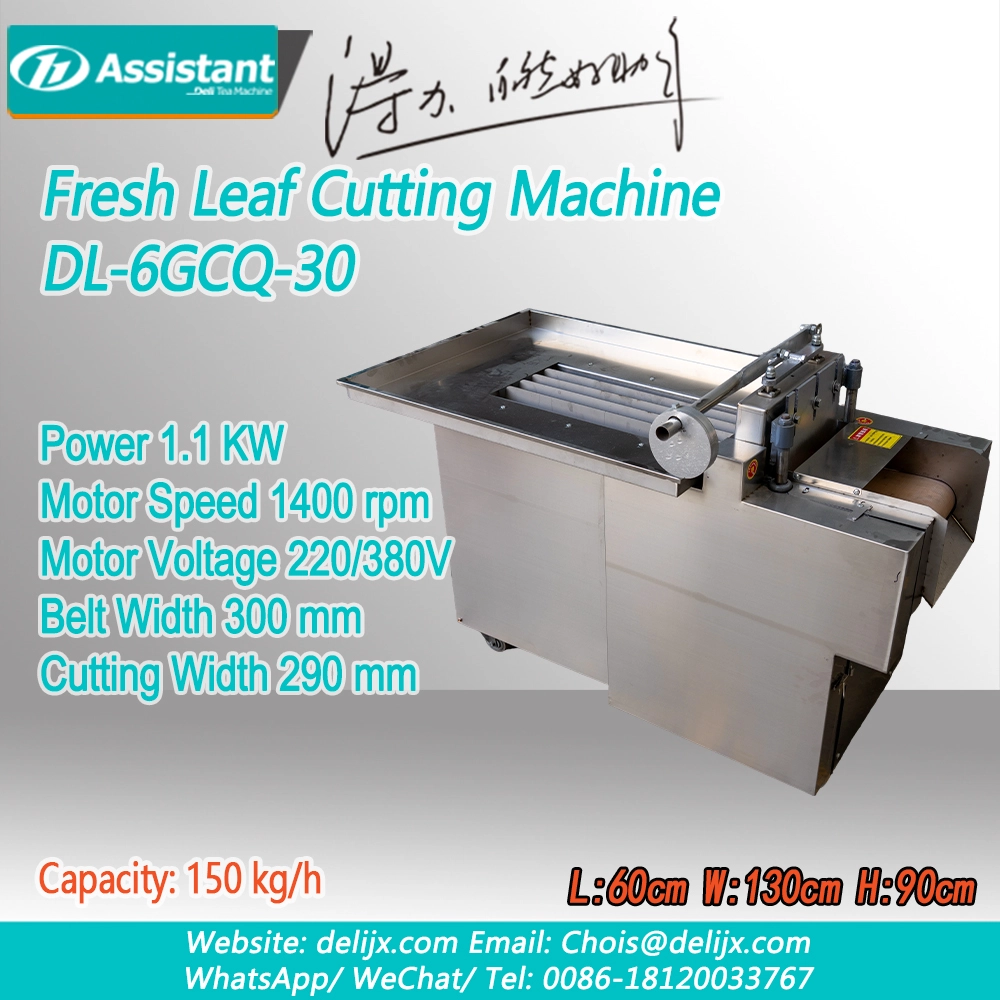
This fresh leaf cutting machine cuts large fresh leaves into uniform small pieces. Two models available: DL-6GCQ-30 (150kg/h) and DL-6GCQ-50 (250kg/h). It adopts conveyor feeding, works for tea, lotus leaf, mulberry leaf and herbal raw materials for tea production.
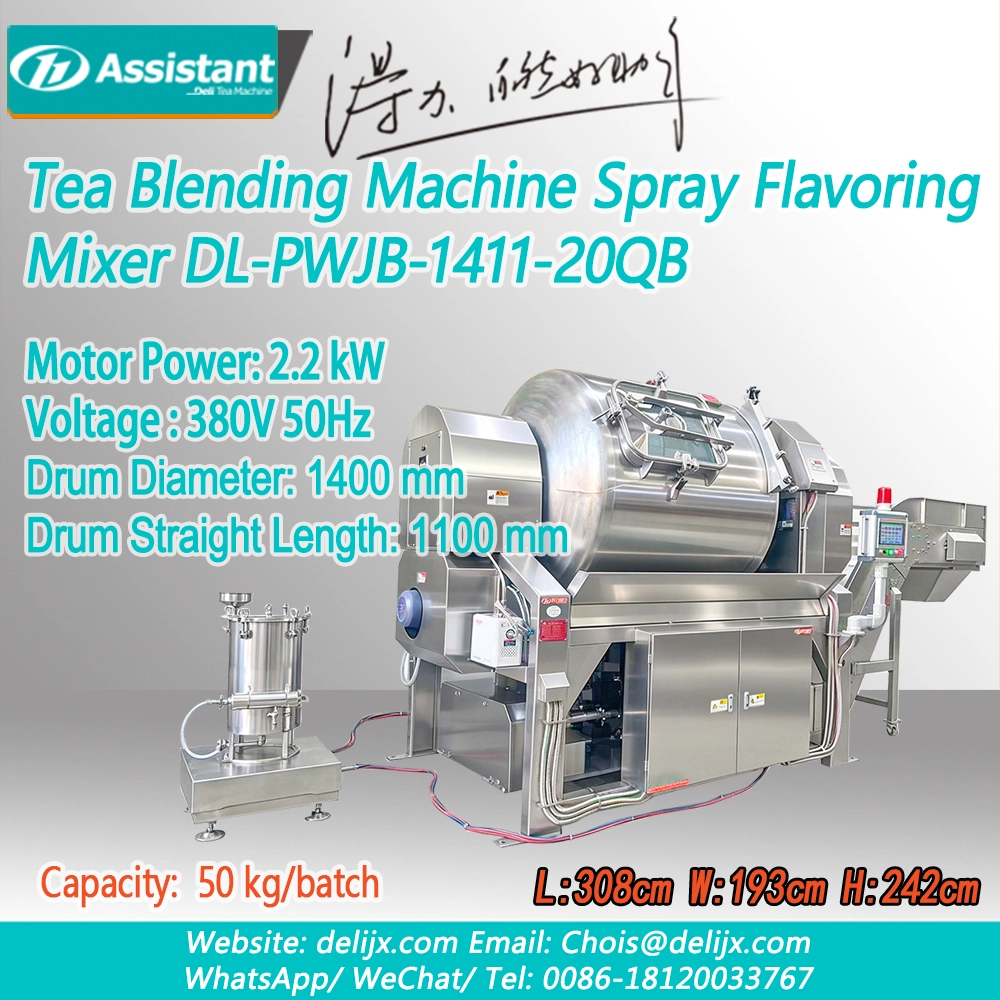
This DELI ASSISTANT spray mixer is a dual-function tea blending & aroma spraying machine, used for homogenizing tea piles and atomized flavor adding in tea factory production, with 1400mm drum, 2.2kW motor and 380V power supply.
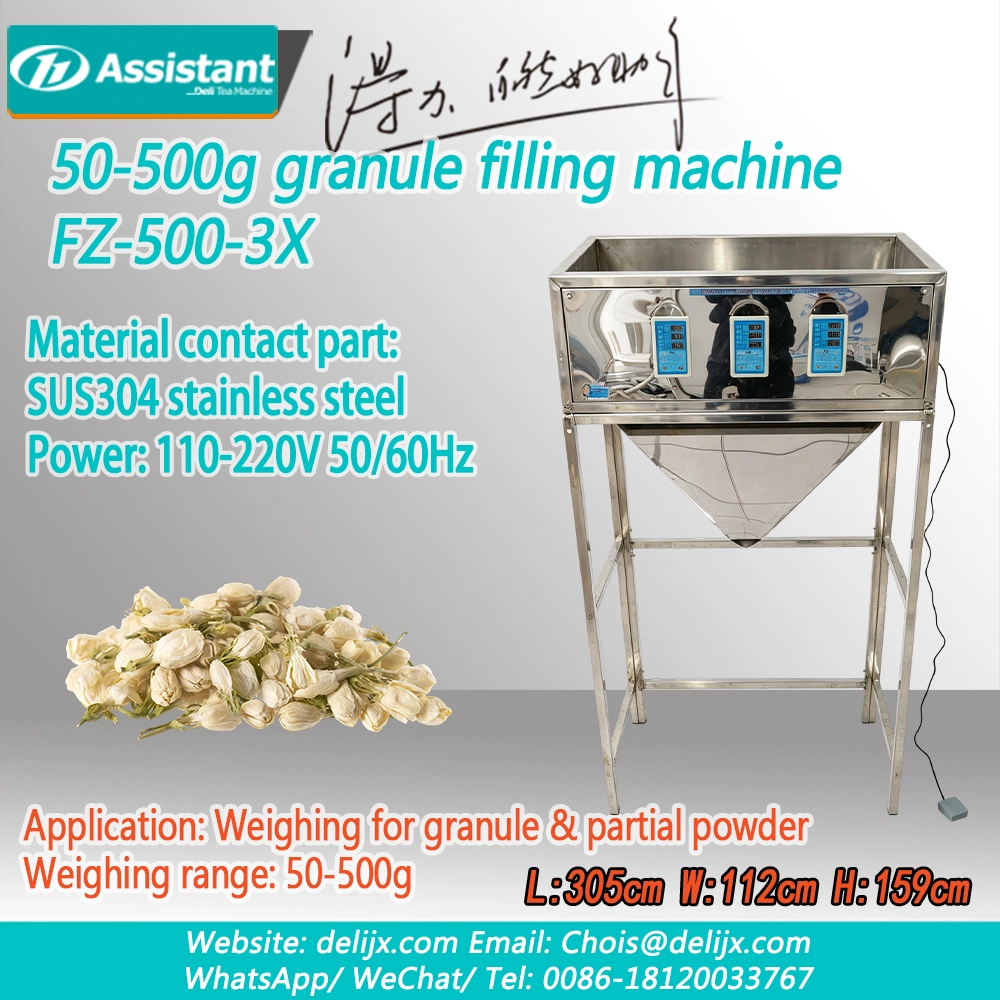
FZ‑500‑3X Automatic Quantitative Filling Machine 50‑500g Granule Powder Weighing Dispenser For Tea Grain Coffee Bean
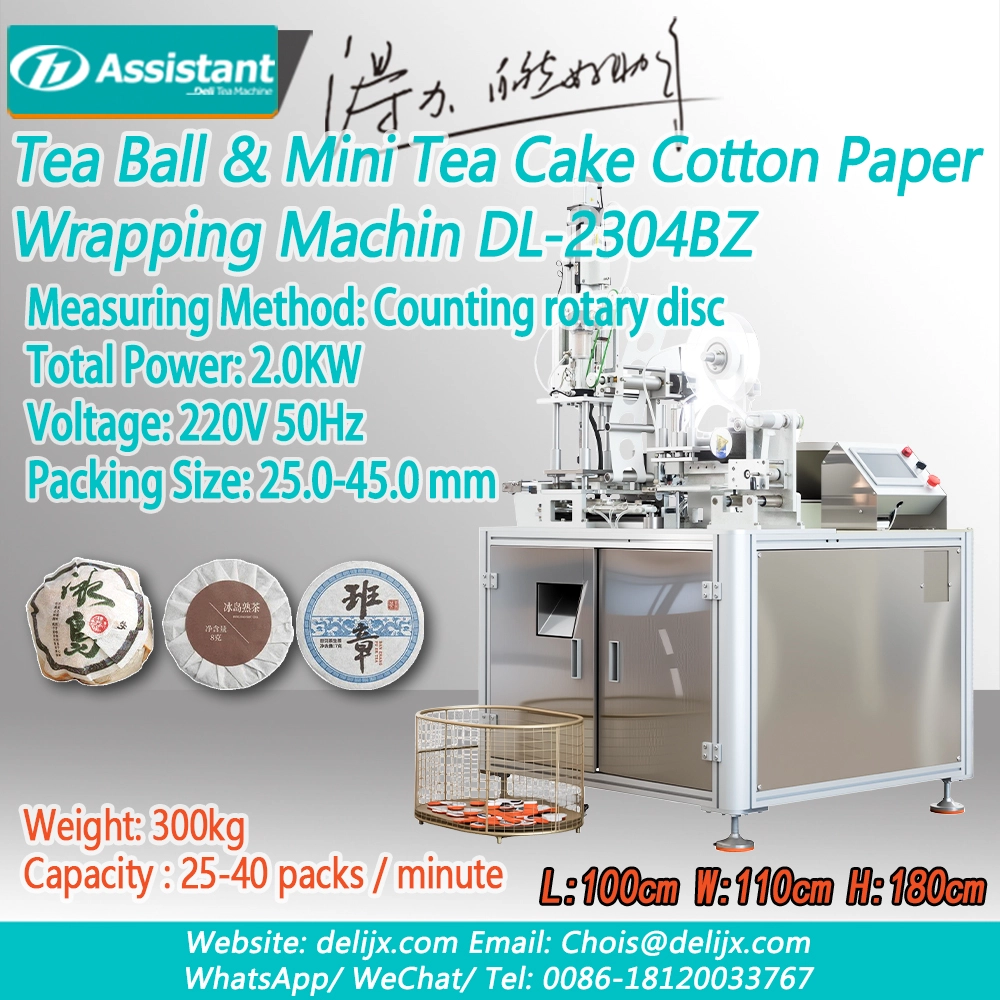
Automatic cotton paper wrapping machine for Pu‑er dragon pearl tea and mini tea cake. PLC control, 25‑40 pcs/min speed, one‑key switch for tea ball & small cake, stable pneumatic‑servo operation for compressed tea packaging.
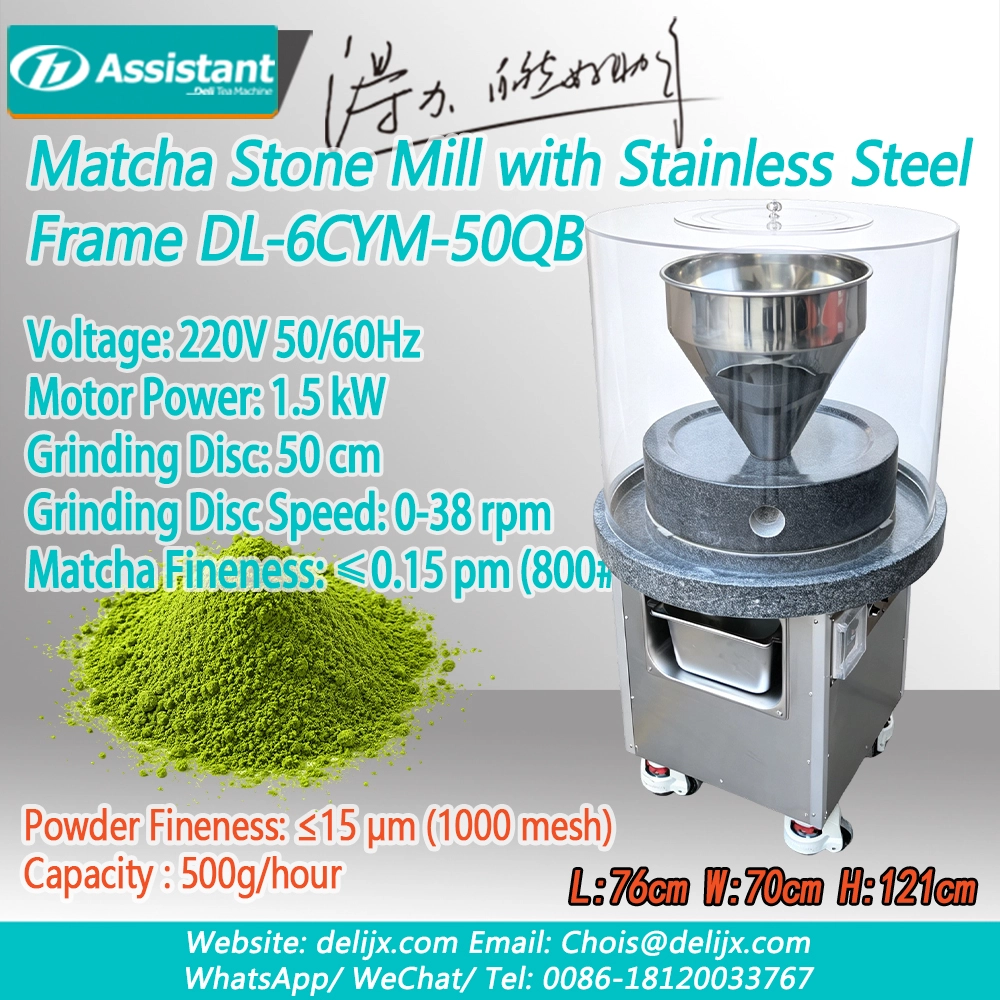
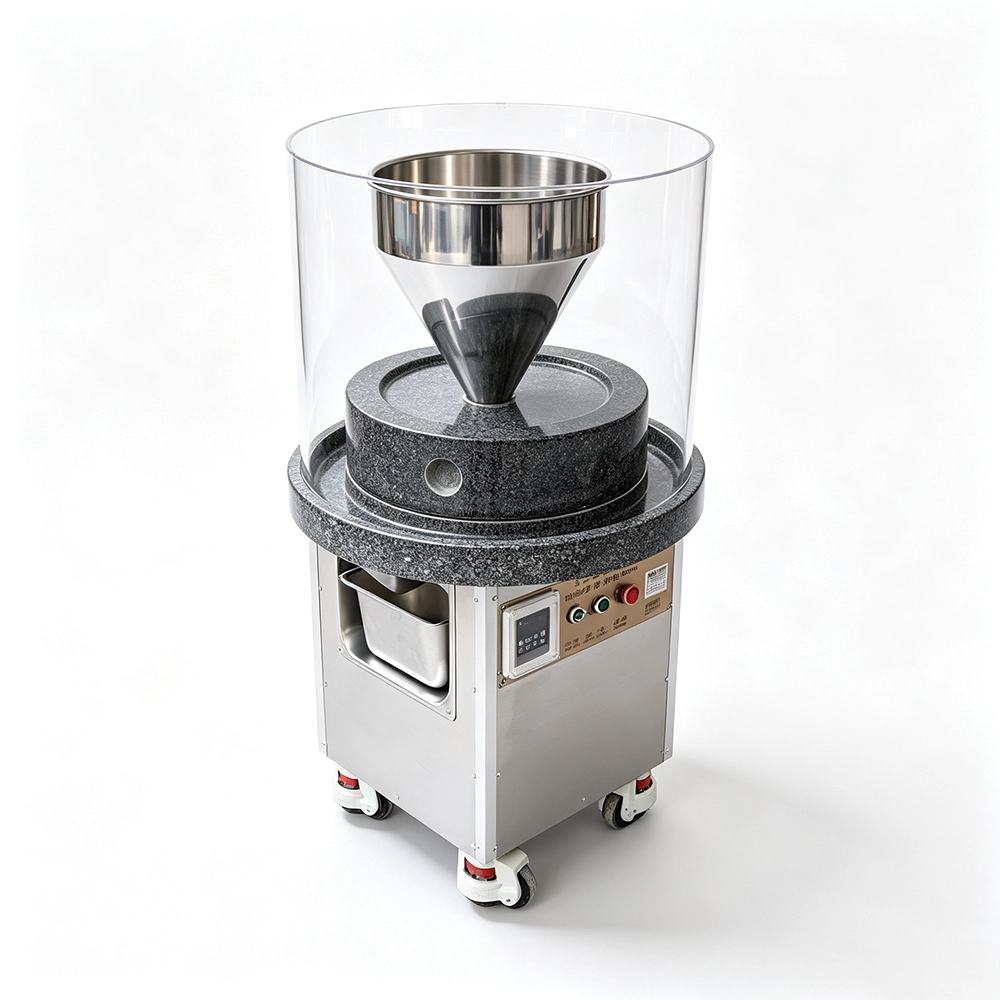
6CMJY-50QB stainless steel custom base matcha green stone mill, natural granite stone plate, low-speed cold grinding. Preserve tea aroma, produce ultra-fine matcha powder. Stainless steel frame with casters, suitable for tea shops, labs and small-batch matcha production.
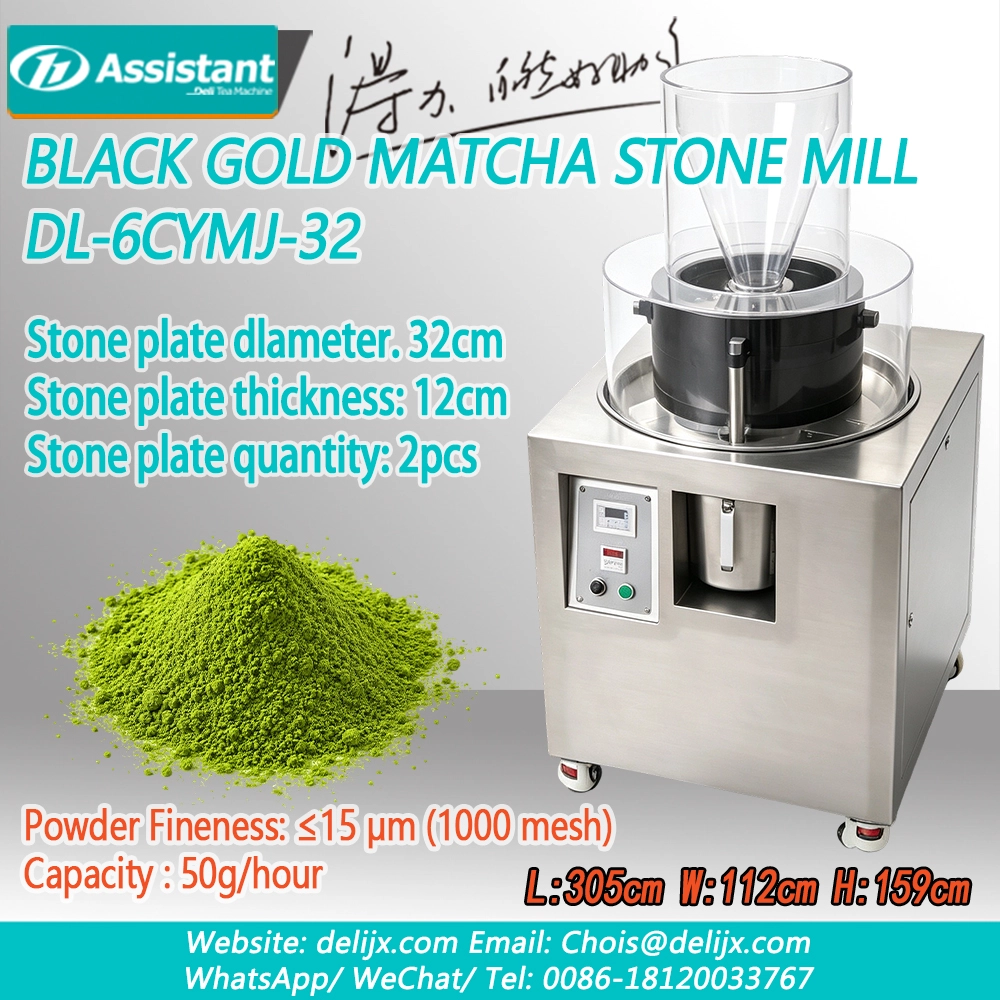
Custom heightened small matcha stone mill DL-6CYMJ-32M, equipped with 30cm natural stone plates. Low-speed low-temperature grinding, produce ultra-fine matcha powder ≤15μm. 50g/h capacity, stainless steel body, ideal for boutique tea shops & small-batch matcha production.
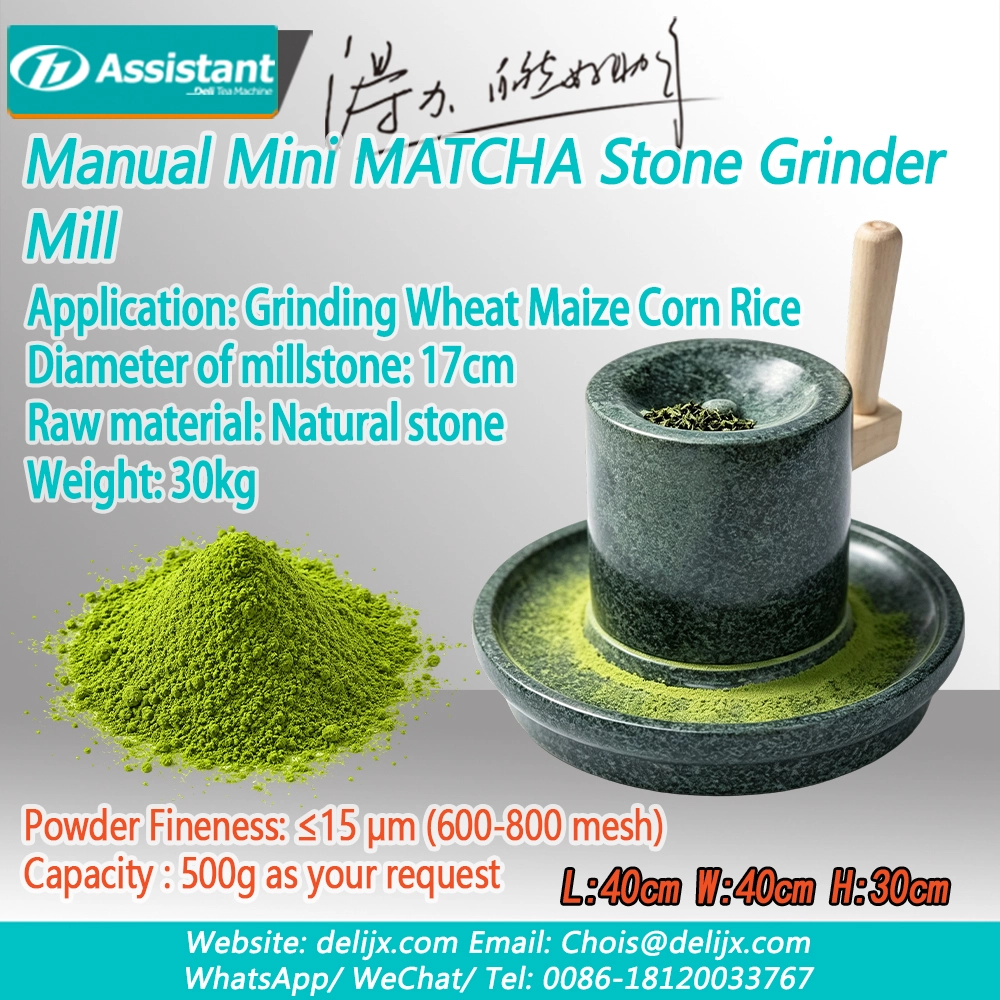
Manual Matcha Stone Mill is a traditional hand-operated grinder made from natural stone, designed for producing fresh and authentic matcha powder. With a slow grinding process and low heat generation, it helps preserve the natural color, aroma, and flavor of tea leaves. Compact and durable, it is ideal for matcha cafes, tea houses, restaurants, cultural experience shops, and small-batch matcha production.
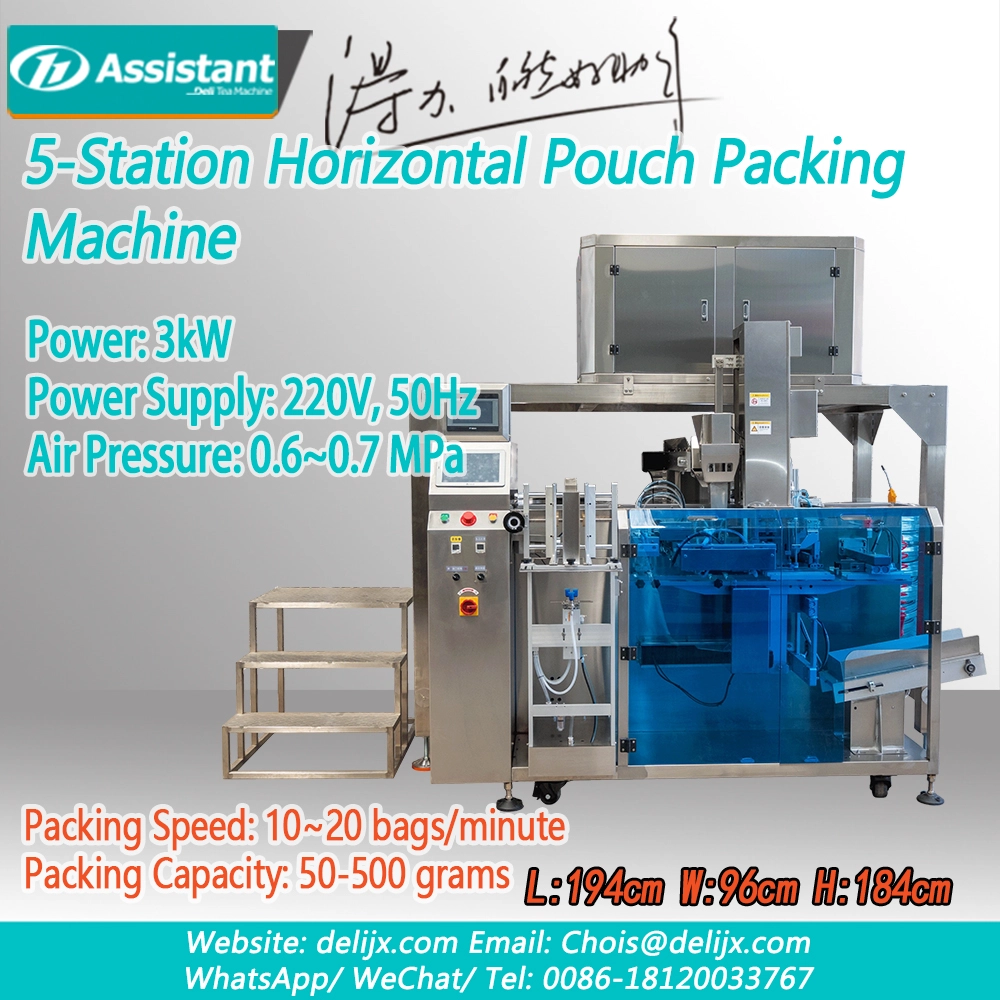
This 5-station horizontal pouch packing machine handles M bags, flat pouches and zipper pouches for 50–500g granular materials like tea. It automatically finishes weighing, filling, vacuuming and sealing with servo control, supporting multiple optional accessories.
Looking for the right matcha grinding equipment? Read our in-depth comparison of 4 matcha grinders, including Black Gold Stone Mills, Blue Stone Mills, Batch Ball Mills, and Continuous Ball Mills. Learn their efficiency, particle size distribution, and ideal applications.
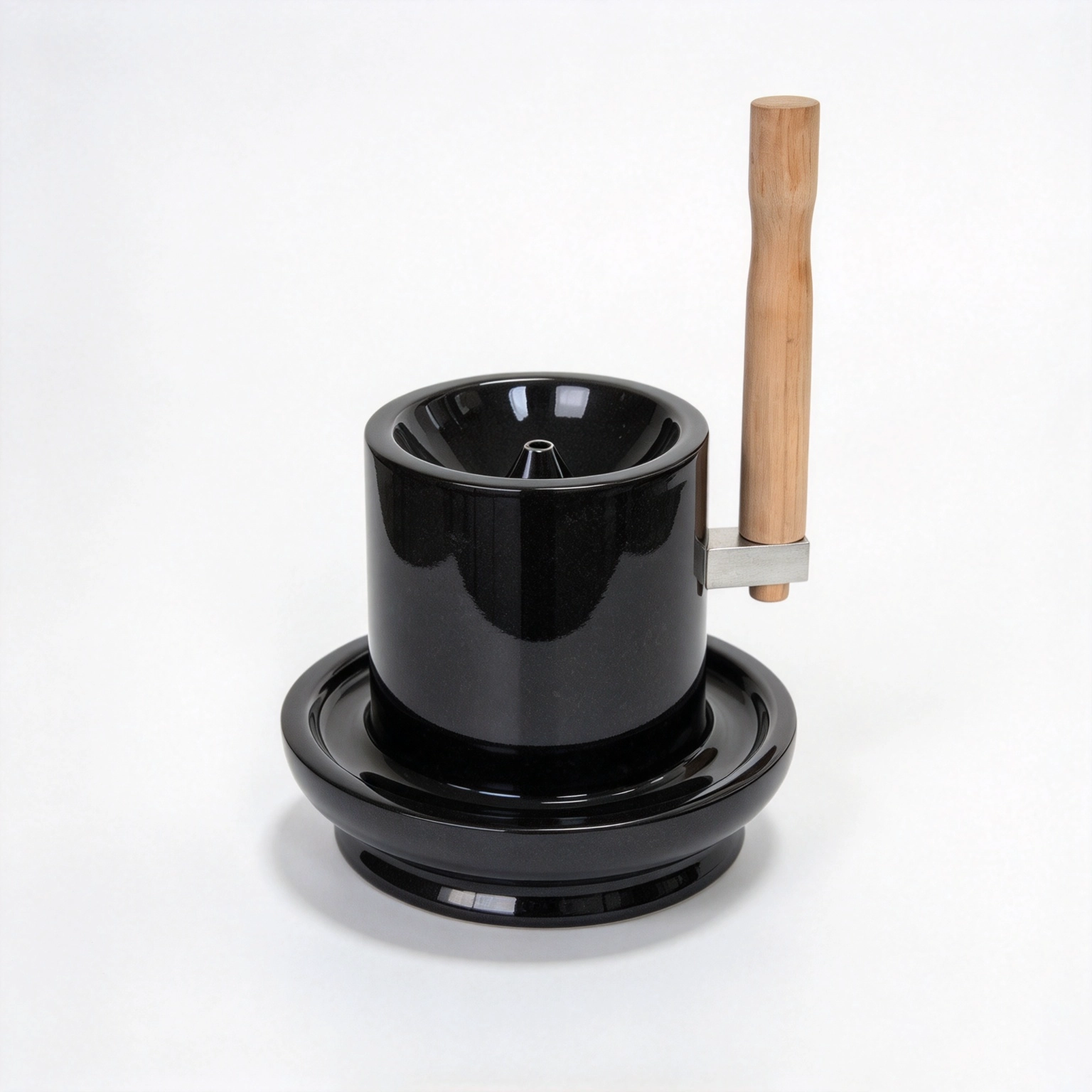
Experience the true flavor of freshly ground matcha. Our mini black stone manual matcha mill brings traditional Japanese stone grinding craft to your home, hand-cranked for fine, aromatic matcha powder.
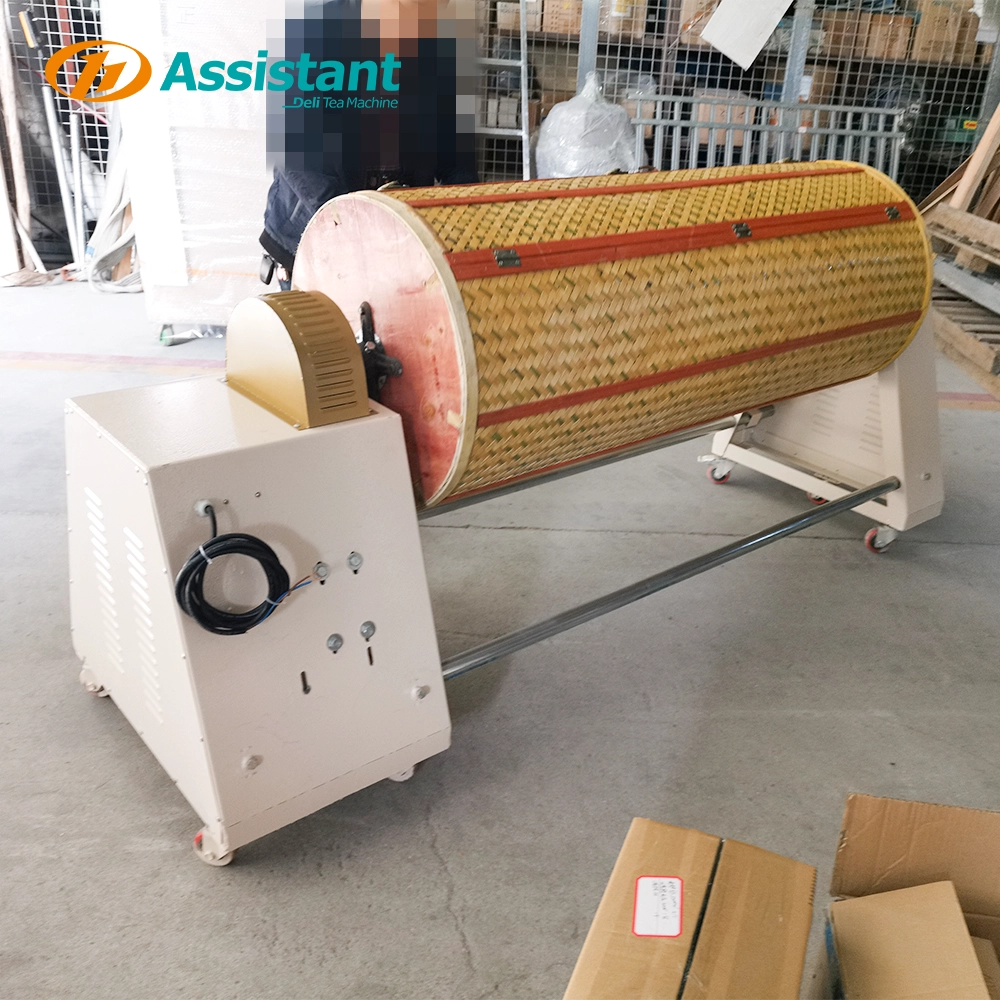
Our bamboo drum oolong tea shaking machine, also known as tea leaf shaker, simulates manual tea shaking to achieve uniform leaf oxidation. Multiple models available for small & large tea factories, stable speed control for premium oolong tea production.

Our DL-6CYMJ-32W stone mill grinder is specially designed for processing matcha and tea leaves. It adopts natural stone plates & SUS304 stainless steel frame, capable of producing ultra-fine tea powder up to ≤15μm (800 mesh). With adjustable rotating speed and automatic operation, it is ideal for tea factories and food workshops. We will introduce its specifications, core advantages, operation workflow and daily cleaning tips below.
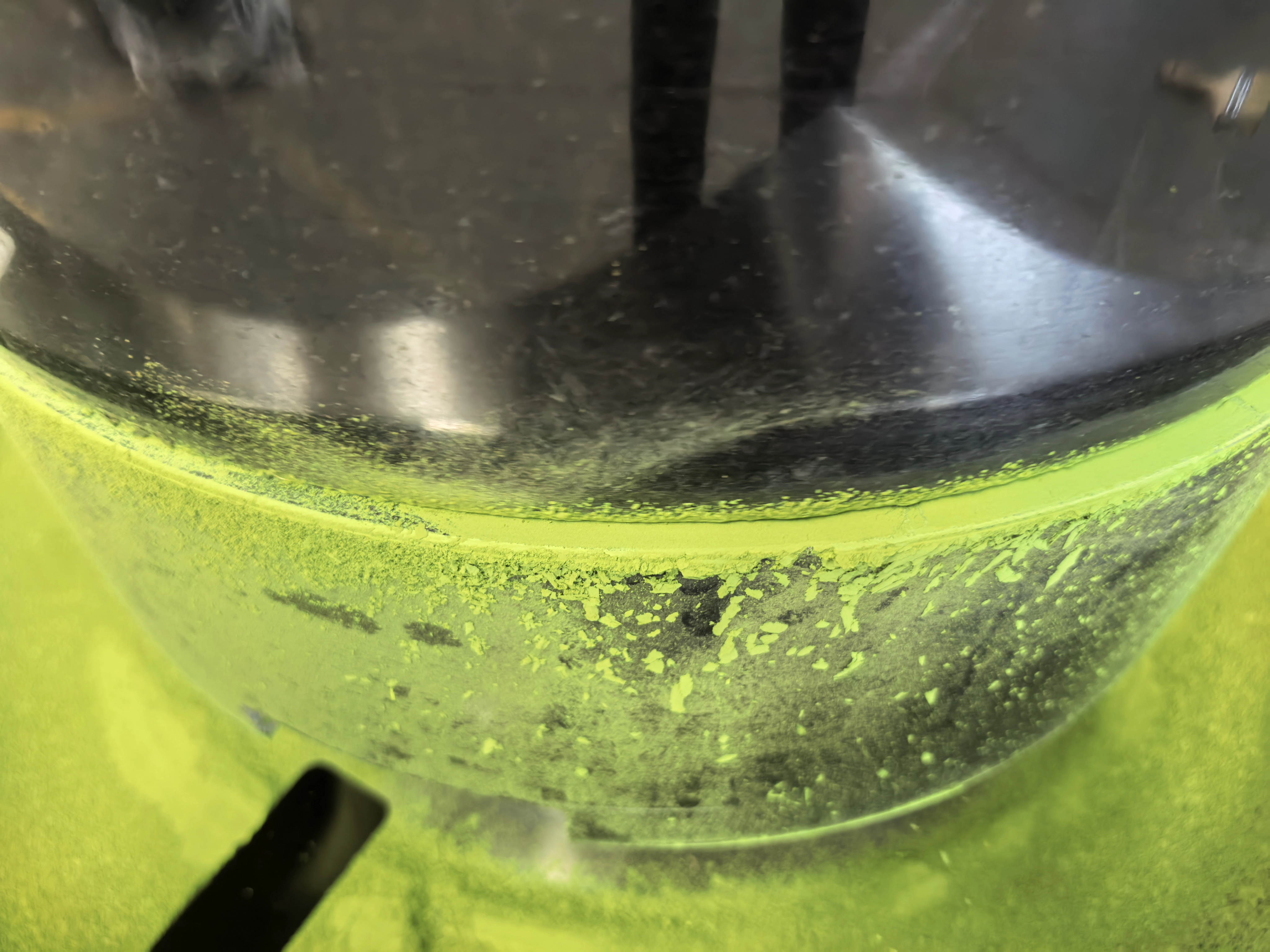
Matcha may look like a simple green powder, but producing smooth, bright and pleasant-tasting matcha requires much more than putting tea leaves into a high-speed grinder.
The raw material, grinding temperature, stone structure, rotation speed, feeding rate and final particle distribution can all affect the finished powder. This is why tea producers, matcha brands and food manufacturers often ask the same questions:
This guide answers those questions and explains how to select a suitable matcha grinding machine.
Authentic matcha is not simply any green tea that has been pulverized.
The traditional raw material is tencha, a specially processed tea made from shade-grown leaves. After harvesting, the leaves are steamed and dried without being rolled. The harder stems and veins are then removed before the remaining soft leaf material is ground into powder.
ITO EN describes matcha as tencha that has been finely ground using a stone mill or similar fine-grinding equipment. The company also notes that removing stems and veins helps create a smoother texture and more refined taste.
This distinction matters because a grinding machine cannot correct poor raw material.
A premium grinder may produce fine powder from ordinary sencha, but the result will still differ from properly processed tencha in color, aroma, texture and flavor. Therefore, the quality of the final matcha begins before the grinding stage.
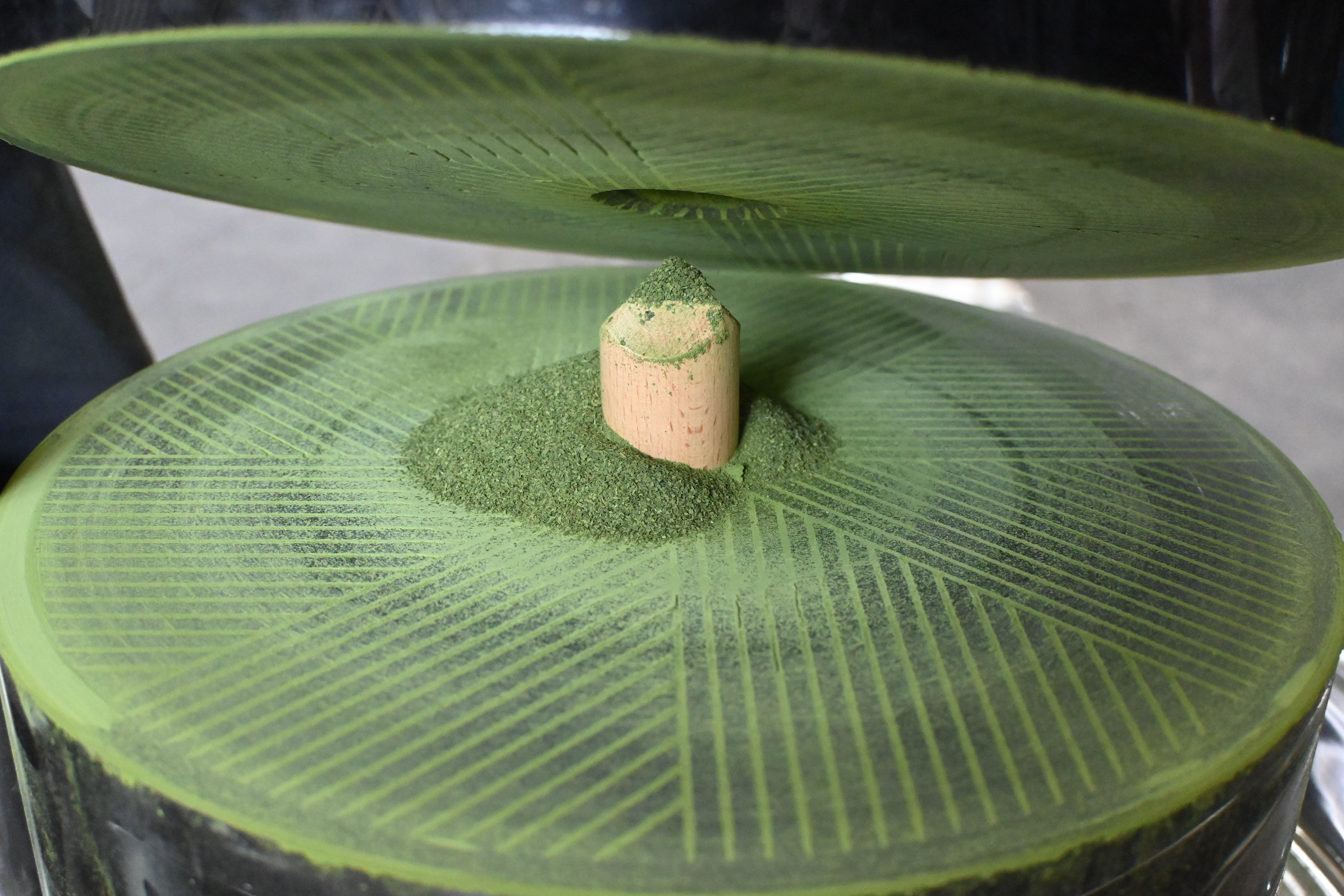
Traditional matcha mills use two carefully shaped stones. The lower stone remains stationary while the upper stone rotates slowly. Tencha is fed through an opening in the center and moves outward through carved grinding grooves.
During this process, the tea is repeatedly cut, compressed and sheared into extremely small particles.
The main advantage of slow stone milling is heat control.
High-speed grinding creates friction. Excessive heat exposure can negatively affect the color, aroma and flavor of delicate tea material. Stone milling is time-consuming, but its slow operating speed helps minimize frictional heat during the final processing stage.
Stone milling is therefore commonly chosen for matcha intended for:
However, stone milling is not automatically superior in every application. Large food factories producing matcha for biscuits, ice cream, noodles or confectionery may prioritize capacity and cost over the sensory characteristics associated with slow stone milling.
The correct grinding method depends on the target product.
Particle size is one of the most frequently discussed matcha quality indicators.
Published research reports a broad matcha particle-size range of approximately 1 to 100 micrometers. Higher-grade matcha is often below 20 micrometers, while some samples may contain particles around or below 5 micrometers. Particles below approximately 20 micrometers are generally difficult to detect individually on the palate, and smaller particles can also improve foaming behavior.
In practical terms, finer and more uniform powder may provide:
Nevertheless, one particle-size number does not define matcha quality.
A powder can be extremely fine and still have poor aroma, dull color or excessive bitterness. Buyers should evaluate particle size together with:
For commercial purchasing, it is better to request a sample grinding test than to rely only on a maximum fineness number.
Slow production is not necessarily a defect in a matcha stone mill. It is often a deliberate part of the process.
ITO EN has reported that a traditional stone mortar mill may produce approximately 20 grams of matcha per hour, while high-capacity hammer pulverizers can produce tens of kilograms per hour. The stone-ground product is mainly used for smoother, premium tea applications, whereas high-output systems are suited to industrial production.
Other commercial stone mills may produce approximately 30 to 50 grams per hour, depending on:
Increasing the rotation speed may raise output, but it can also increase heat, reduce grinding consistency or affect powder quality. For that reason, output should not be evaluated independently from temperature and particle-size results.
A blender, spice grinder or coffee grinder can turn dry tea leaves into green tea powder. However, it usually cannot reproduce the texture of properly stone-ground matcha.
Common problems include:
Household grinders may leave fibers and larger particles that feel sandy in the mouth.
Some material becomes very fine while other fragments remain comparatively large.
Small high-speed blades can heat the tea quickly, especially during repeated grinding.
Coarse powder settles rapidly and may not whisk into a stable, smooth beverage.
Coffee, spices, oils and odors left inside a multipurpose grinder may contaminate the tea.
A household grinder may be acceptable for cooking experiments or powdered green tea ingredients. It is generally unsuitable for producing consistent commercial drinking matcha.
Neither technology is ideal for every producer.
| Factor | Stone Matcha Mill | High-Speed Pulverizer |
|---|---|---|
| Typical purpose | Premium and small-batch matcha | Culinary and industrial powder |
| Grinding speed | Low | High |
| Hourly output | Usually measured in grams | Often measured in kilograms |
| Heat generation | Relatively low when properly operated | Higher; cooling may be required |
| Texture | Fine, smooth and traditionally associated with drinking matcha | Depends strongly on machine type and classification system |
| Investment priority | Product quality and premium positioning | Capacity and production cost |
| Suitable buyers | Tea farms, matcha brands, cafés, laboratories | Ingredient factories and large processors |
Some manufacturers use both systems. Stone mills can produce premium product lines, while higher-capacity equipment supplies culinary or bulk applications.
Old, poorly stored or uneven raw material cannot produce premium matcha simply because it is finely ground.
Tea that is too moist may stick, clump or feed unevenly. Excessively dry material may create more airborne dust and handling losses.
A stable, adjustable speed allows the operator to balance throughput, fineness and heat generation.
Overfeeding can reduce fineness and increase pressure inside the grinding path. Underfeeding reduces productivity and may produce inconsistent operation.
The millstone surface and groove pattern gradually change with use. Cleaning, inspection and periodic stone maintenance are necessary for consistent output.
Room temperature, machine temperature and operating duration should be monitored, particularly during continuous production.
Tea powder absorbs moisture and external odors easily. Surfaces around the grinding and collection areas should be easy to inspect and clean.
No.
“Stone ground” describes the grinding method. It does not independently guarantee ceremonial quality.
The final grade also depends on:
Stone milling can help a producer preserve the characteristics of good tencha, but it cannot create qualities that were absent from the raw material.
This is an important point for both sellers and buyers. Marketing claims should be supported by raw-material records, sensory testing and measurable quality data.
Before requesting a quotation, define the intended product and production conditions.
Ask the equipment supplier the following questions:
Matcha for drinking has different requirements from powder used in cookies, chocolate, noodles or premixed beverages.
A mill producing 30 to 50 grams per hour may be suitable for a premium product line but not for a factory requiring several kilograms per shift.
Variable speed provides more control when processing different tencha batches or testing different quality settings.
The collection system should minimize product loss, airborne dust and exposure to contamination.
A sample test is more useful than a demonstration using unrelated tea leaves.
Clarify whether the stated fineness refers to maximum particle size, average size, median size or a sieve specification. Different test methods can produce very different numbers.
Confirm voltage, frequency, plug type and local electrical requirements before shipment.
For tea producers and matcha brands that need low-speed, small-batch grinding, the DL-6CYMJ-32 Black Granite Matcha Stone Mill Grinder is designed to combine traditional stone-milling principles with electric operation.
Its adjustable rotation speed allows operators to test different settings according to raw-material condition and target powder quality. The transparent protective enclosure also allows the grinding area to remain visible during operation while helping maintain a cleaner working environment.
| Item | Specification |
|---|---|
| Model | DL-6CYMJ-32 |
| Machine dimensions | 65 × 68 × 130 cm |
| Input voltage and frequency | 220 V, 50/60 Hz |
| Motor power | 0.55 kW |
| Millstone diameter | 35 cm |
| Millstone thickness | 24 cm |
| Number of stones | 2 pieces |
| Machine weight | 110 kg |
| Approximate output | 50 g/hour |
| Adjustable speed | 0–38 rpm |
| Grinding material | Black granite stone |
The approximately 50-gram-per-hour capacity makes the machine more suitable for premium small-batch production than for mass-market, multi-kilogram processing.
Possible users include:
The most reliable way to evaluate a matcha grinder is to test it with your own raw material.
When contacting us, please provide:
We can then evaluate whether the DL-6CYMJ-32 is suitable for your production requirements and discuss sample testing, machine configuration, quotation, packaging and shipping.
Looking for a low-speed matcha stone mill for premium small-batch production? Contact us for a quotation and grinding-test consultation.
Traditional stone grinding is slow. Depending on the mill, settings and raw material, production is commonly measured in tens of grams per hour rather than kilograms.
There is no universal best speed. The correct setting depends on stone structure, tencha condition, feed rate and target quality. Operators should compare output, powder temperature and particle-size results at several speeds.
They can be ground into green tea powder, but authentic matcha is traditionally produced from tencha. Grinding ordinary sencha does not automatically turn it into matcha.
Fine tea powder has a large surface area and readily absorbs moisture. Static electricity, humidity and compression during transportation can also cause clumping. Sifting before preparation does not necessarily indicate that the powder is defective.
No. Stone diameter, weight, groove design, speed and feeding system must work together. A larger stone does not automatically provide better fineness or lower grinding temperature.
The supplier normally needs the destination country, voltage, required capacity, raw material, application and any particle-size requirements.