Introduction
Matcha production relies on two primary grinding technologies: stone grinding (divided into granite and black gold stone variants) and ball milling. Each equipment type employs distinct materials and processing mechanisms, directly influencing matcha’s texture, flavor, color, and production scalability. Quanzhou Deli Agroforestrial Machinery Co., Ltd. offers three specialized models—DL-6CYM-70 granite stone mill, DL-6CYMJ-32 black gold stone mill, and DL-6CQM-40 ball mill—each tailored to different market segments and production requirements. Below is a detailed analysis of their differences, functions, and advantages to guide your purchasing decision.
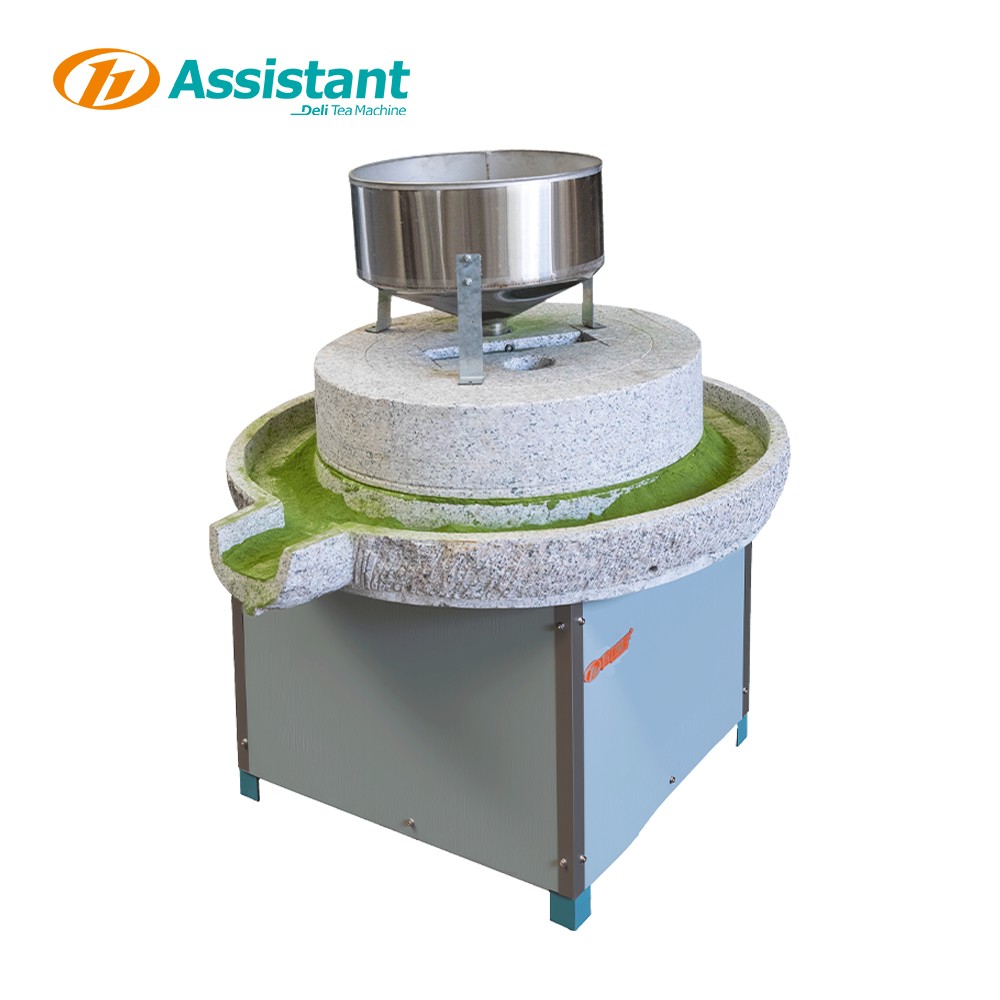
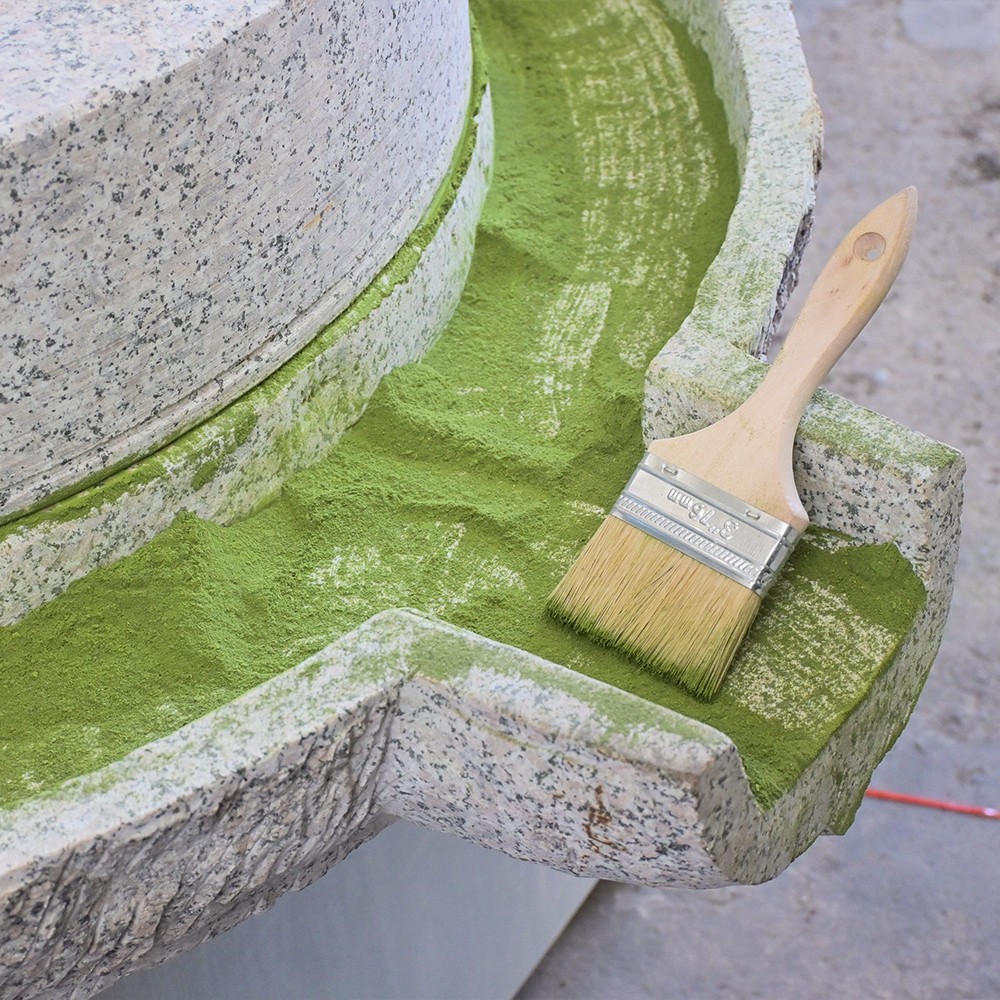
Core Features & Working Principle
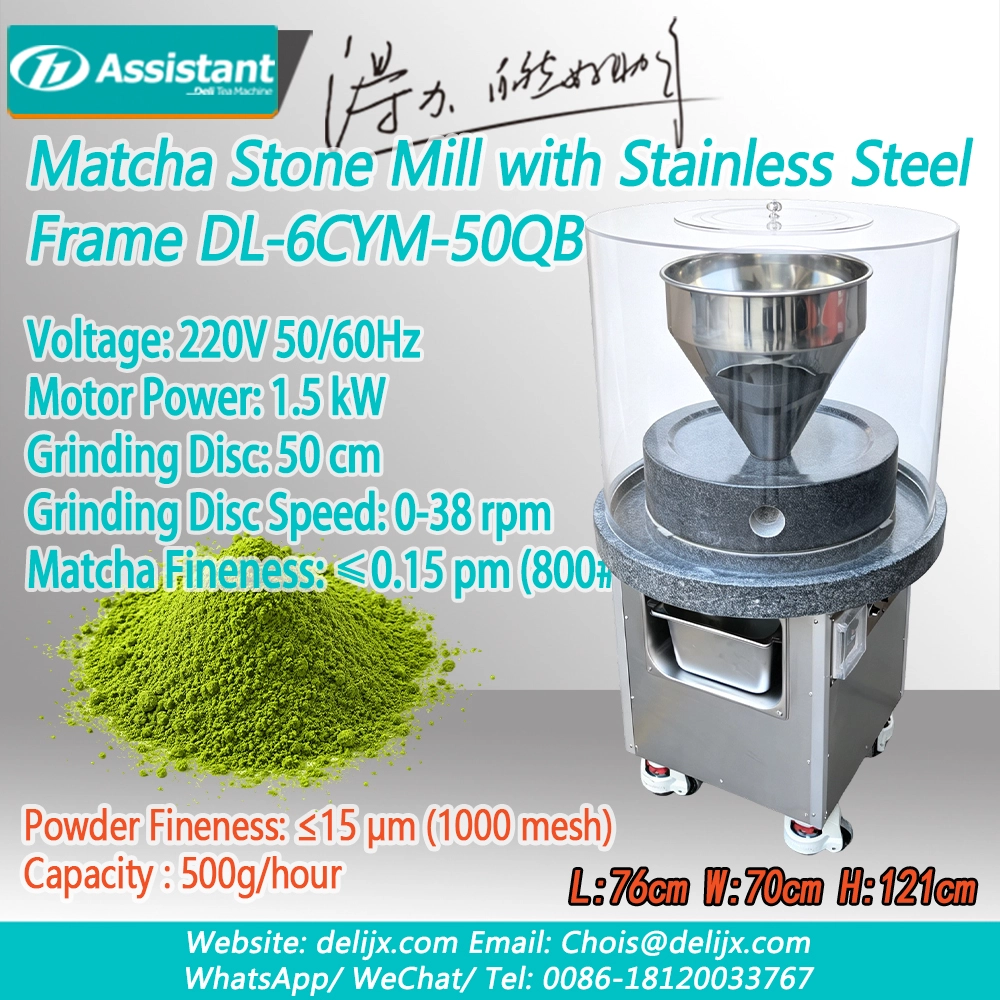
Crafted with high-quality granite plates (70cm diameter, 26cm thickness × 2 pieces), this mill operates on a high-speed rolling and crushing principle. It leverages the hardness and durability of granite to grind tea leaves into matcha powder efficiently, balancing production volume and basic quality.
Key Performance & Advantages
- Particle Size: Approximately 50μm, meeting the standard for mid-range matcha products.
- Flavor & Color: Retains complete chlorophyll content, delivering a medium-bodied flavor and a yellowish-green hue—ideal for everyday matcha applications.
- Production Capacity: 10 kg per hour, significantly higher than the black gold stone mill, making it suitable for scaling mid-tier production.
- Cost-Efficiency: The lowest production cost among the three (≈$0.02/kg), offering excellent value for businesses prioritizing output and affordability.
- Operational Flexibility: Compatible with 220V or 380V voltage, adapting to different electrical setups. Its robust design (400 kgs weight, 115×112×133cm dimensions) ensures stability during long-term operation.
Ideal Applications
This equipment is perfect for manufacturers focused on mid-range matcha with large output demands. It excels in scenarios like bulk matcha supply for cafes, bakeries, or daily-use matcha products where cost-control and production volume take precedence over premium quality.
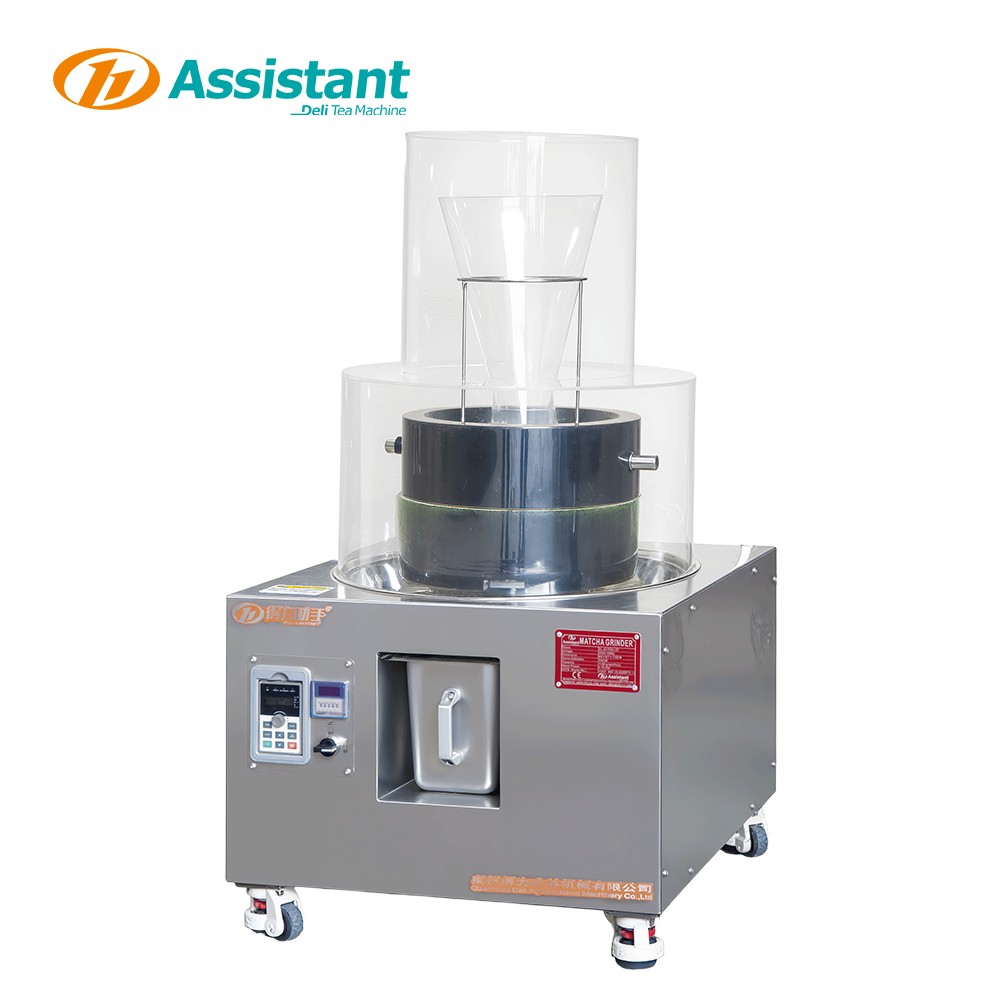
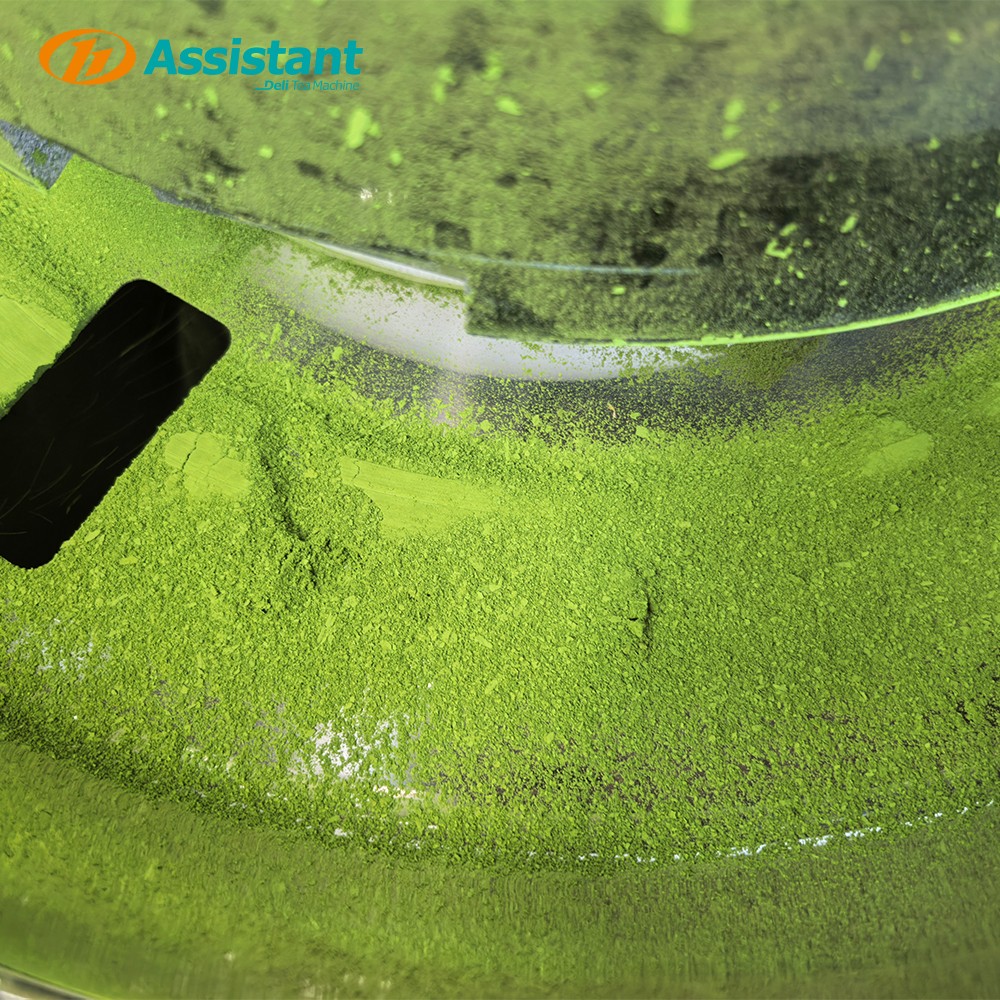
Core Features & Working Principle
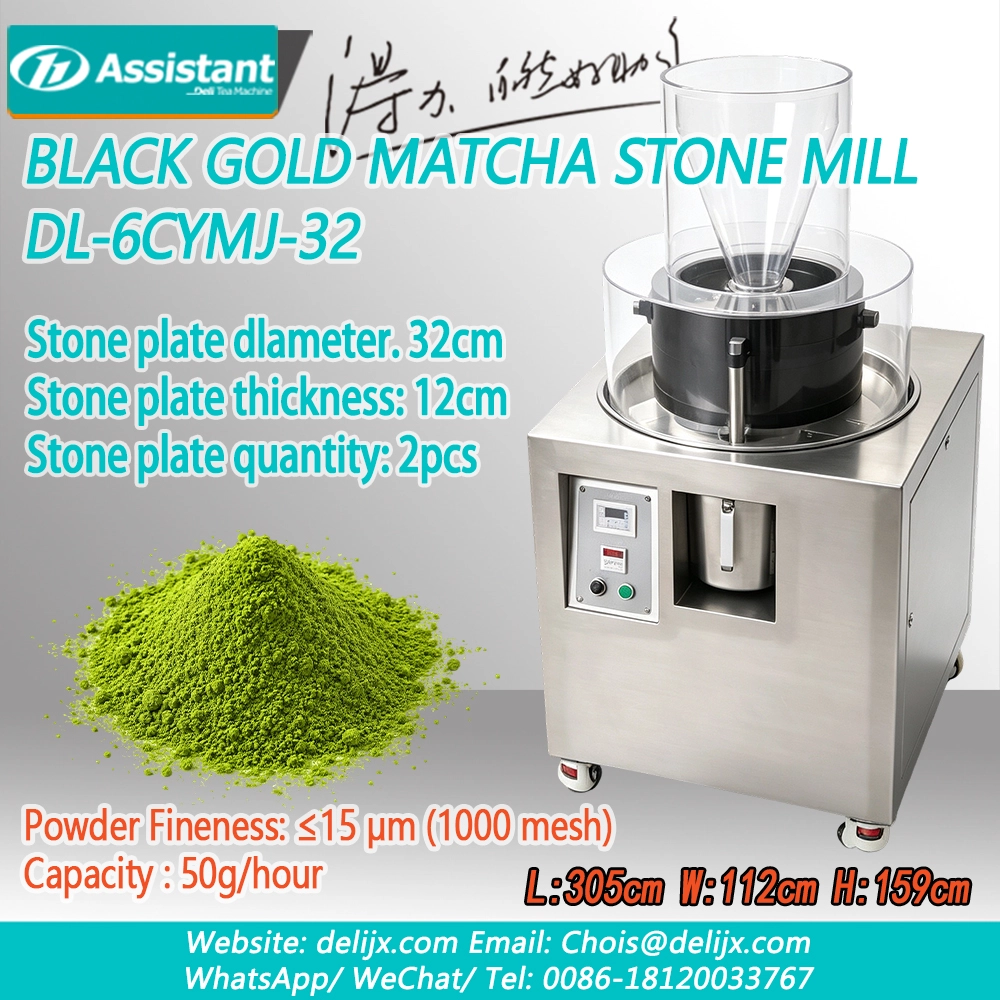
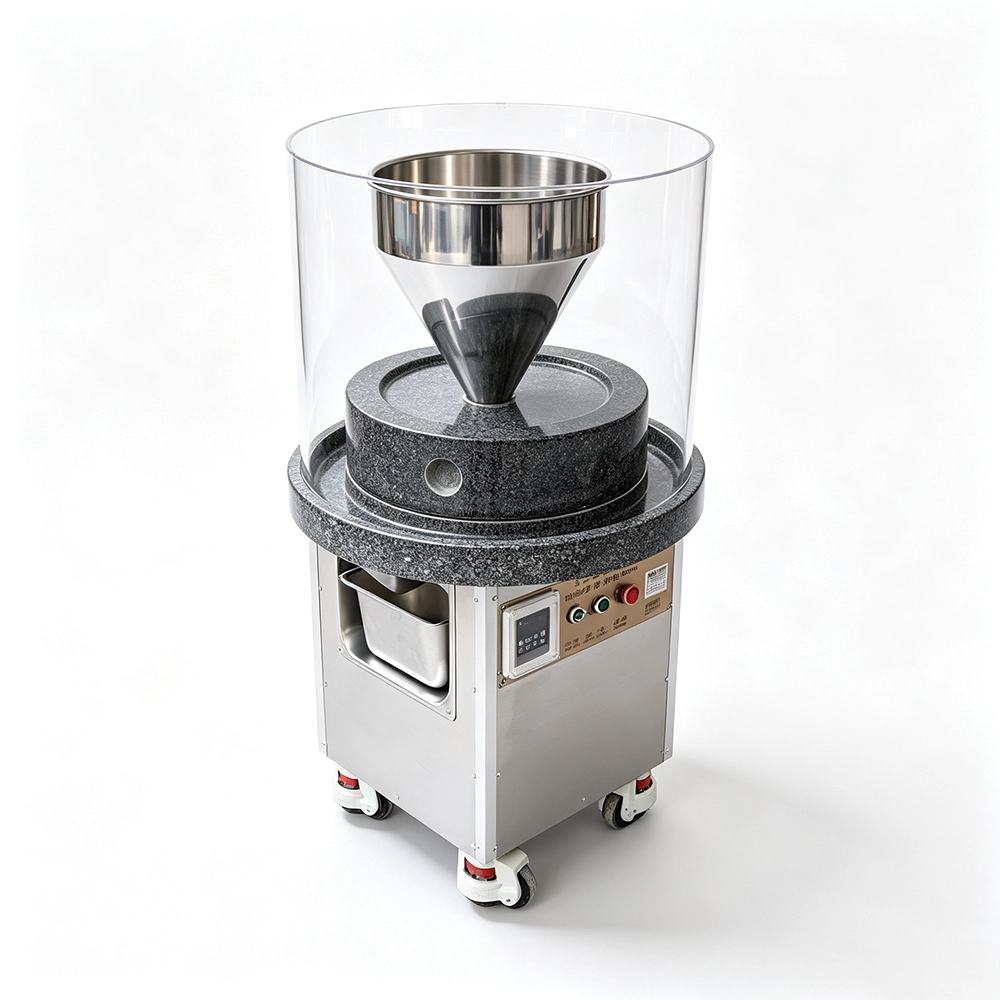
Built with premium black gold stone plates (32cm diameter, 12cm thickness × 2 pieces), this mill uses a low-speed shearing and tearing process. The soft, fine texture of black gold stone minimizes heat generation and preserves the tea’s natural compounds, prioritizing matcha’s sensory quality over speed.
Key Performance & Advantages
- Particle Size: ≤15μm, achieving ultra-fine powder comparable to high-end matcha standards.
- Flavor & Color: Delivers the best flavor among the three—complete chlorophyll retention enhances freshness, while its bright emerald green color stands out as a visual hallmark of premium matcha.
- Heat Control: Low heat generation during grinding, preventing nutrient degradation and ensuring the tea’s original aroma remains intact.
- Compact Design: With dimensions of 65×68×130cm and a weight of 110 kgs, it is space-efficient and easy to install, even in small-scale workshops.
Limitations & Ideal Applications
The primary tradeoff is its ultra-low production capacity (≈50 grams per hour) and higher cost (≈$1.5/kg). However, it is unmatched for high-end, small-batch premium matcha production—ideal for boutique brands, luxury tea houses, or specialty matcha products where quality and uniqueness justify the higher cost.
3. Ball Mill (Model: DL-6CQM-40)
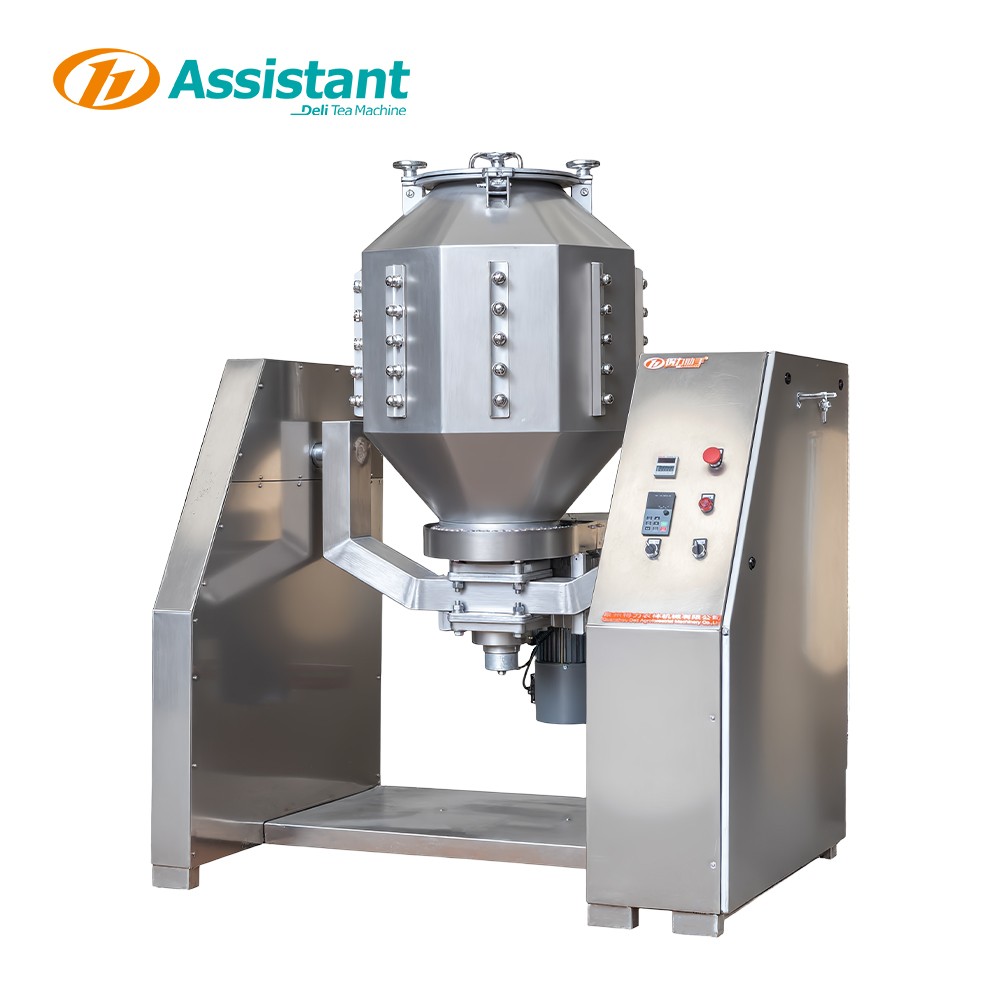
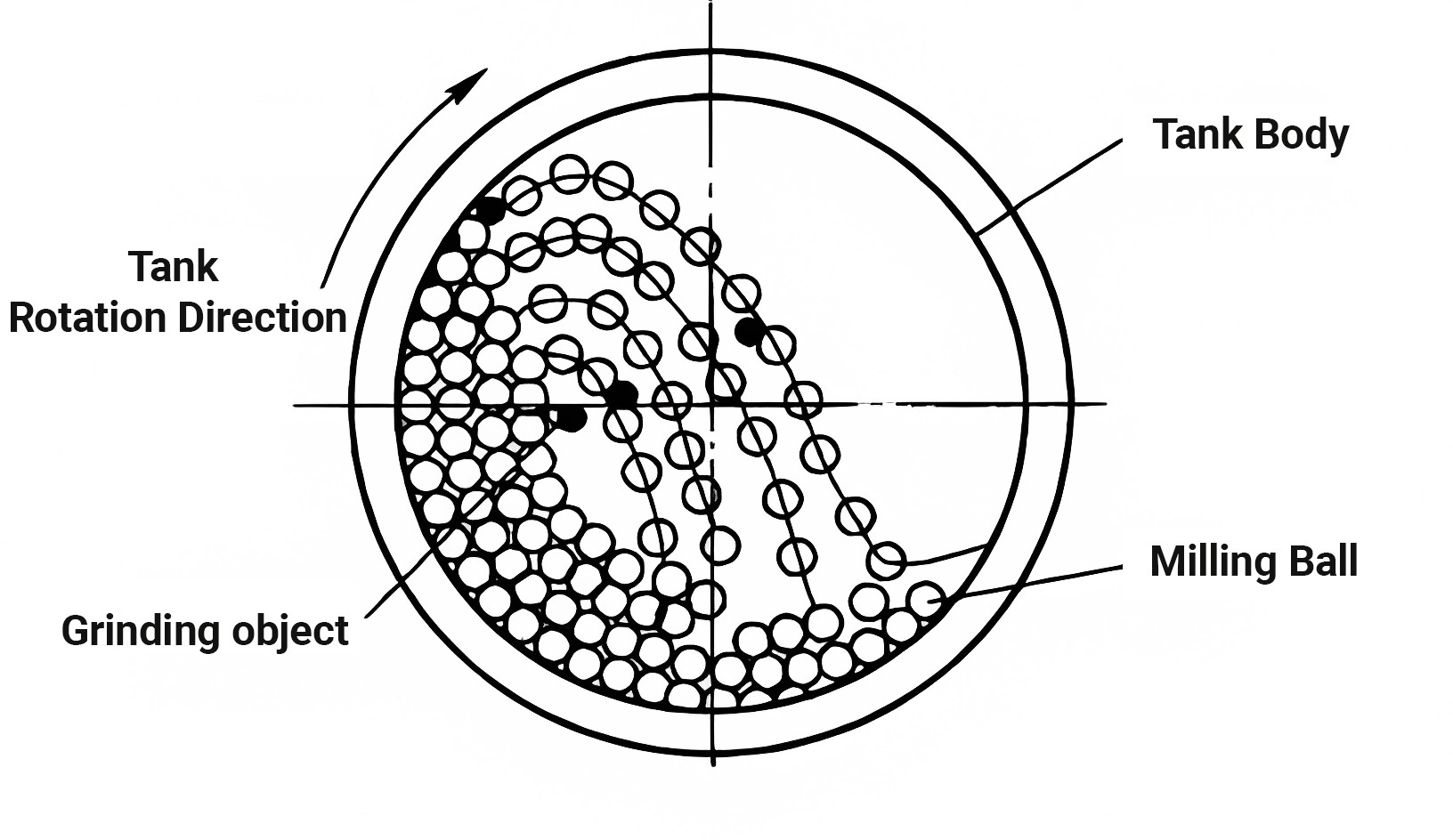
Core Features & Working Principle
This industrial-grade equipment uses super-hard alumina balls (φ20 size, 90-100 quantity) as the grinding medium, operating on an impact and extrusion crushing principle. Encased in a sealed drum (Φ65 diameter) with adjustable speed (0-38 rpm), it ensures consistent grinding under controlled conditions.
Key Performance & Advantages
- Particle Size: <15μm, producing ultra-fine powder suitable for industrial applications requiring uniform texture.
- Microbial Control: A sealed working environment significantly reduces microbial contamination—an essential advantage for food-grade mass production.
- Scalability: Designed for batch processing (25 kgs per batch, 10-20 hours per batch) with a continuous output of ≈1-2 kg/hour. It excels in large-scale operations where consistency and hygiene are critical.
- Technical Specifications: Equipped with a 1.75 KW motor (380V 50/60Hz) and optimized for working temperatures of 5-15℃ (requires a 25℃ ambient environment to manage heat generation). Its sturdy build (360 kgs weight, 1500×1190×1760mm dimensions) supports long-term industrial use.
Limitations & Ideal Applications
While its flavor and color (dark green, 中上 quality) are slightly inferior to stone-milled matcha (due to partial chlorophyll destruction), it is the top choice for industrial-scale matcha production. It is widely used in manufacturing matcha for beverages, ice cream, confectionery, and other processed foods, where large volumes, consistent quality, and microbial safety are non-negotiable. The production cost (≈$0.15/kg) strikes a balance between scalability and affordability.
Core Differences & Comparison Summary
| Aspect |
Granite Stone Mill |
Black Gold Stone Mill |
Ball Mill |
| Core Strength |
High capacity, low cost |
Premium flavor/color |
Industrial scalability, microbial control |
| Particle Size |
≈50μm |
≤15μm |
<15μm |
| Production Capacity |
10 kg/h |
≈50 g/h |
≈1-2 kg/h |
| Production Cost |
≈$0.02/kg |
≈$1.5/kg |
≈$0.15/kg |
| Flavor Rank |
Medium |
Best |
Good (slightly lower than stone mills) |
| Ideal Use Case |
Mid-range mass production |
High-end boutique batches |
Industrial food/beverage manufacturing |
How to Choose the Right Equipment?
- Prioritize quality over quantity: Select the black gold stone mill for premium, high-margin matcha.
- Balance output and cost: Opt for the granite stone mill if you need mid-range matcha with large production volumes.
- Industrial-scale manufacturing: The ball mill is indispensable for mass-produced matcha products requiring consistency and hygiene.
For further inquiries or customized solutions, contact Quanzhou Deli Agroforestrial Machinery Co., Ltd.:
- Web: www.delijx.com
- Tel/WhatsApp: +86-17750089040
- Email: info@delijx.com
- Address: 12# Dongxing Road, Anxi County, Quanzhou City, Fujian Province, China