Green tea withering methods are categorized by how environmental conditions (temperature, humidity, airflow) are controlled, each with unique pros, cons, and ideal use cases:
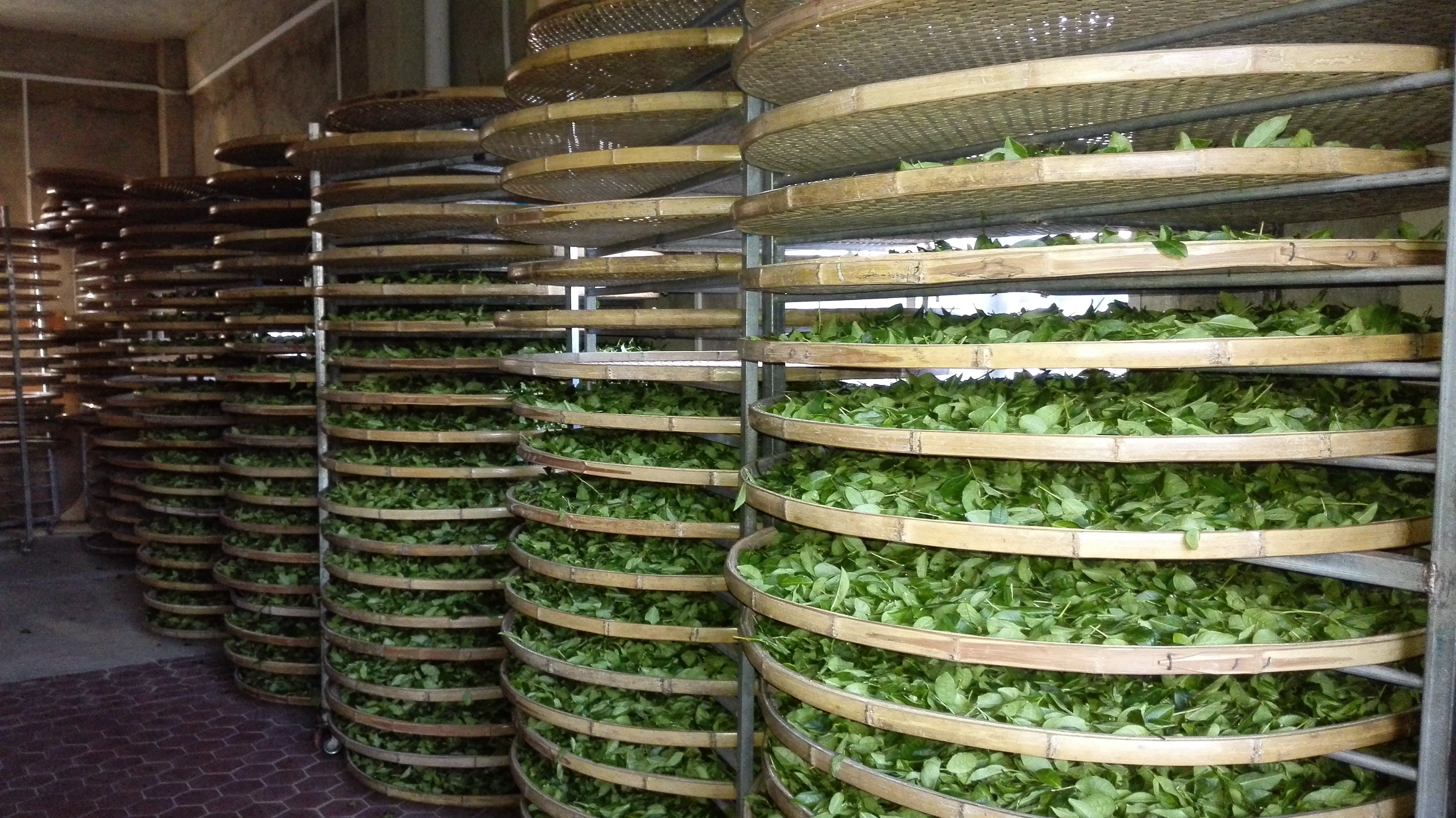
The most time-honored method, reserved for premium, famous green teas (e.g., Longjing, Biluochun). Fresh leaves are spread thinly on bamboo trays, wooden racks, or natural ventilation troughs, relying solely on ambient room temperature, humidity, and air circulation to slowly remove moisture.
- Pros: No artificial intervention preserves the delicate, natural floral/chestnut aroma and umami of tea leaves, resulting in a mellow, bright flavor.
- Cons: Extremely weather-dependent, long withering time (6–12 hours), low production efficiency, and high risk of quality fluctuation.
- Best for: Small-batch, artisanal production of high-end green tea.
2. Heated / Artificial Withering (Mechanical Withering)
A modern, industrial method that uses specialized equipment (e.g., hot air withering troughs) to precisely control temperature, airflow, and humidity, accelerating moisture loss.
- Pros: Fully weather-independent, stable production cycles, 70–80% faster than natural withering, and ideal for large-scale manufacturing.
- Cons: Requires strict parameter control; improper temperature/airflow can cause overheating, red stems, or aroma loss.
- Best for: Medium-to-large tea factories producing bulk green tea, black tea, or white tea.
3. Combined Withering (Hybrid Method)
A balanced, industry-preferred approach that merges the benefits of natural and artificial withering. Leaves first undergo 2–4 hours of natural indoor withering to initiate gentle flavor development, then transfer to a mechanical trough for heated withering to complete the process.
- Pros: Balances premium quality (from natural withering) and high efficiency (from mechanical withering), reduces weather risk, and ensures consistent batch quality.
- Cons: Requires coordinated process management and labor for the two stages.
- Best for: Tea producers pursuing both quality and scale, suitable for most green tea varieties.
Part 2: Practical Tips to Improve Green Tea Withering Quality & Efficiency
Whether you use traditional or mechanical withering, these evidence-based tips will elevate your results:
1. Standardize Fresh Leaf Input
- Uniform Raw Material: Harvest leaves with consistent tenderness (avoid mixing old and young foliage) to ensure even moisture loss.
- Scientific Spreading Thickness: For natural withering, spread leaves 2–3cm thick for premium tea, 5–8cm for bulk tea. For mechanical withering, adjust thickness to avoid overheating.
- Timely Processing: Process leaves within 2–3 hours of picking to prevent respiratory heat buildup and red stems.
2. Precisely Control Environmental Parameters
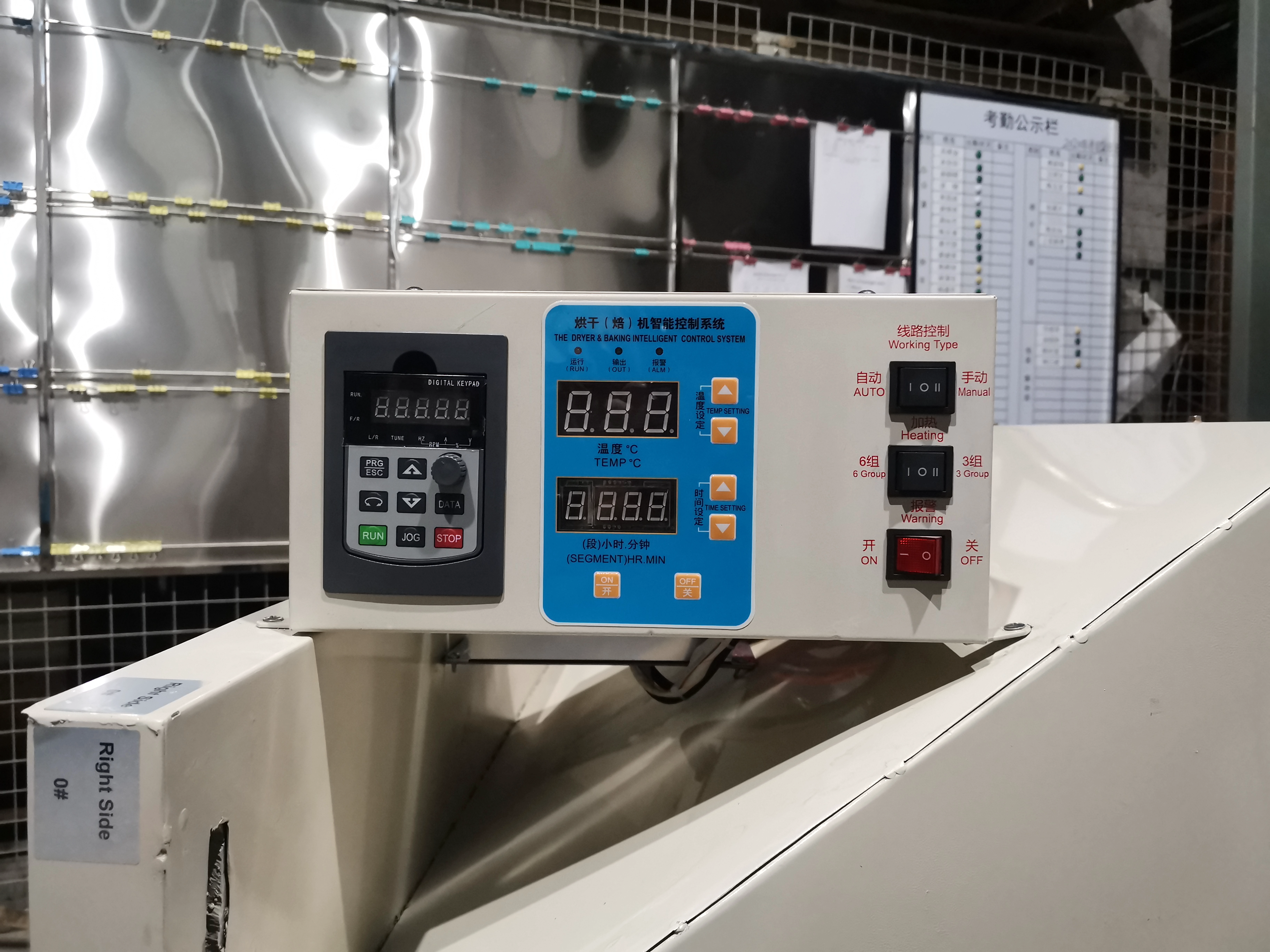
- Temperature: Maintain 20–25℃ (68–77°F) for natural withering; limit hot air to 30–38℃ (86–100°F) for mechanical withering (never exceed 40℃ to avoid leaf damage).
- Humidity: Keep relative humidity at 60–70% for optimal moisture loss. High humidity slows withering, while low humidity causes surface drying and uneven internal moisture.
- Airflow: Ensure consistent ventilation to carry away moisture. For mechanical withering, adjust fan speed to eliminate dead zones in the trough.
3. Implement Graded Withering
Classify leaves by tenderness, variety, and picking time, and wither them separately:
- Tender bud leaves: Thin spread, lower temperature, shorter withering time.
- Mature leaves: Thicker spread, slightly higher temperature, longer withering time.This guarantees uniform withering across all batches, boosting overall product quality.
4. Regular Monitoring & Leaf Turning
- For natural withering: Turn leaves every 1–2 hours to prevent local overheating and ensure even moisture loss.
- For mechanical withering: Monitor temperature, humidity, and leaf status in real time, adjusting parameters as needed.
- Withering Endpoint Standard: For green tea, target a 15–25% moisture loss rate (varies by process). Leaves should be soft, with a clear fresh aroma, no red stems, and reduced surface luster.
5. Invest in Automated, Intelligent Equipment
Upgrading to a professional withering machine is the single most effective way to improve both quality and efficiency. Automated equipment eliminates human error, reduces labor costs, and ensures consistent batch quality, even in inclement weather.
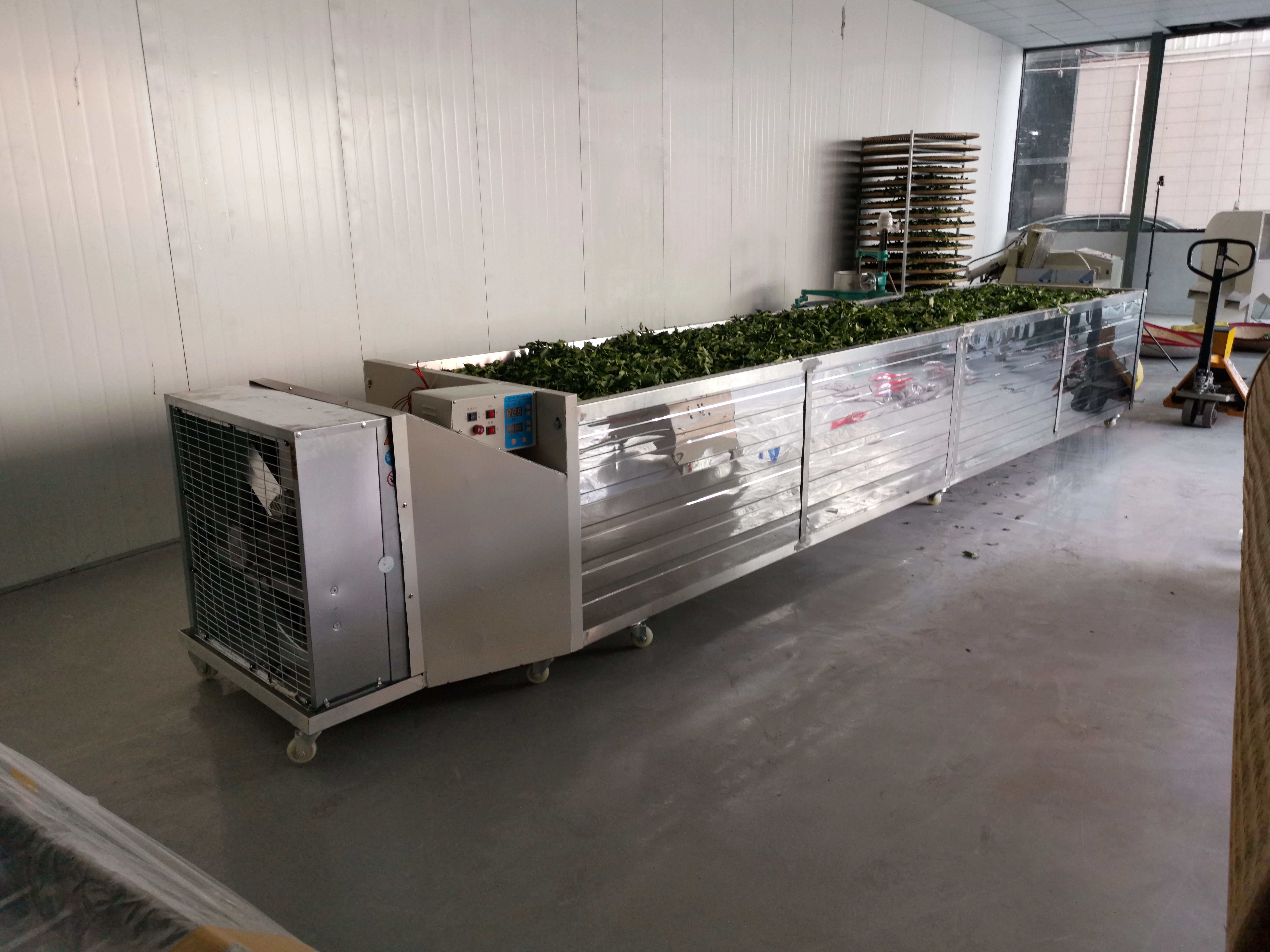
For tea producers looking to modernize their withering process, the DL-6CWD-580 5 Meters Tea Withering Processing Machine is a versatile, high-performance solution. Originally engineered for black tea and white tea withering, its fully adjustable temperature and airflow make it perfectly suited for green tea withering (tanqing), meeting the strict process requirements of green tea production.
Key Specifications
| Parameter |
Details |
| Model |
DL-6CWD-580 |
| Withering Area |
5㎡ |
| Batch Capacity |
100 kg per batch (adjustable up to 200 kg for thicker spreading) |
| Total Heating Power |
15 KW (3 independent heating groups) |
| Fan Power |
250 W |
| Voltage |
380V 50HZ |
| Dimensions |
580010001050 mm (LWH) |
| Adjustable Features |
Temperature, hot air volume |
| Withering Time Reduction |
Up to 80% compared to natural withering |
Core Advantages
- Ultra-High Efficiency: Cuts withering time by ~80% vs. traditional natural withering, drastically boosting production capacity and cutting labor costs.
- Precise, Customizable Control: Fully adjustable temperature and airflow let you tailor the process for green tea, black tea, or white tea, ensuring consistent, premium quality for every batch.
- Scalable Production: 5-meter-long trough with 5㎡ of withering area, handling 100kg of fresh leaves per batch, ideal for small-to-medium tea factories.
- Versatile Applicability: Suitable for withering/airing processes for all major tea types, making it a high-ROI investment for your entire processing line.
- User-Friendly Design: Intuitive control panel, durable stainless steel construction, and low maintenance requirements for long-term, reliable operation.
Why It’s Perfect for Green Tea Production
The DL-6CWD-580 solves the biggest pain points of traditional green tea withering: weather dependence, low efficiency, and quality fluctuation. Its low-temperature, adjustable hot air system preserves the fresh aroma and umami of green tea while accelerating production, making it ideal for both bulk and premium green tea manufacturing.
Conclusion
Withering is the "first step to great tea" in green tea processing. By understanding the classification of withering methods, implementing scientific process controls, and adopting advanced equipment like the DL-6CWD-580, you can transform your withering process to deliver higher-quality green tea and far greater production efficiency.
Whether you are a small artisanal tea maker or a large-scale tea factory, optimizing the withering process is the key to producing green tea that stands out in the global market.
If you are interested in learning more about the DL-6CWD-580 or other tea processing solutions, contact us for professional guidance tailored to your production needs!