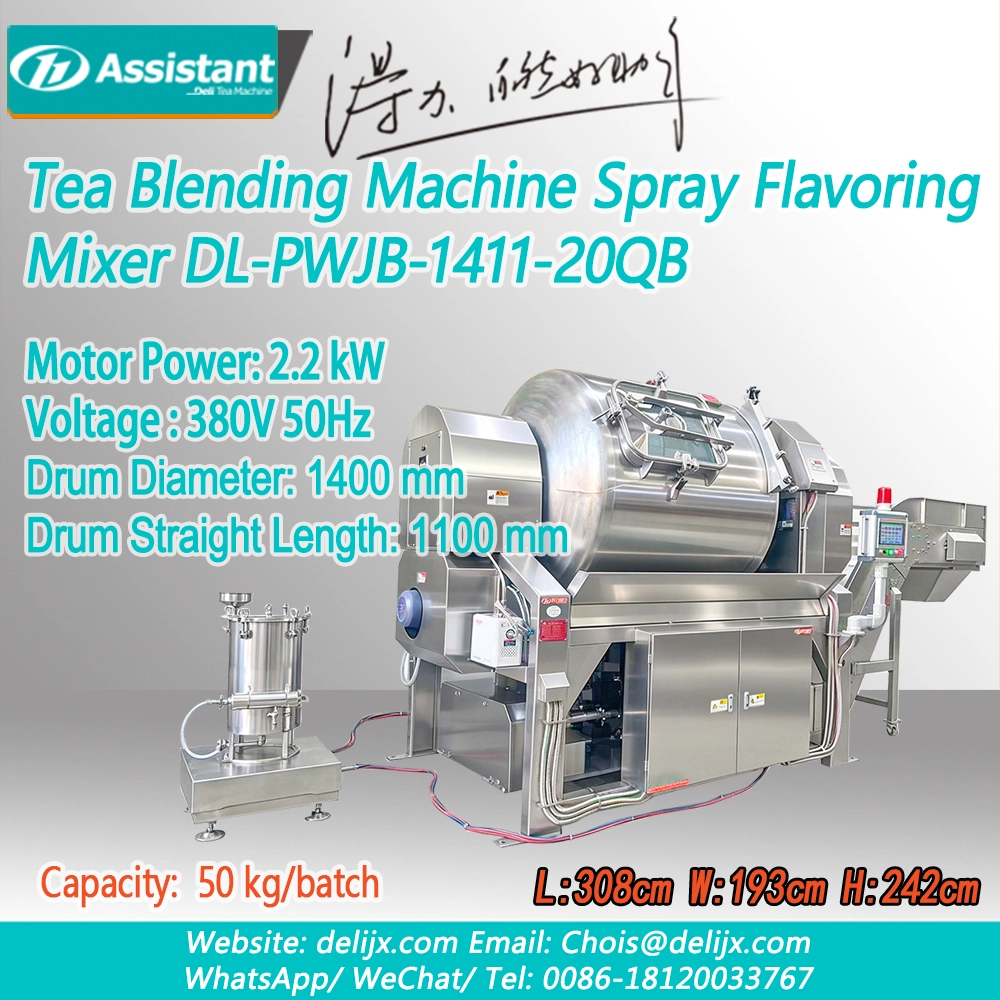
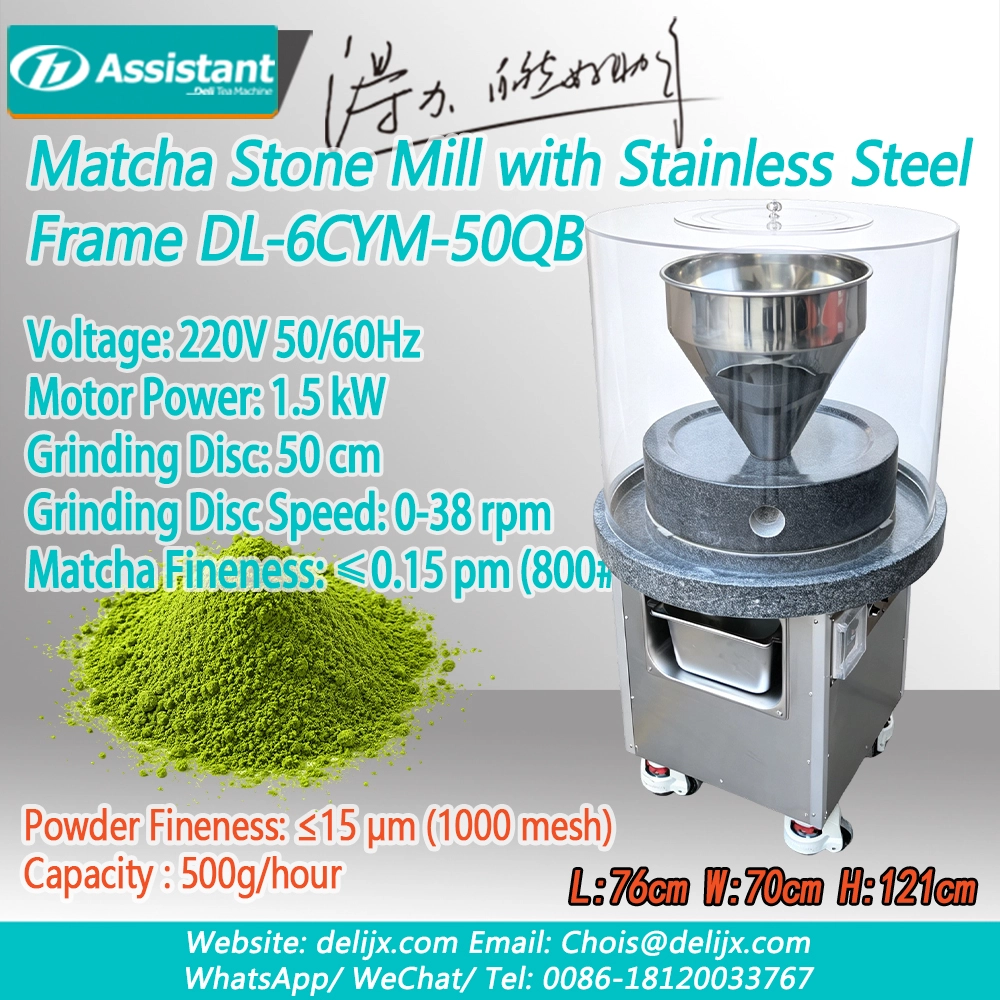
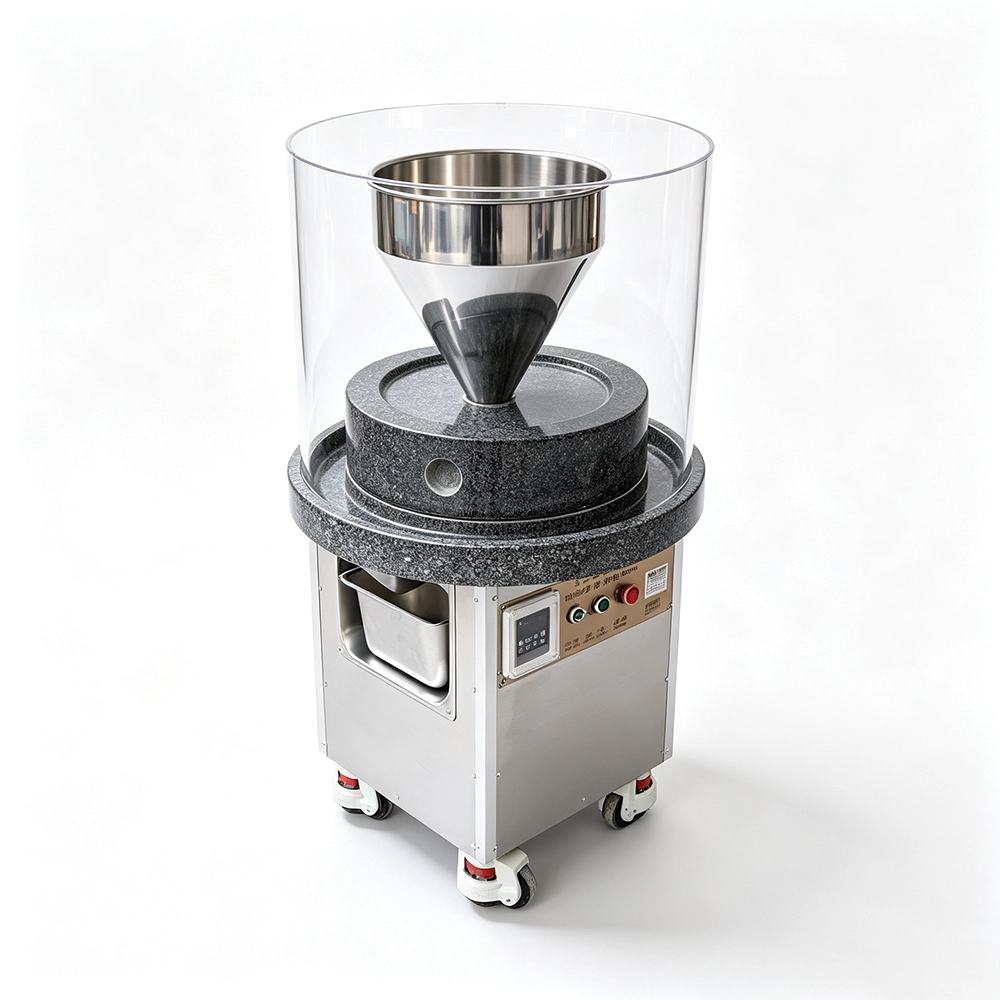
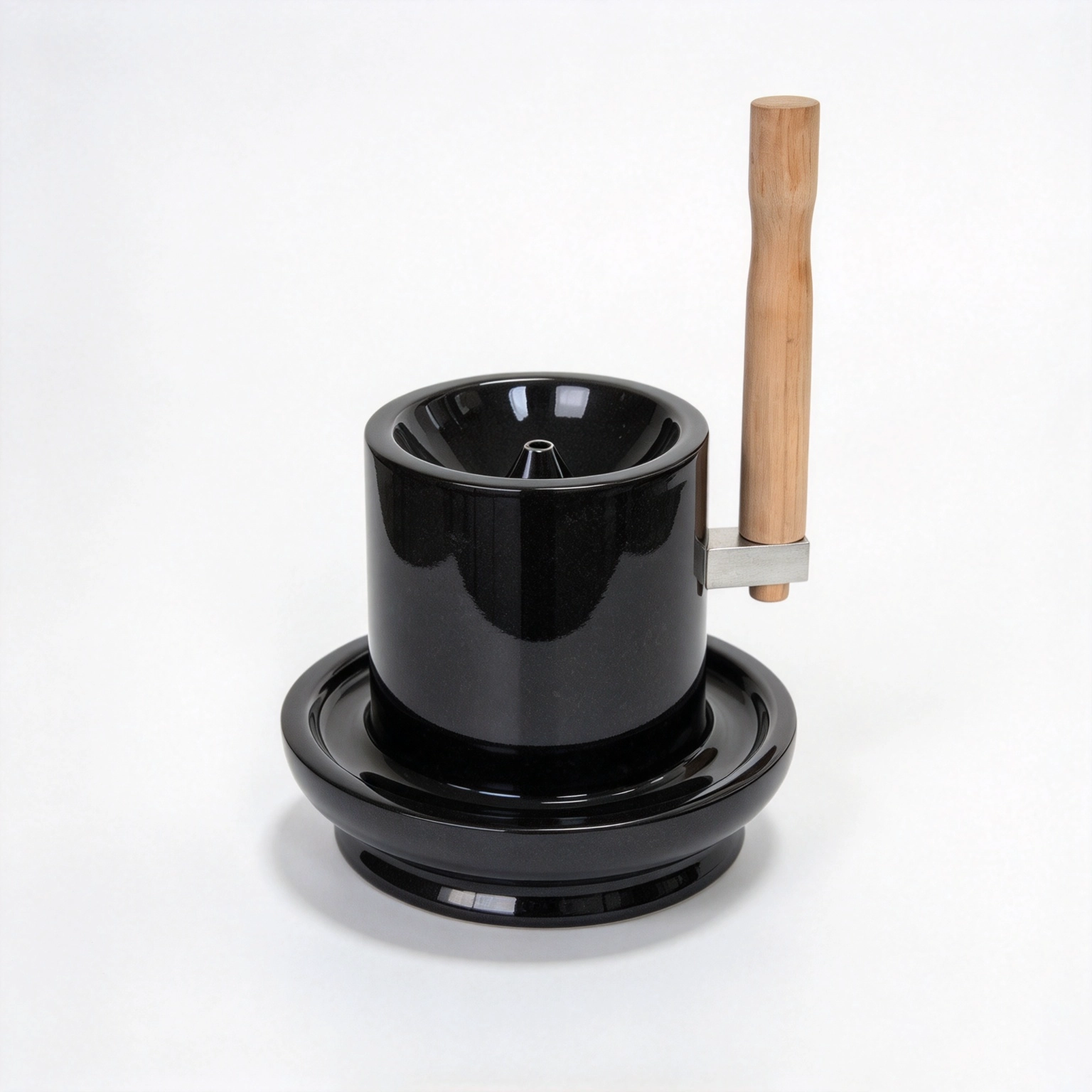
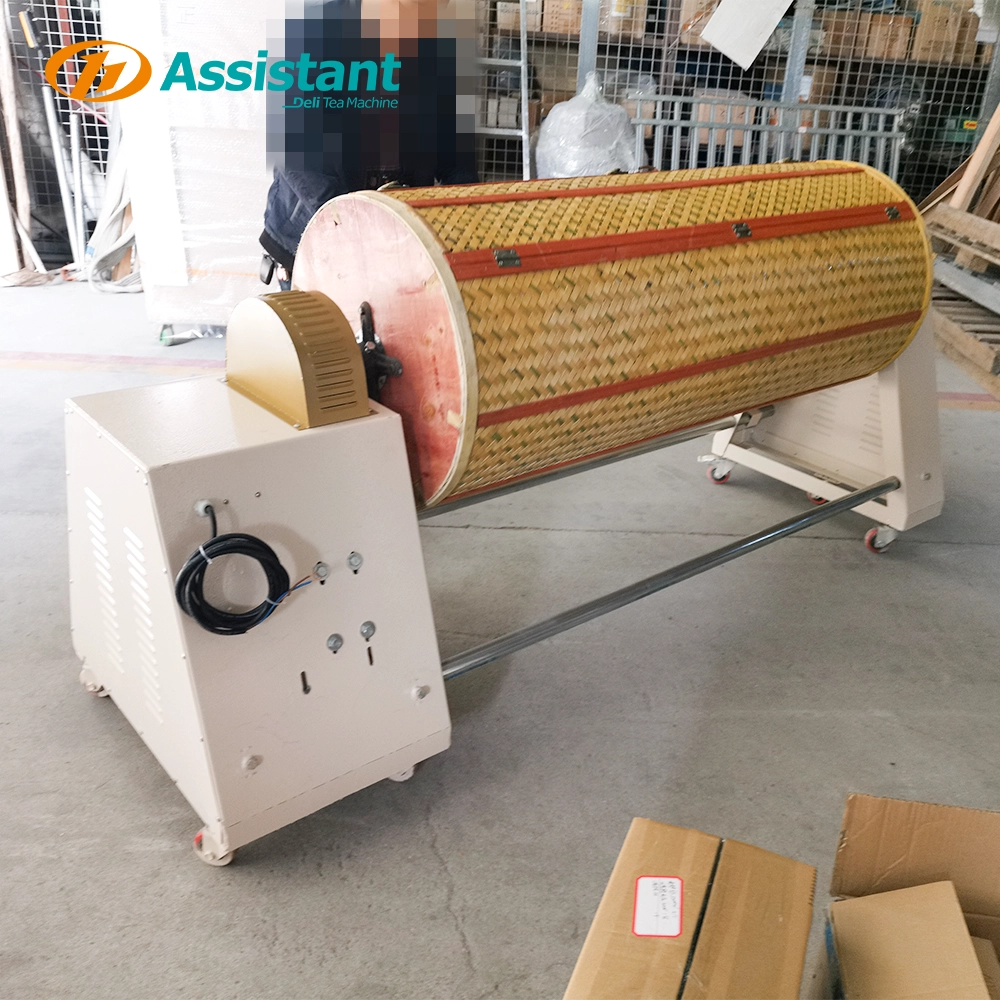
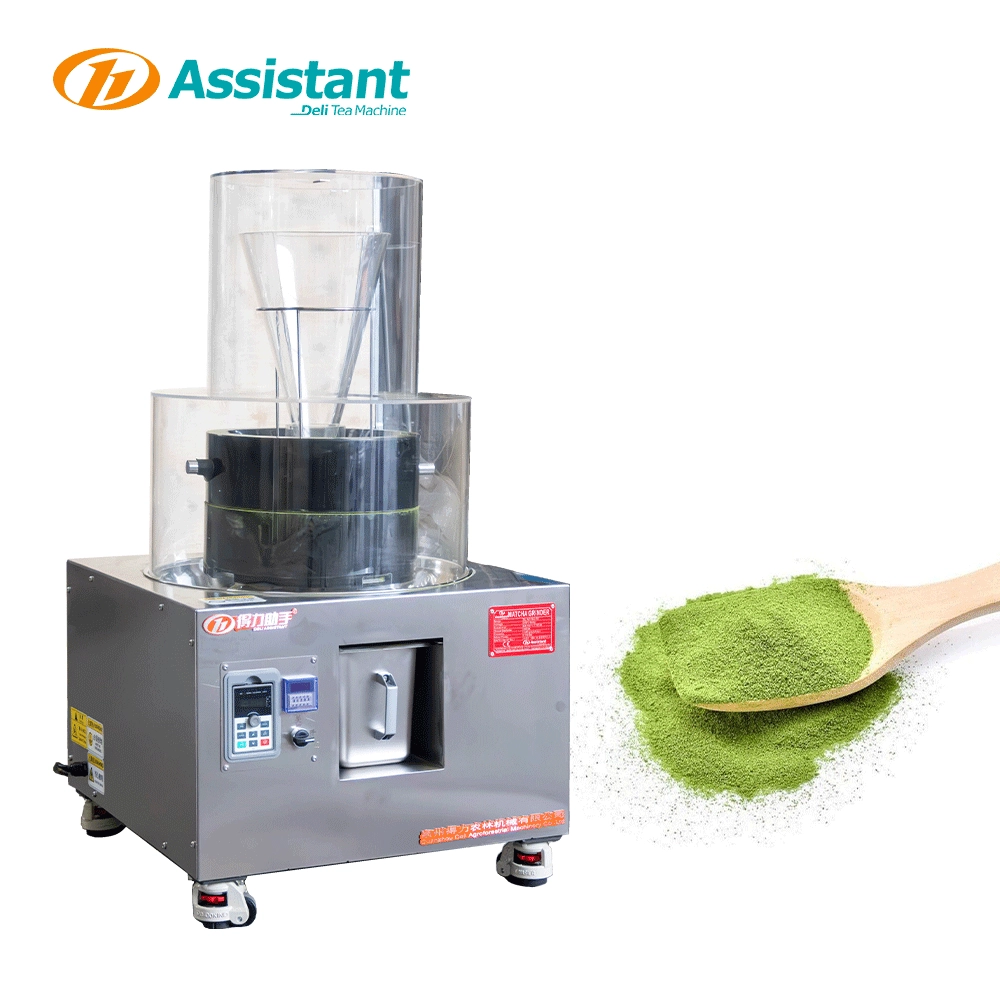
As matcha continues to surge in popularity worldwide as a staple for healthy beverages and gourmet bakeries, market demand is growing rapidly. For tea processing plants, beverage brands, and bubble tea suppliers, choosing the right matcha grinding equipment is the key to ensuring product quality, taste, and production efficiency.
Currently, matcha production processes are generally categorized into two main categories: Stone Milling and Ball Milling. Stone milling is further divided into Black Gold Stone Mills and Blue Stone Mills, while ball milling includes single-unit batch ball mills and continuous ball mills. This guide provides a detailed analysis of the materials, craftsmanship, pros, and cons of these four major matcha grinding machines to help you choose the ideal solution for your business.
I. Quick Comparison of Four Matcha Grinding Equipment Types
| Equipment Type |
Grinding Medium / Material |
Core Working Principle |
Production Efficiency (Capacity) |
>800 Mesh Fine Powder Share |
Ideal Application Scenarios |
|
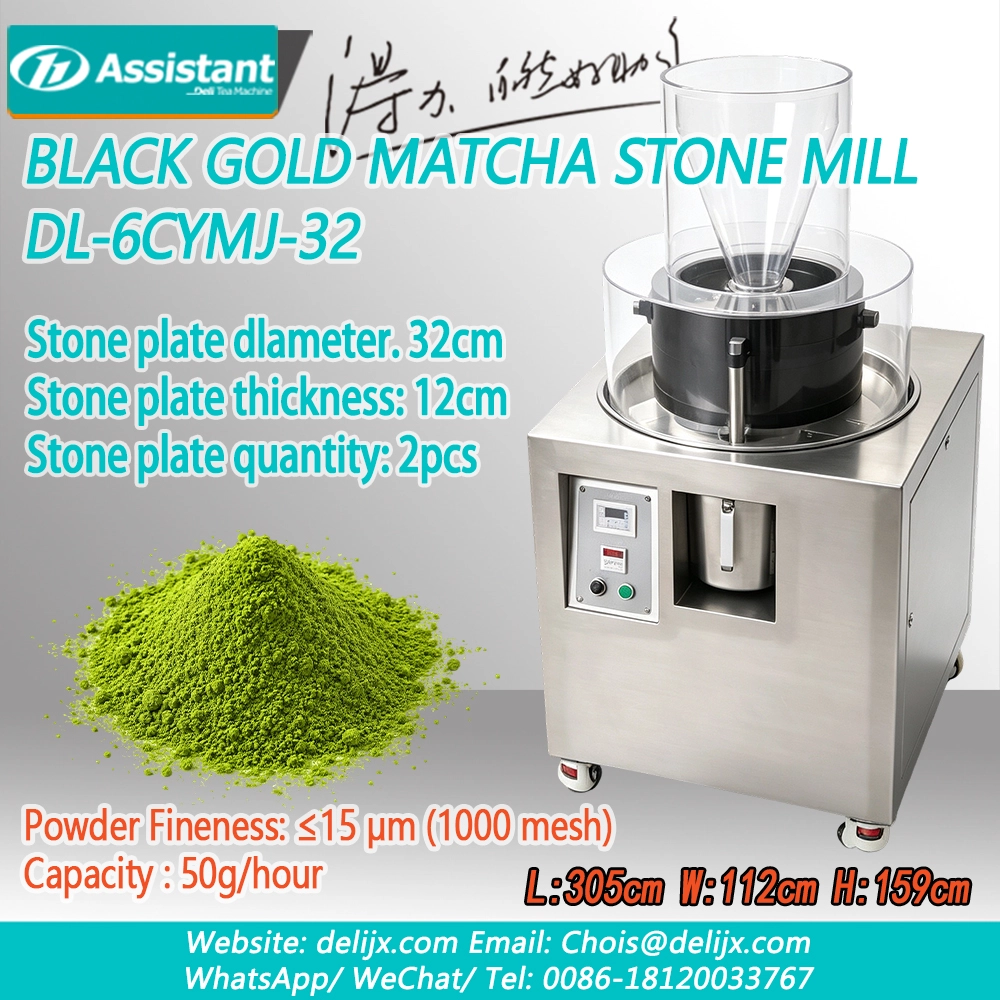
1. Black Gold Stone Mill
(DL-6CYMJ-32)
|
Wujin Stone
(Mohs hardness 7-7.5)
|
Compression, friction, and surface groove shearing
|
Approx. 50 g/hour
|
81.35%
|
Small factories, bubble tea shops, high-end cafe displays
|
|
2. Large Blue Stone Mill
(DL-6CYMJ-50QS)
|
Fujian Blue Stone
(Mohs hardness 6.5-7)
|
Stirring, friction, and special groove shearing
|
Approx. 300 g/hour
|
81.23%
|
Medium-to-large factories, commercial bulk production, showroom displays
|
|
3. Batch Ball Mill
(Batch Ball Mill)
|
Zirconia-aluminum mixed beads
|
High-speed throwing impact + late-stage low-speed friction
|
Approx. 25 kg/batch
|
70.16%
|
Medium-to-large matcha factories seeking independent fineness control
|
|
4. Continuous Ball Mill
(Continuous Ball Mill)
|
95% zirconia beads (approx. 5mm)
|
Damping screw agitation, rolling friction, and pressure
|
Approx. 15-25 kg/hour
|
68.05%
|
Large-scale matcha processing plants focusing on high-volume continuous output
|
II. In-Depth Analysis of the Four Equipment Types
1. Black Gold Stone Mill (DL-6CYMJ-32)
-
Material & Hardness: Crafted from premium Wujin stone with a Mohs hardness of 7–7.5.
-
Features: Designed with a compact stainless steel base, making it neat and exquisite. It boasts extremely low heat generation during operation, maximally preserving the natural chlorophyll and unique flavor profile of the tea leaves.
-
Best Applications: Perfect for live demonstrations in high-end beverage shops and cafes, as well as small-scale premium matcha production.
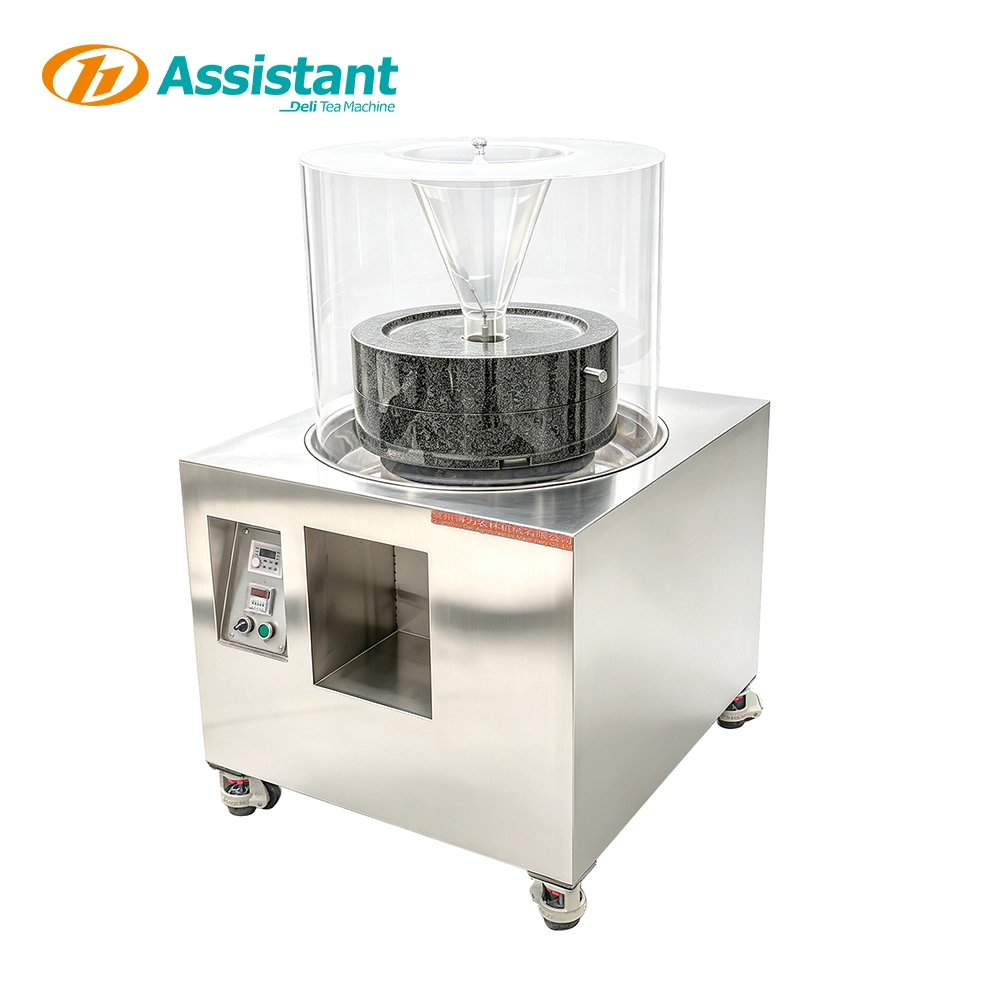
2. Large Blue Stone Mill (DL-6CYMJ-50QS)
-
Material & Hardness: Made of Fujian blue stone with a Mohs hardness of 6.5–7.
-
Features: Compared to traditional small mills, the millstone diameter is increased from 32cm to 50cm, boosting output by 6 times to 300 grams per hour. The discharge port is widened to 8cm to handle coarser tencha. It can be customized into an automated feeding production line for unattended, fully automatic operation.
-
Best Applications: Commercial batch production in medium-to-large matcha factories and factory exhibitions.
3. Batch Ball Mill (Batch Ball Mill)
-
Working Principle: High-speed drum rotation hurls grinding balls upward to drop and impact larger tencha into smaller pieces. During rotation, mutual ball friction refines the tea into ultra-fine matcha powder. Early stages rely on high speeds for impact; later stages slow down to maximize friction for superior fineness.
-
Features: Versatile with tea varieties—suitable for oolong, black, green, and white teas. Options include conventional mechanical knobs or programmable PLC controls.
-
Best Applications: Medium-to-large matcha processing plants looking for independent, customizable fineness control.
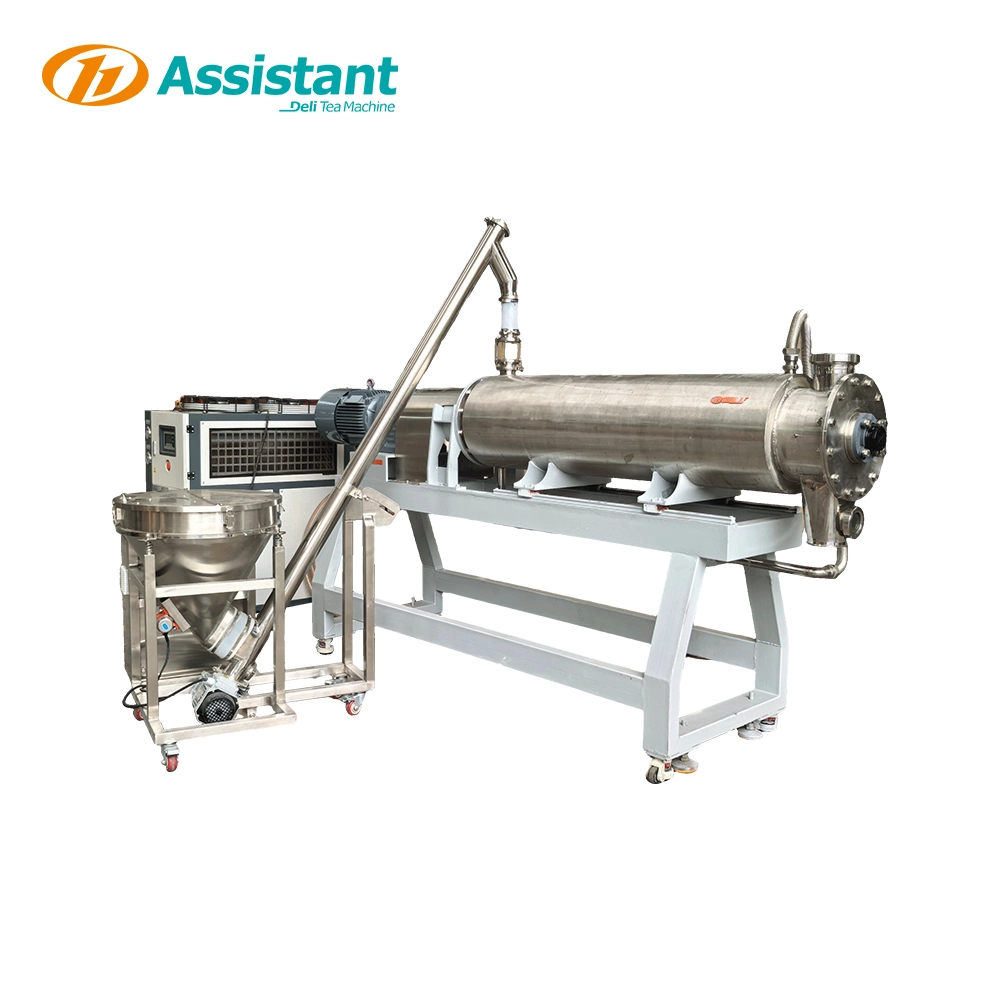
4. Continuous Ball Mill (DL-DQM-150)
-
Working Principle: Small-diameter zirconia beads (approx. 5mm) are agitated by a stainless steel damping screw driven by the main shaft. Rolling friction and pressure between beads accelerate tea crushing and ultra-fine pulverization.
-
Features: Must be used alongside an automatic feeder and a water chiller. Offers a high production rate of 15–25 kg/hour, built for heavy industrial throughput.
-
Best Applications: Large-scale matcha processing facilities aiming for mass continuous production.
III. Particle Size Testing & Compliance
According to China's National Matcha Standard GB/T 34778-2017, standard matcha particle sizes of $\le 18$ microns (800 mesh) must account for over 60%. Laboratory test results from Deli Agroforestrial Machinery demonstrate:
-
Stone Mill Series (Blue Stone and Black Gold Stone) achieve an 800-mesh fine powder proportion exceeding 81%, offering extremely high chlorophyll retention and minimal flavor degradation.
-
Ball Mill Series (Batch and Continuous) achieve 800-mesh proportions of 70.16% and 68.05% respectively, fully complying with national standards while providing unmatched mass-production efficiency.
Conclusion
-
If you run a high-end tea house, cafe, or boutique brand prioritizing exceptional flavor and visual presentation, the Black Gold Stone Mill is your ultimate choice.
-
If you operate a medium-to-large factory seeking to scale up commercial output while retaining traditional stone-ground quality, the upgraded Large Blue Stone Mill is recommended.
-
If you process diverse tea types and need flexible control over grinding parameters, the Batch Ball Mill fits your needs.
-
If your goal is industrial-scale, high-volume continuous manufacturing, the high-efficiency Continuous Ball Mill serves as the core growth engine for your operations.