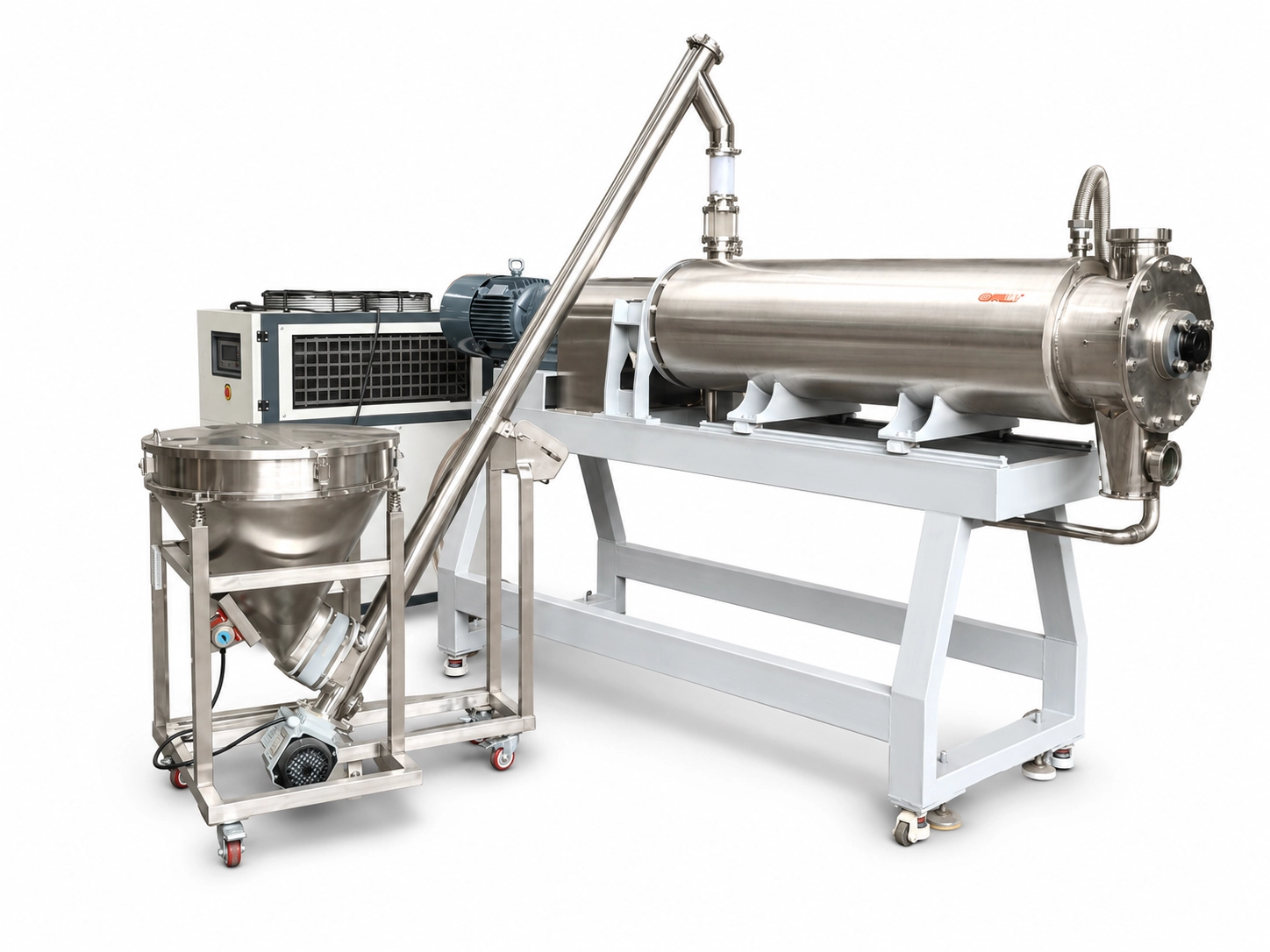
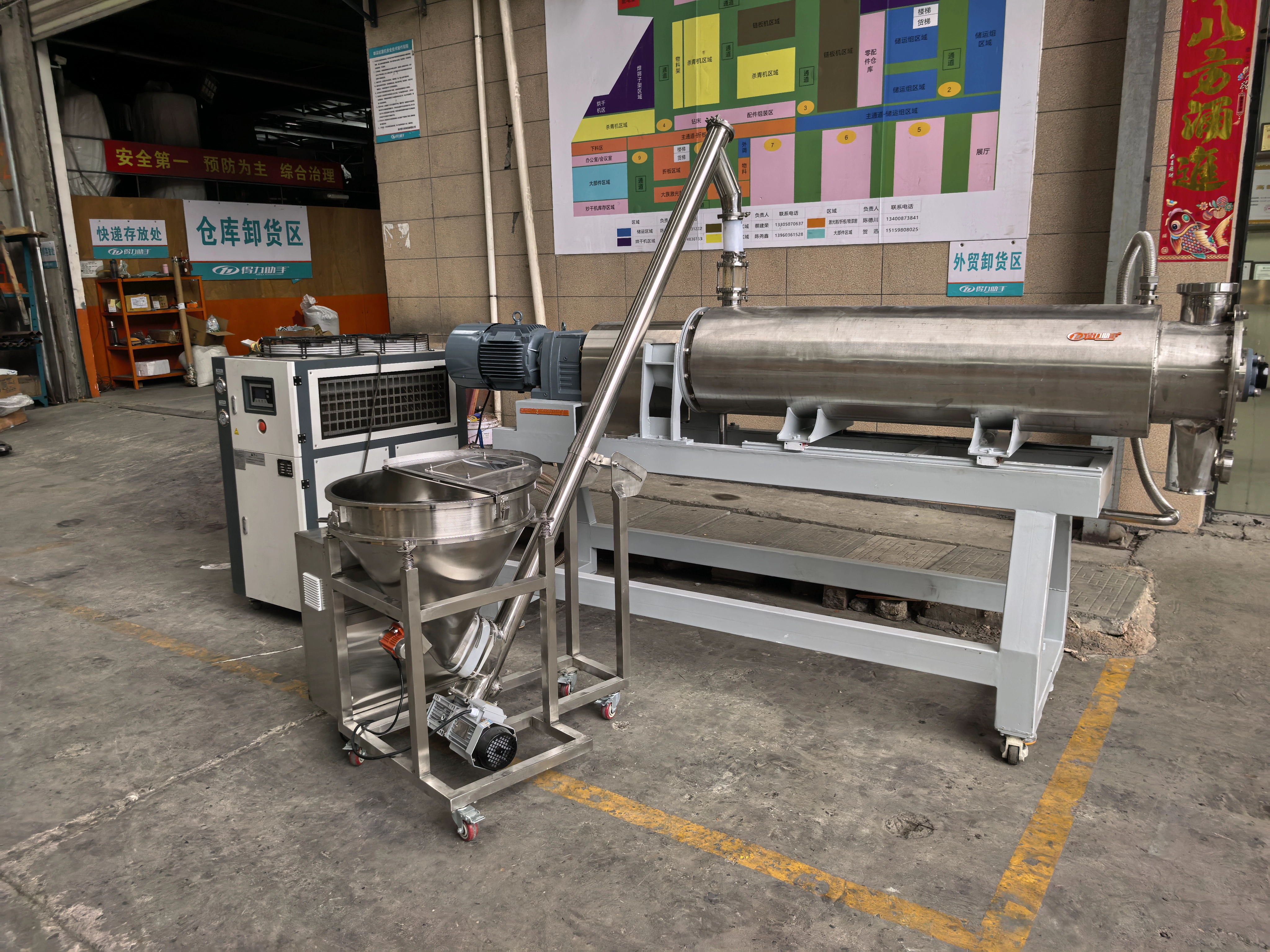
The Deli Assistant DQM‑150 is a dedicated continuous ball mill engineered for large‑volume ultrafine pulverization of various tea varieties, including matcha, green tea, oolong, black tea, white tea, dark tea and yellow tea. Compared with traditional batch‑type ball mills, this continuous‑flow grinding solution boosts production efficiency by more than ten times, delivering evenly‑sized fine powder up to 2500 mesh while locking natural tea aroma and color via low‑temperature water‑cooled design. The complete set consists of three core modules: automatic screw feeding unit, ball‑grinding main host, and independent water chiller cooling system. Food‑grade 304 stainless steel construction meets food‑processing hygiene standards. Free material test‑run service and on‑site installation guidance are available.
Main Technical Parameters
表格
| Item |
Specification |
| Model |
DQM‑150 |
| Grinding Tank Volume |
110 L (304 stainless steel jacketed cylinder) |
| Feeding Hopper Capacity |
60 L |
| Max Processing Capacity |
1500 kg/h |
| Grinding Media |
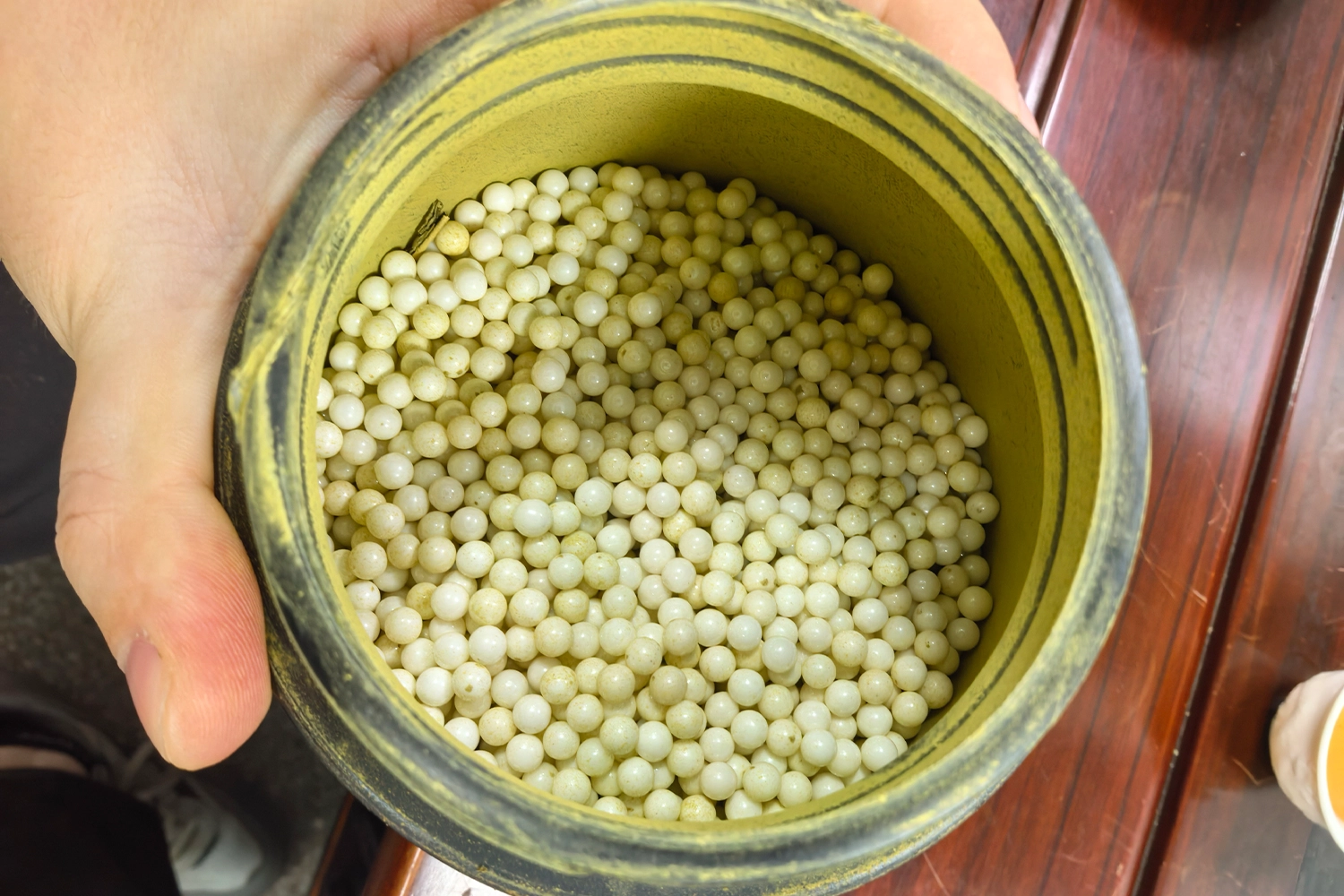
Food‑grade 95 zirconia beads |
| Fineness Range |
Adjustable, maximum 2500 mesh |
| Main Host Rotation Speed |
27‑242 r/min adjustable |
| Feeding Screw Speed |
0‑300 r/min adjustable |
| Main Motor Power |
11000 W pure‑copper motor |
| Chiller Model |
XC‑8HP |
| Cooling Temperature Range |
5‑20 °C adjustable |
| Output Powder Temperature |
Around 40 °C |
| Screw Diameter |
Φ114 mm |
| Overall Dimension |
14407001450 mm |
| Machine Weight |
270 kg |
Working Principle
Raw tea materials are loaded into the 60L feeding hopper. A variable‑speed reduction motor drives the flexible screw conveyor to transport tea fragments continuously into the sealed grinding cylinder. Inside the 110‑L main tank, high‑purity 95 zirconia beads are driven by the main stirring shaft. Tea materials are pulverized by mutual friction, squeezing and shearing between rolling zirconia beads. The damping screw structure accelerates bead movement to enhance crushing performance.
The jacketed grinding cylinder connects with the external water chiller. Circulating chilled water continuously takes away friction heat generated during high‑intensity grinding, maintaining low‑temperature milling conditions to avoid thermal damage to tea chlorophyll and aromatic substances. Finished fine tea powder flows out continuously from the discharge outlet. Operators can switch collecting barrels without stopping the whole machine via the butterfly valve.
Core Structure & Key Details
- Automatic Screw Feeding Unit The feeding assembly includes a 60‑L large‑volume stainless‑steel storage hopper, flexible spiral conveyor, vibration switch, forward‑reverse rotation switch and reduction drive motor. The vibration switch shakes residual tea materials off hopper inner walls to prevent material buildup. Forward rotation delivers tea raw materials toward grinding chamber; reverse rotation discharges leftover residues. A transparent visual observation window is installed on the feeding pipeline for real‑time monitoring of material feeding progress. Operators adjust screw rotation speed to control feeding volume, realizing unattended continuous feeding without frequent manual charging.
- Ball‑Grinding Main Host The grinding chamber is triple‑layer 304 stainless‑steel structure: outer protective shell, middle water‑cooling jacket layer and inner grinding cavity. Two inspection ports are reserved: upper port for checking grinding status and preventing zirconia bead leakage; lower observation port for cleaning residual powder. The butterfly valve at powder outlet supports barrel replacement without shutdown. Heavy‑duty pure‑copper reduction motor supplies stable power, and rotation speed can be fine‑tuned according to target powder fineness requirement. Universal casters and leveling feet allow convenient relocation and horizontal positioning of the unit.
- Low‑Temperature Water‑Cooling Chiller System The independent XC‑8HP water chiller is fitted with high‑power cooling fans, pressure gauges and digital control panel. Users set cooling temperature within 5‑20 °C. Chilled water circulates through the intermediate jacket of grinding cylinder to dissipate frictional heat constantly. The final powder temperature stays around 40 °C. Low‑temperature milling effectively retains tea natural color, flavor and active components, avoiding yellowing and off‑flavor caused by overheating in ordinary un‑cooled ball mills.
Operation Instructions
- Pre‑inspection: Confirm that all pipeline connections are tight; check zirconia bead filling status, chiller water level and power supply condition.
- Parameter setting: Set target cooling temperature on chiller panel; adjust main‑host rotation speed and screw feeding speed according to tea material characteristics and required powder fineness. Start the chiller for pre‑cooling.
- Feeding preparation: Pour dried tea raw materials into the 60L feeding hopper.
- Start production: Activate feeding screw (forward rotation), turn on hopper vibration function, then start grinding main host. Observe material flow status via transparent feeding sight glass.
- Powder collection: Place collecting bucket under discharge opening. When replacing full powder bucket, close the discharge butterfly valve, swap empty bucket and reopen valve to resume continuous collection, no full‑machine shutdown needed.
- Shutdown procedure: Stop feeding screw first, run main host for short period to empty residual material, then reverse‑rotate feeding screw to clear leftover materials inside conveyor pipeline, finally shut down main motor and chiller. Conduct chamber cleaning after machine cools down.
Applicable Materials
Suitable for superfine grinding of diverse dried tea leaves:
- Green tea: Longjing, Biluochun, Huangshan Maofeng for matcha‑style green tea powder
- Oolong tea: Tieguanyin, Da Hong Pao, Fenghuang Dancong
- Black tea: Lapsang Souchong, Jin Jun Mei, Keemun black tea
- White tea: Baihao Yinzhen, Bai Mudan, Gongmei, Shoumei
- Dark tea: Pu‑er tea, Anhua dark tea, Liubao tea
- Yellow tea: Junshan Yinzhen, Mengding yellow bud, Huoshan yellow bud
Notes & Attention Points
- Raw‑material requirement: Tea leaves must be fully dried before grinding. High‑moisture tea will cause caking inside grinding tank and affect powder quality.
- Temperature management: Do not run the grinding host without turning on the water‑cooling chiller. Long‑time grinding without cooling will produce excessive heat and degrade tea powder quality.
- Zirconia bead maintenance: Periodically inspect wear condition of zirconia grinding beads; replenish or replace beads when serious abrasion appears to guarantee grinding fineness.
- Hygiene maintenance: Disassemble and clean feeding pipeline, grinding cavity and powder‑contact components when switching different tea varieties, to prevent cross‑contamination of tea aroma.
- Operation safety: Keep hands away from rotating screw and driving components during running. Do not open inspection ports while the machine is in operation.
- Parameter debugging: For new tea varieties, it is recommended to perform trial grinding first, adjust feeding speed and host rotation speed to obtain ideal powder fineness. Material sample test‑run service is supported.
- Compare with traditional intermittent ball mill: Traditional models use alumina grinding beads which risk metal impurity mixing; they have no water‑cooling structure and generate high temperature after long‑time milling, and need batch‑wise stop‑and‑reload feeding, with much lower overall throughput.
After‑sales Support
Deli Assistant provides sample test‑run service with customer‑supplied raw tea materials, full‑video recording of testing process, professional on‑site installation and operation training for operators.