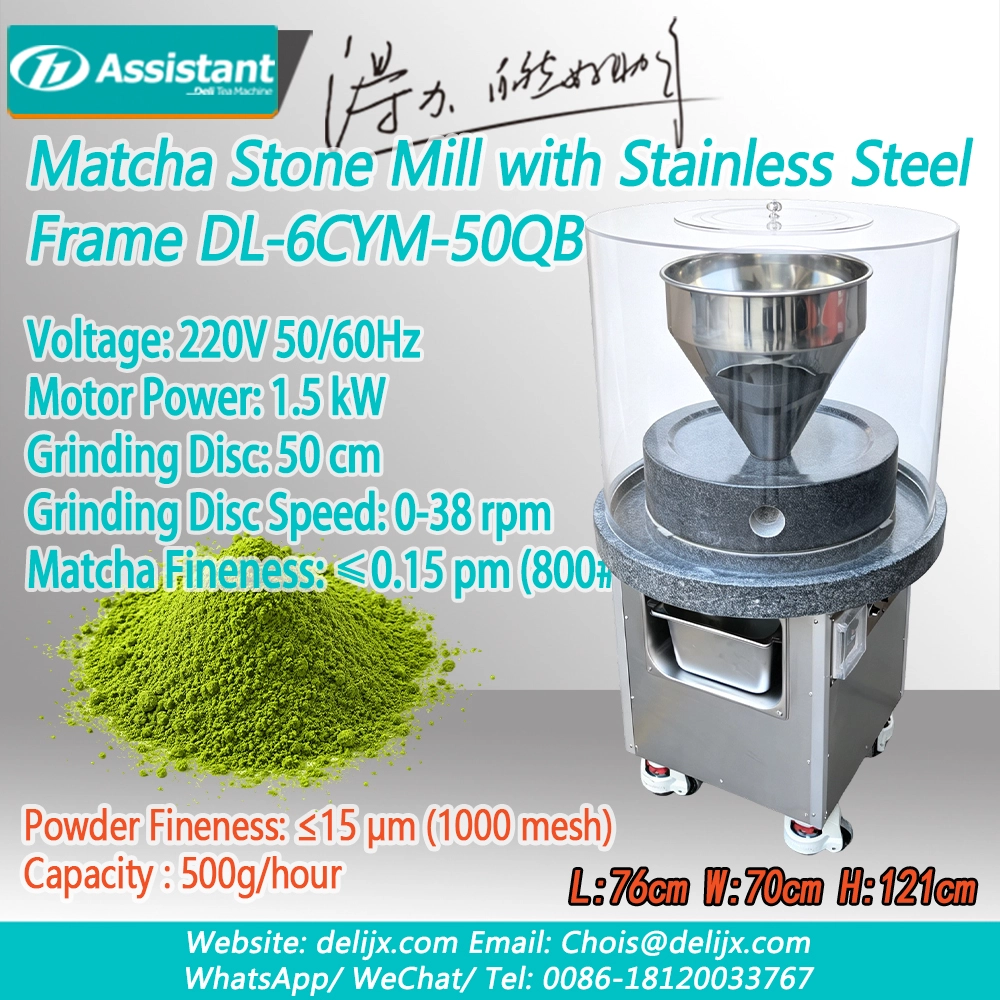
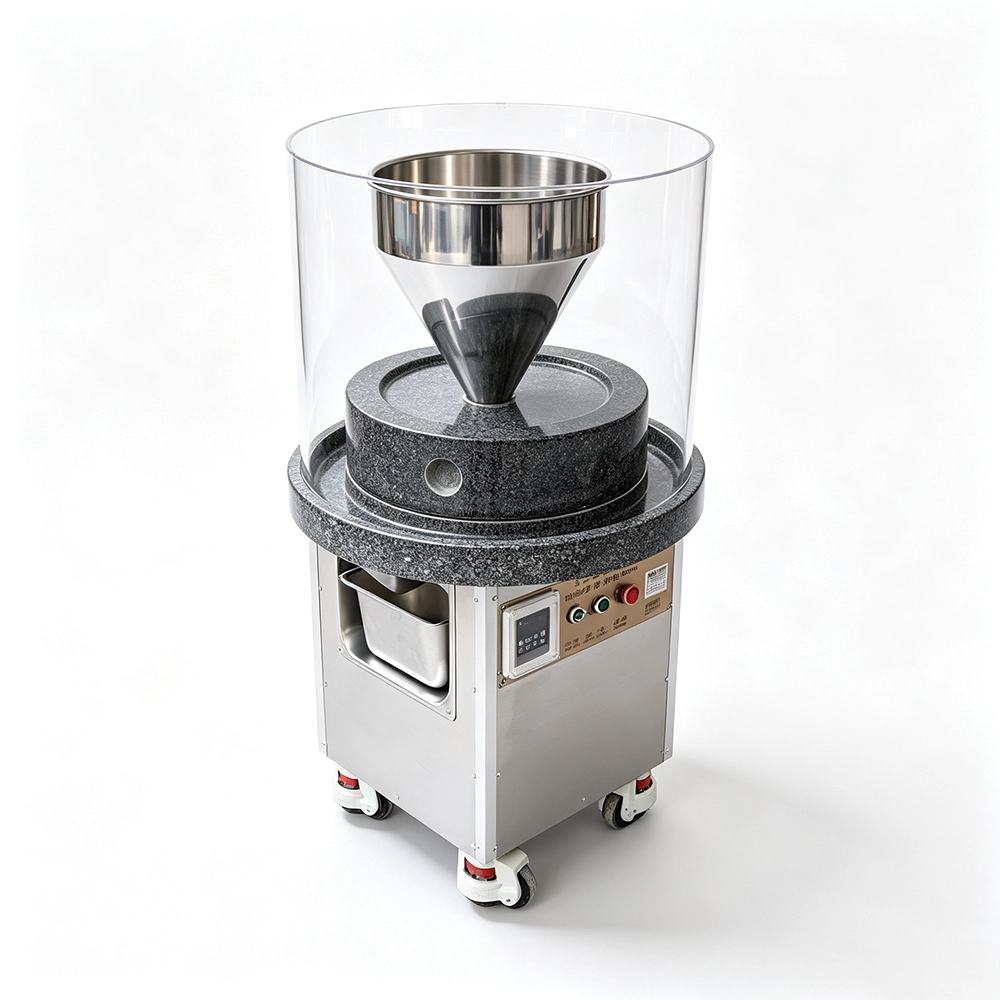
6CMJY-50QB stainless steel custom base matcha green stone mill, natural granite stone plate, low-speed cold grinding. Preserve tea aroma, produce ultra-fine matcha powder. Stainless steel frame with casters, suitable for tea shops, labs and small-batch matcha production.
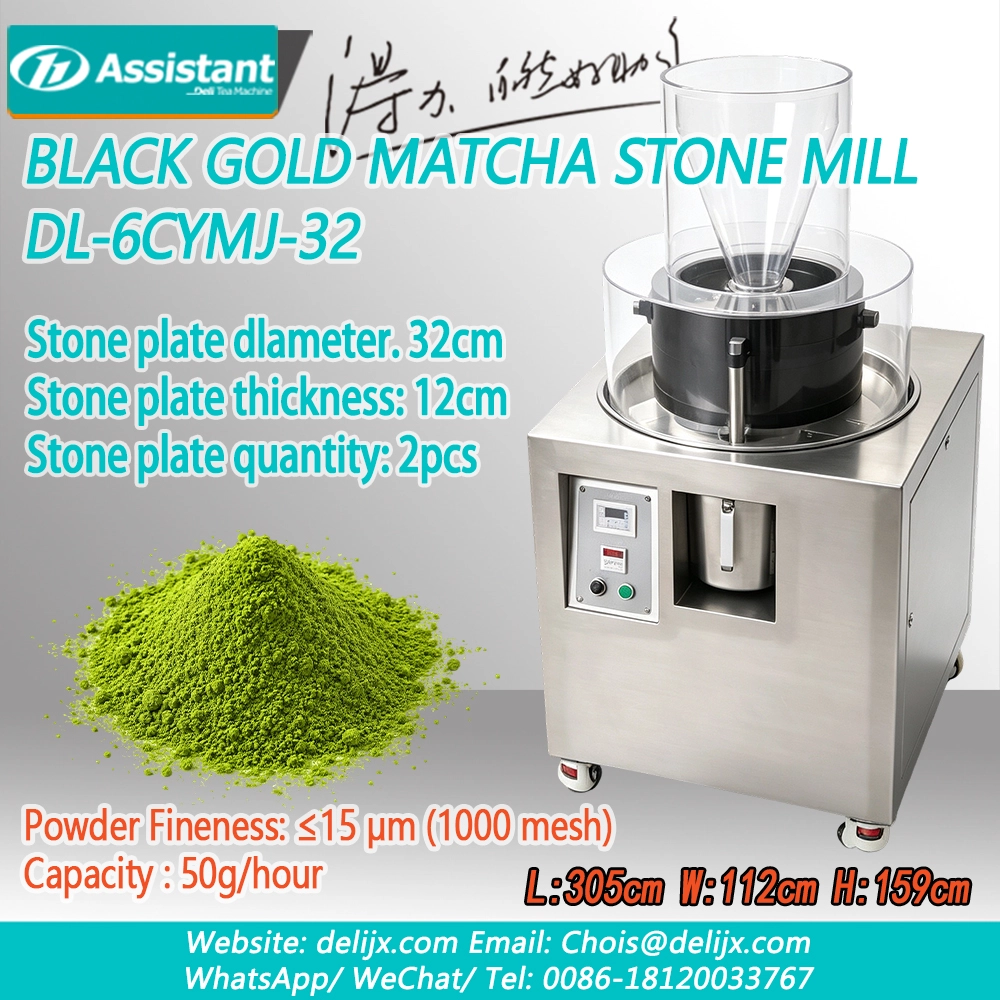
Custom heightened small matcha stone mill DL-6CYMJ-32M, equipped with 30cm natural stone plates. Low-speed low-temperature grinding, produce ultra-fine matcha powder ≤15μm. 50g/h capacity, stainless steel body, ideal for boutique tea shops & small-batch matcha production.
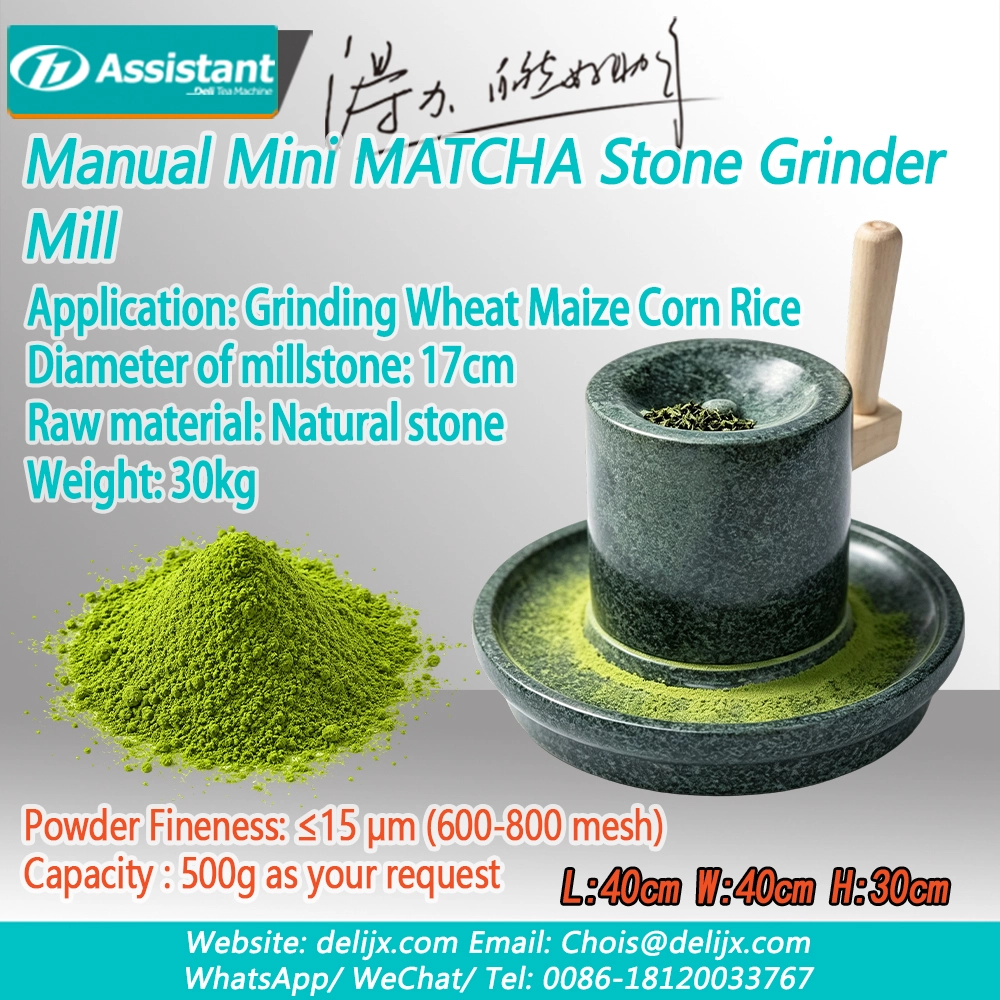
Manual Matcha Stone Mill is a traditional hand-operated grinder made from natural stone, designed for producing fresh and authentic matcha powder. With a slow grinding process and low heat generation, it helps preserve the natural color, aroma, and flavor of tea leaves. Compact and durable, it is ideal for matcha cafes, tea houses, restaurants, cultural experience shops, and small-batch matcha production.
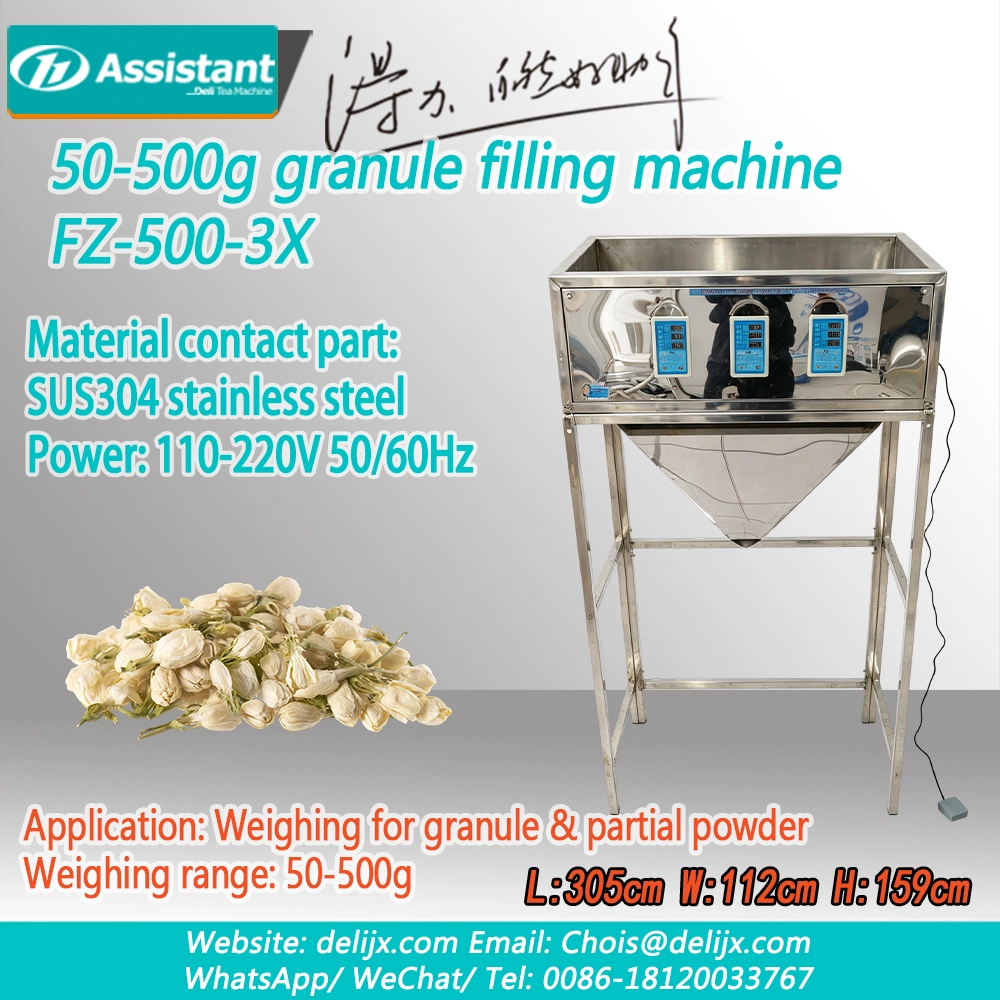
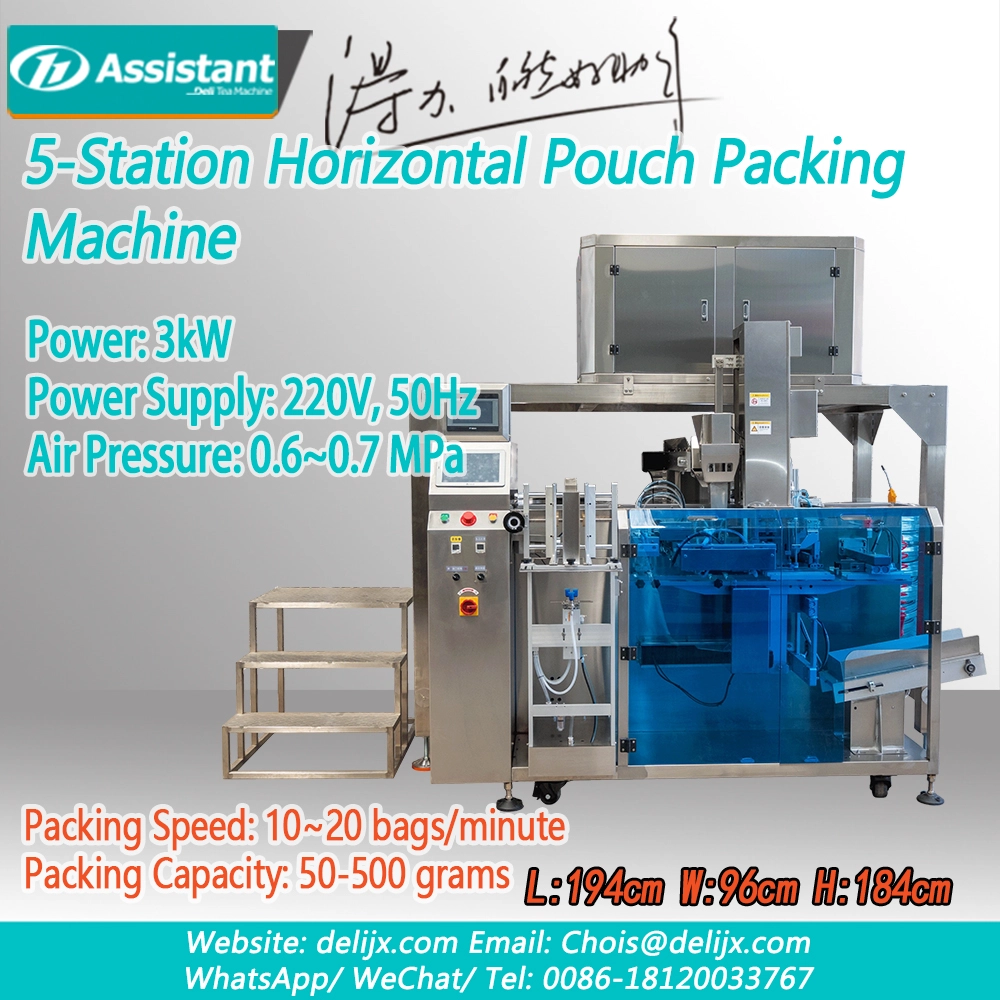
This 5-station horizontal pouch packing machine handles M bags, flat pouches and zipper pouches for 50–500g granular materials like tea. It automatically finishes weighing, filling, vacuuming and sealing with servo control, supporting multiple optional accessories.
The electrostatic cleaner adsorption generated by 4-10 electrostatic rollers extracts impurities in the tea, such as hair, broom bristles, tea fluff ash, thatch, woven bag silk, plastic scraps, iron filings, etc.
DL-6CJDCZ-780-5 electrostatic dust removal cleaner adopts five 780mm rollers. Powered by 1.5kw (380V 50Hz) with dual vibration motors, it delivers cleaning efficiency over 92% and hourly capacity ≥300kg. Optimized electrostatic separation design effectively clears lint, dust and lightweight foreign contaminants in tea. With mature conveyor and sorting bed structure, this machine balances processing yield and purification effect, a cost-effective option for medium-scale tea production lines.
This White Stone Matcha Mill can grind tea leaves into 15μm ultrafine matcha powder.
The DQM-150 features a robust 110L inner and outer 304 stainless steel tank powered by an 11kw pure copper core reduction motor. The machine employs an automated feeding system with a 60L large-capacity hopper, transferring raw materials via a flexible screw conveyor driven by a speed-adjustable motor (0-300r/min).
The purpose of tea rolling is to make the initial shape, and to break the leaf cells to increase the flavor concentration of the finished tea. In green tea processing, except for a few famous green teas, rolling is generally an indispensable process.
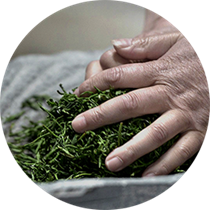
Common failures, causes and solutions of tea kneading machines:
(1) The kneading bucket does not rotate or reverse. The reason for the non-rotation is that the head screw between the active crank arm and the active shaft is loose, and the motor output V-belt is loose and slipping. The reason for the reverse rotation is the wrong three-phase electrical connection of the motor. The solutions are: tighten the head screw, tighten or replace the V-belt; exchange any two input power cables of the motor.
(2) The running noise is loud. The reasons include insufficient lubricating oil in the gear reducer, wear of the gears in the reducer, and the motor fan touching the shell. The solutions are: add enough lubricating oil, replace gears, and adjust the fan housing;
(3) The kneading lid of the single-arm kneading machine collides with the kneading barrel. The reasons are that the fastening bolts at the lower end of the single-arm column are loose, and the connecting screws between the gland and the gland are loose. The solution is: tighten the loose screw.