





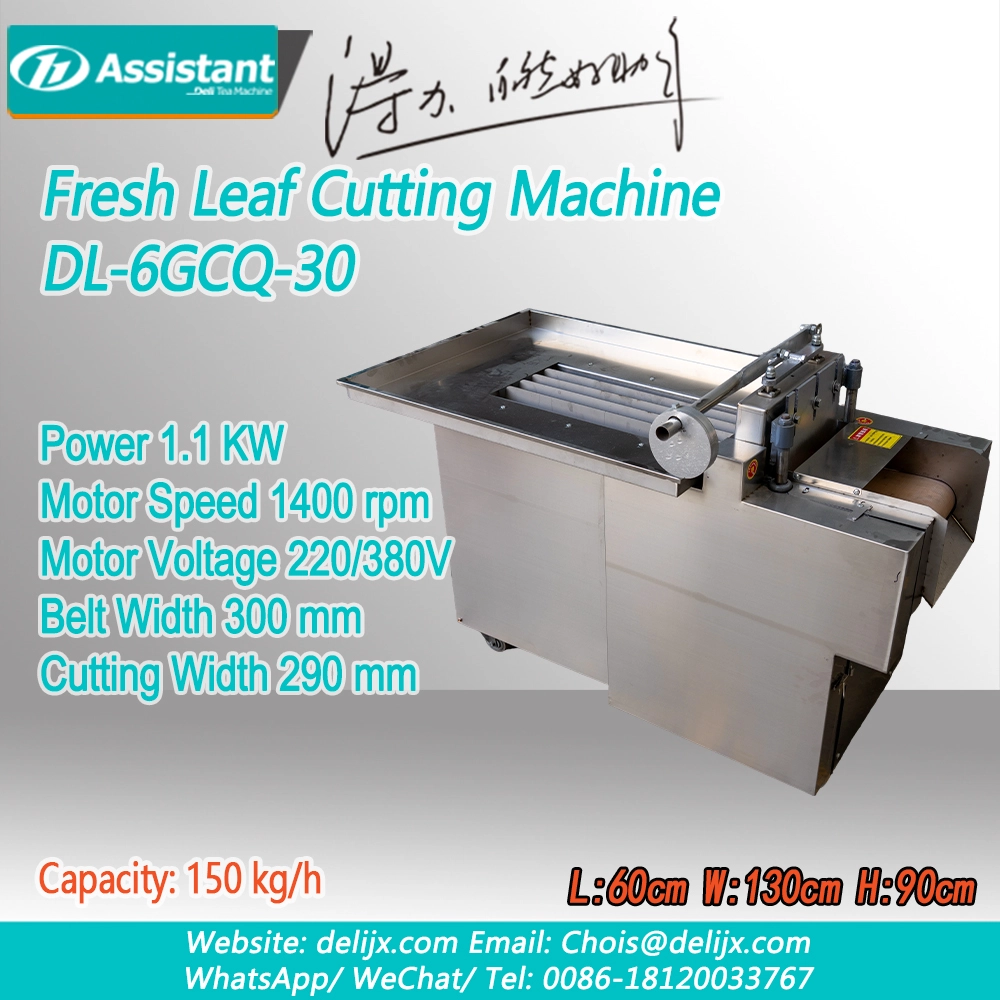
This fresh leaf cutting machine cuts large fresh leaves into uniform small pieces. Two models available: DL-6GCQ-30 (150kg/h) and DL-6GCQ-50 (250kg/h). It adopts conveyor feeding, works for tea, lotus leaf, mulberry leaf and herbal raw materials for tea production.
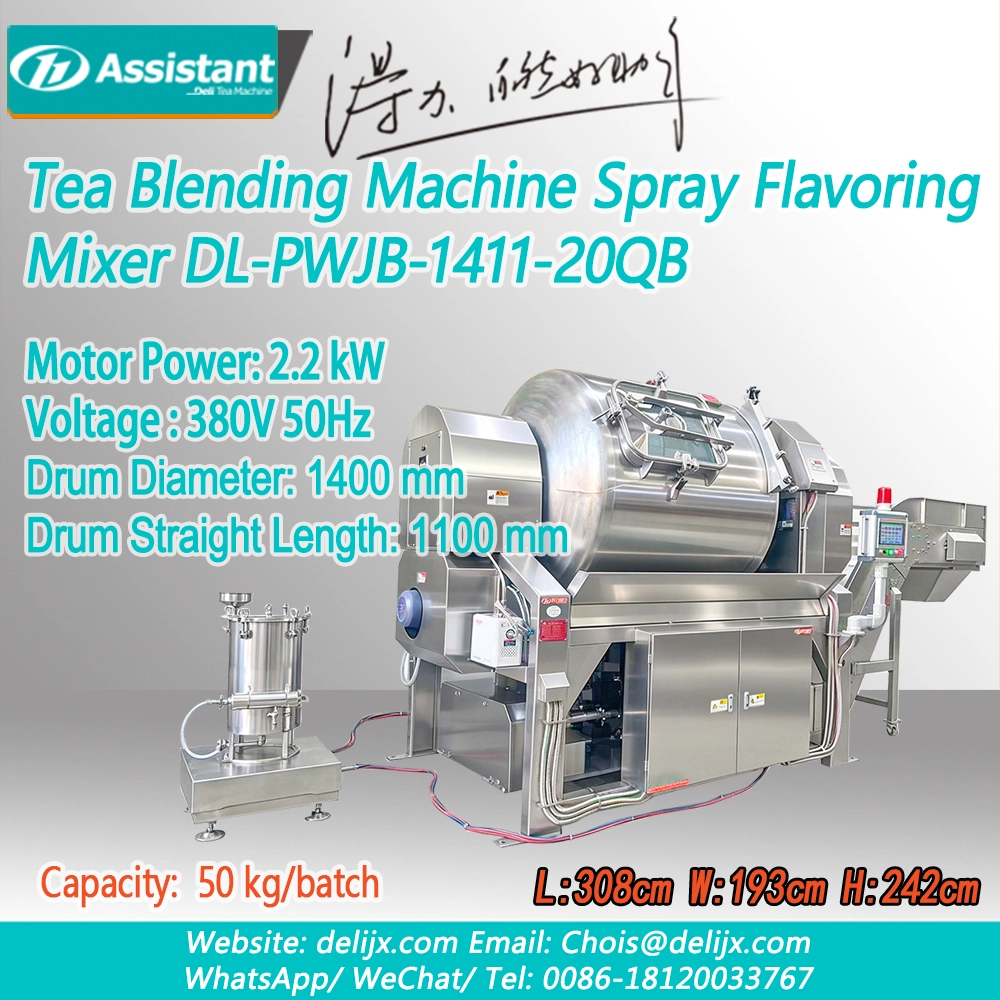
This DELI ASSISTANT spray mixer is a dual-function tea blending & aroma spraying machine, used for homogenizing tea piles and atomized flavor adding in tea factory production, with 1400mm drum, 2.2kW motor and 380V power supply.
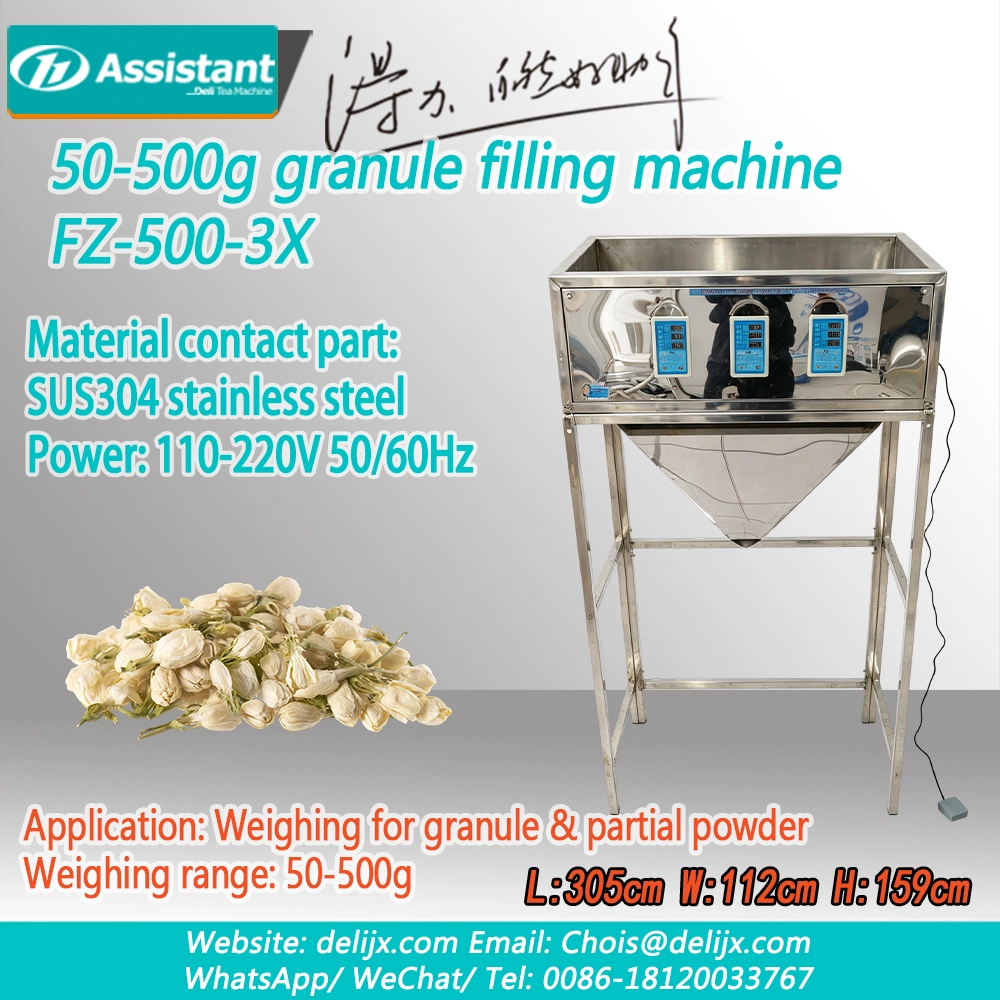
FZ‑500‑3X Automatic Quantitative Filling Machine 50‑500g Granule Powder Weighing Dispenser For Tea Grain Coffee Bean
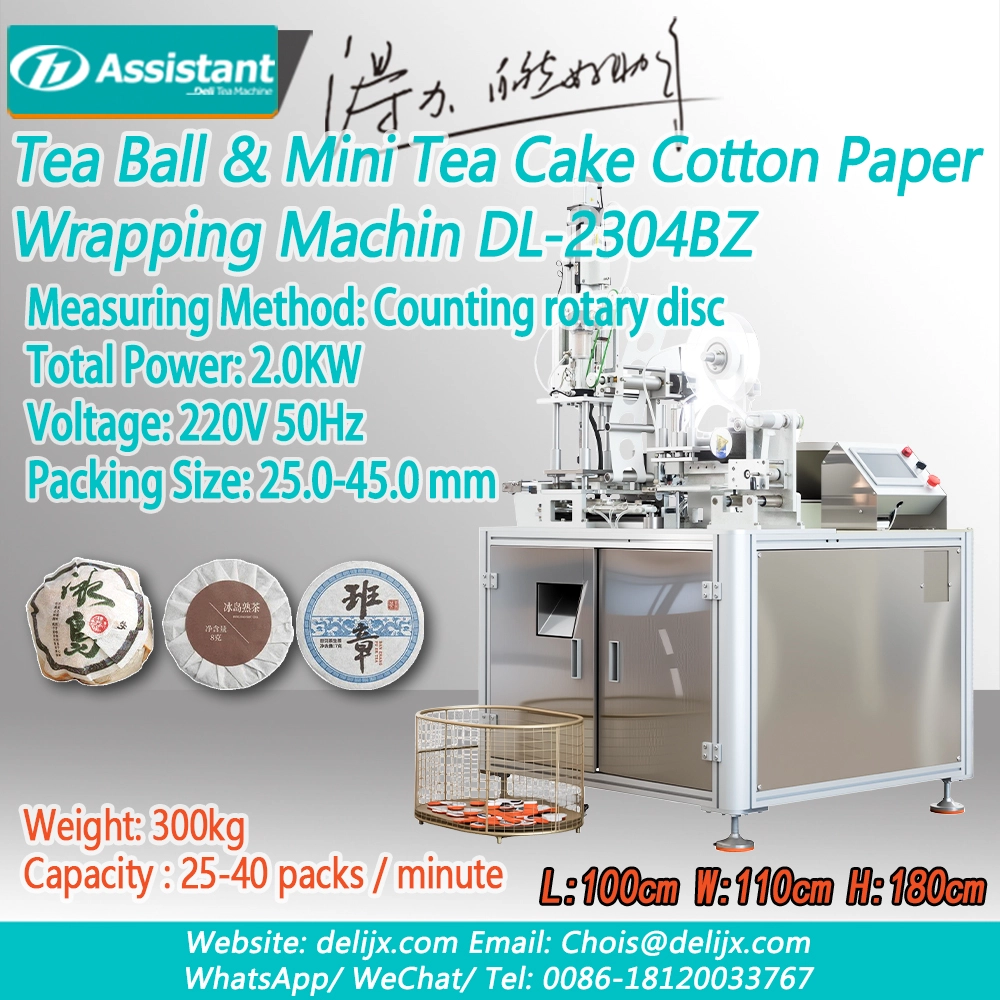
Automatic cotton paper wrapping machine for Pu‑er dragon pearl tea and mini tea cake. PLC control, 25‑40 pcs/min speed, one‑key switch for tea ball & small cake, stable pneumatic‑servo operation for compressed tea packaging.
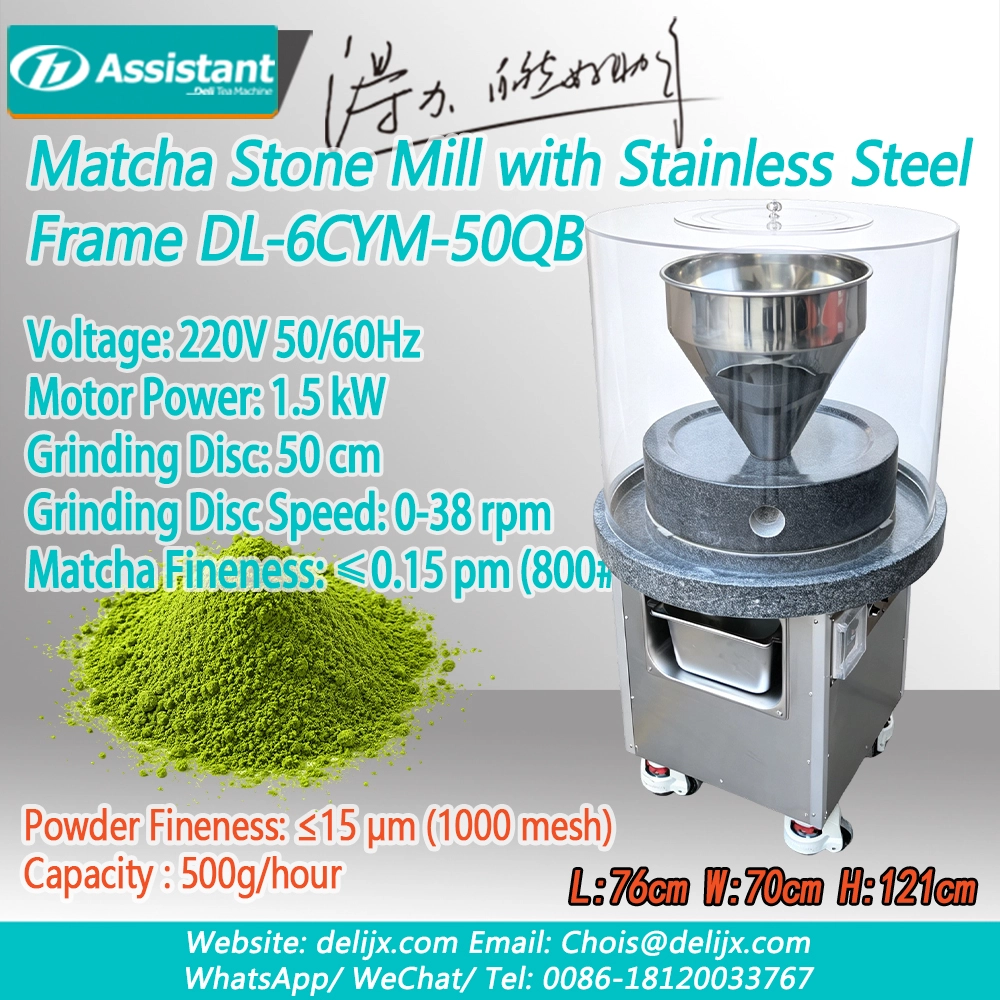
6CMJY-50QB stainless steel custom base matcha green stone mill, natural granite stone plate, low-speed cold grinding. Preserve tea aroma, produce ultra-fine matcha powder. Stainless steel frame with casters, suitable for tea shops, labs and small-batch matcha production.
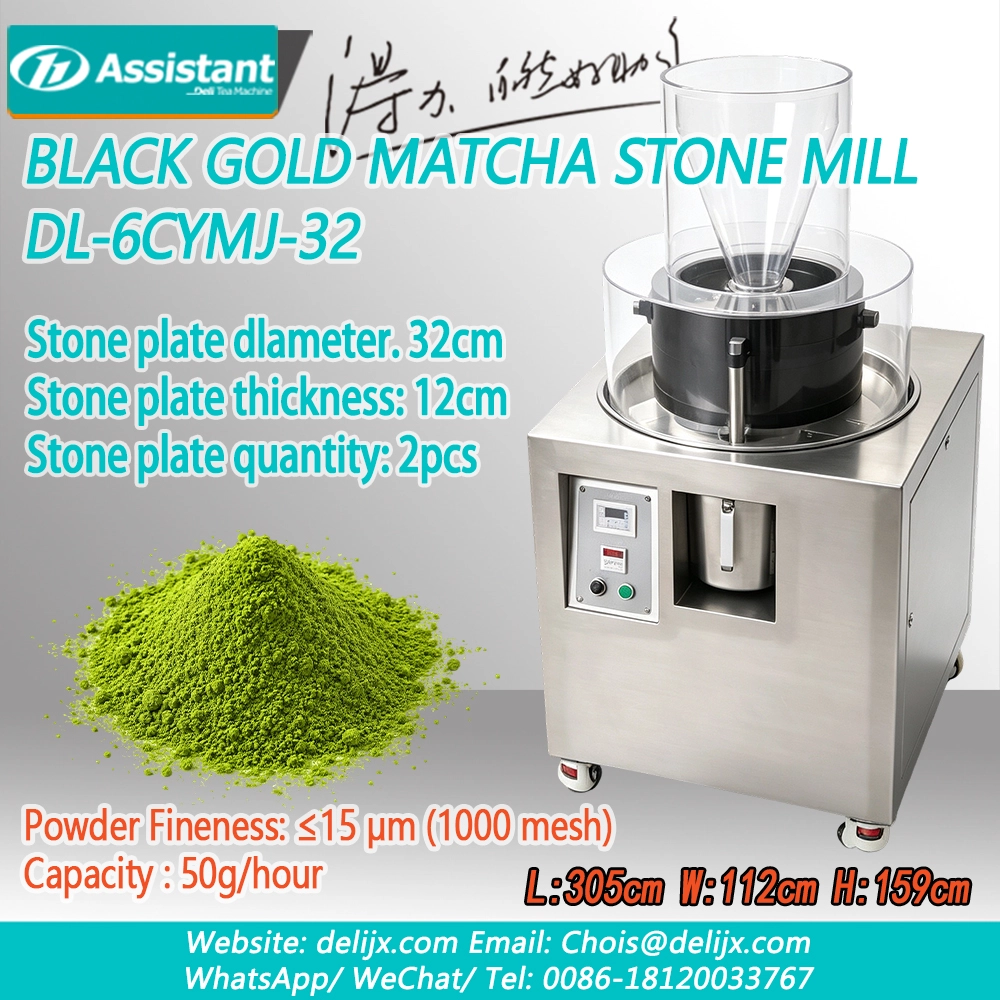
Custom heightened small matcha stone mill DL-6CYMJ-32M, equipped with 30cm natural stone plates. Low-speed low-temperature grinding, produce ultra-fine matcha powder ≤15μm. 50g/h capacity, stainless steel body, ideal for boutique tea shops & small-batch matcha production.
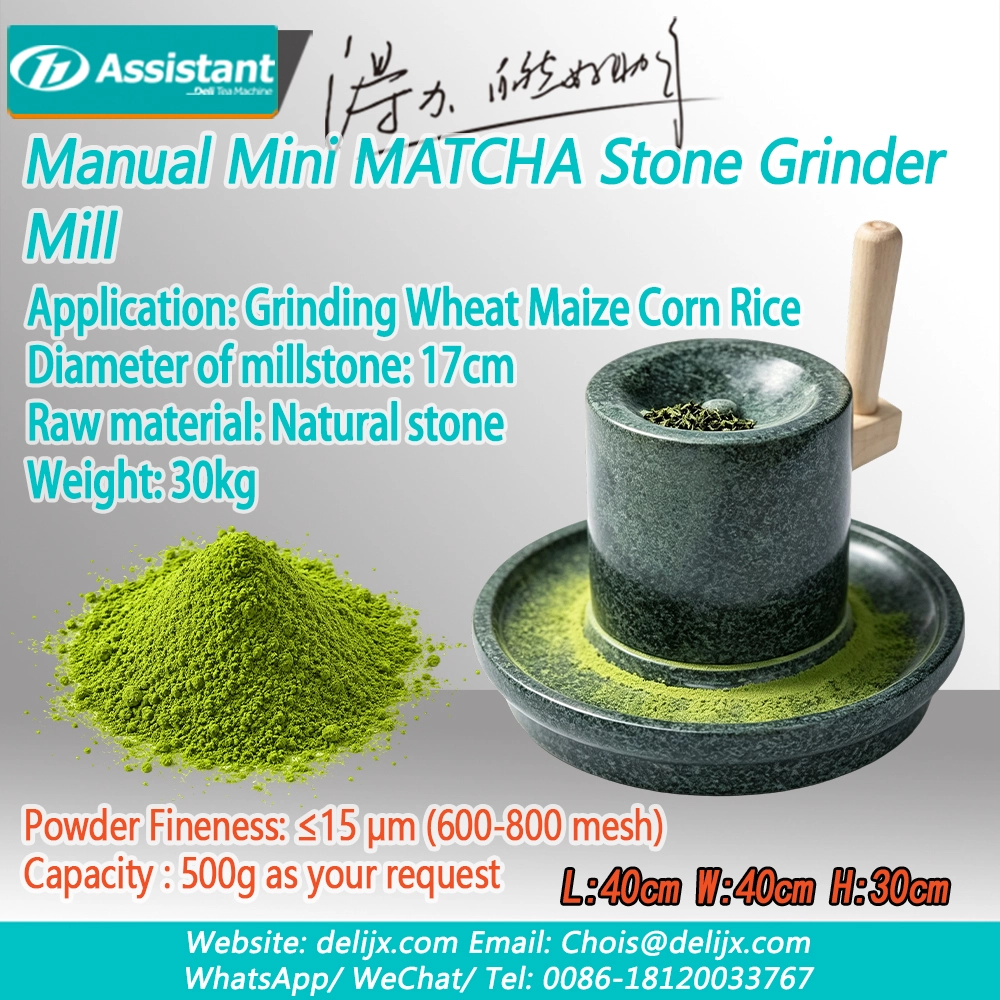
Manual Matcha Stone Mill is a traditional hand-operated grinder made from natural stone, designed for producing fresh and authentic matcha powder. With a slow grinding process and low heat generation, it helps preserve the natural color, aroma, and flavor of tea leaves. Compact and durable, it is ideal for matcha cafes, tea houses, restaurants, cultural experience shops, and small-batch matcha production.
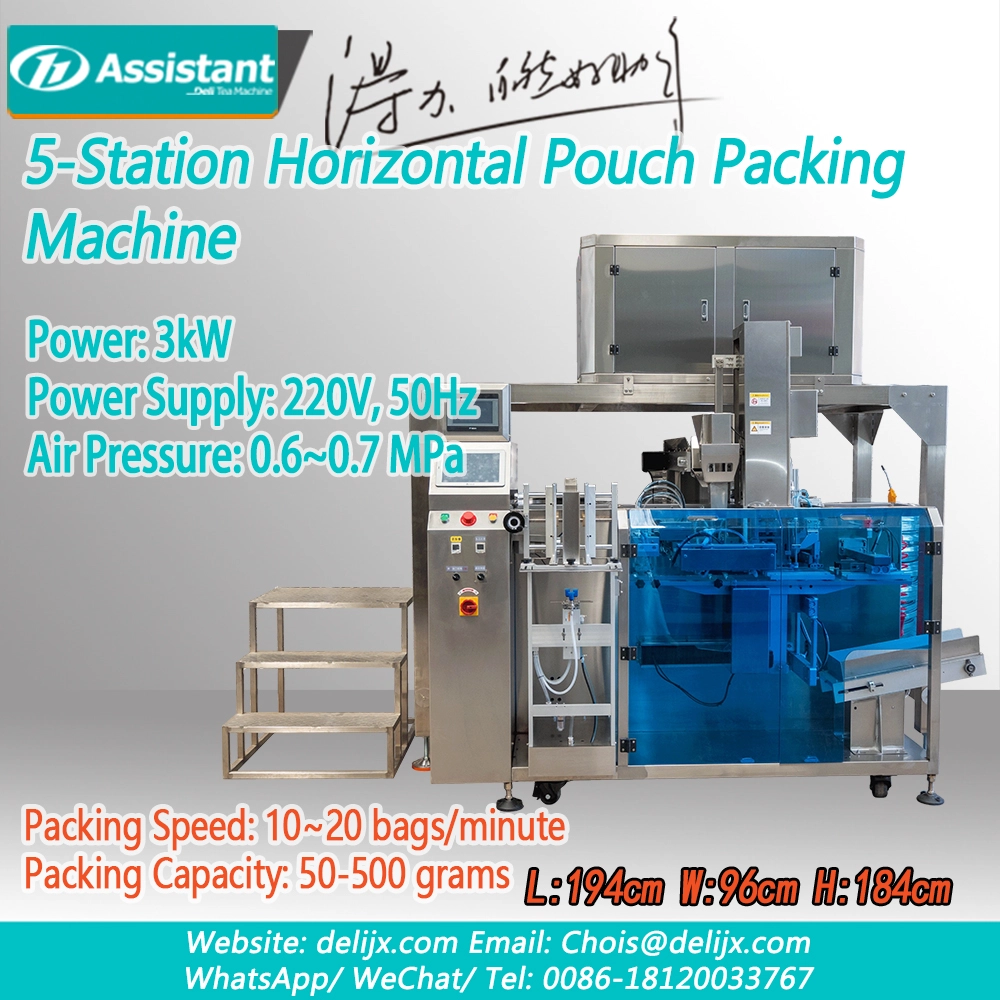
This 5-station horizontal pouch packing machine handles M bags, flat pouches and zipper pouches for 50–500g granular materials like tea. It automatically finishes weighing, filling, vacuuming and sealing with servo control, supporting multiple optional accessories.
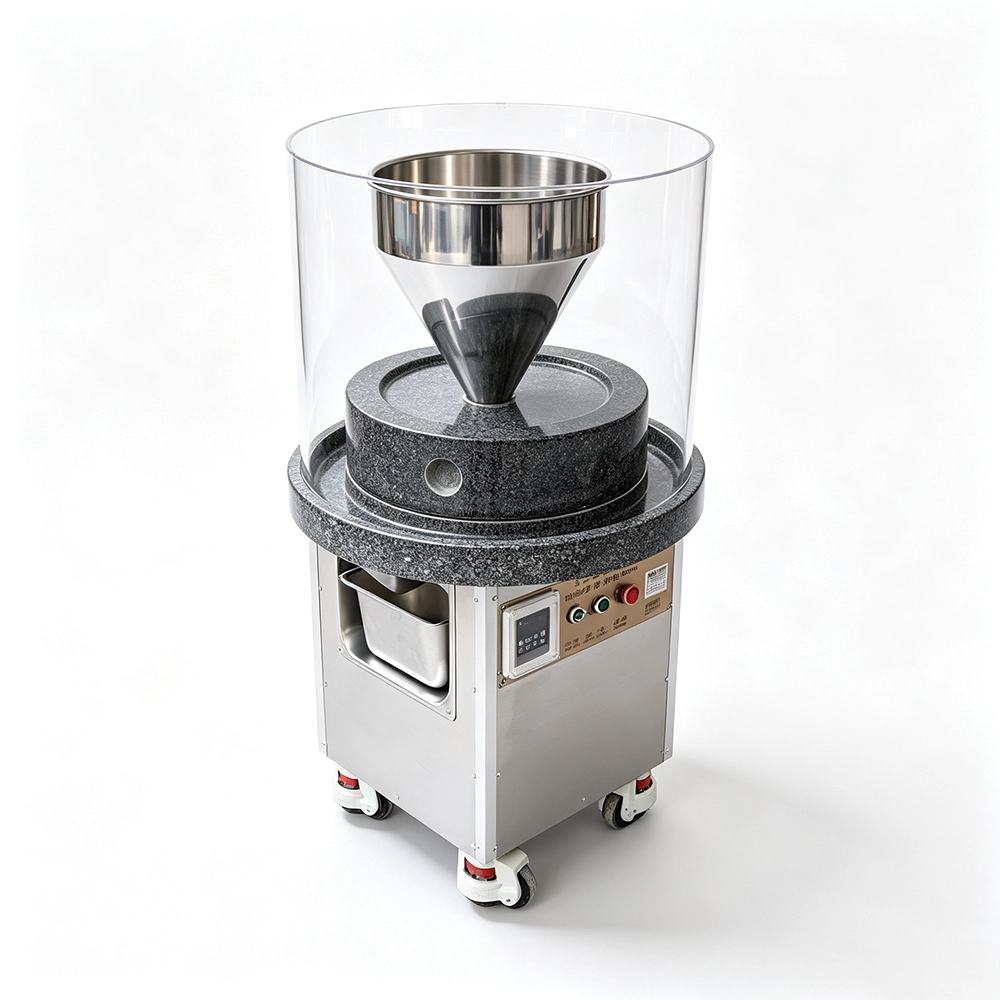
Looking for the right matcha grinding equipment? Read our in-depth comparison of 4 matcha grinders, including Black Gold Stone Mills, Blue Stone Mills, Batch Ball Mills, and Continuous Ball Mills. Learn their efficiency, particle size distribution, and ideal applications.
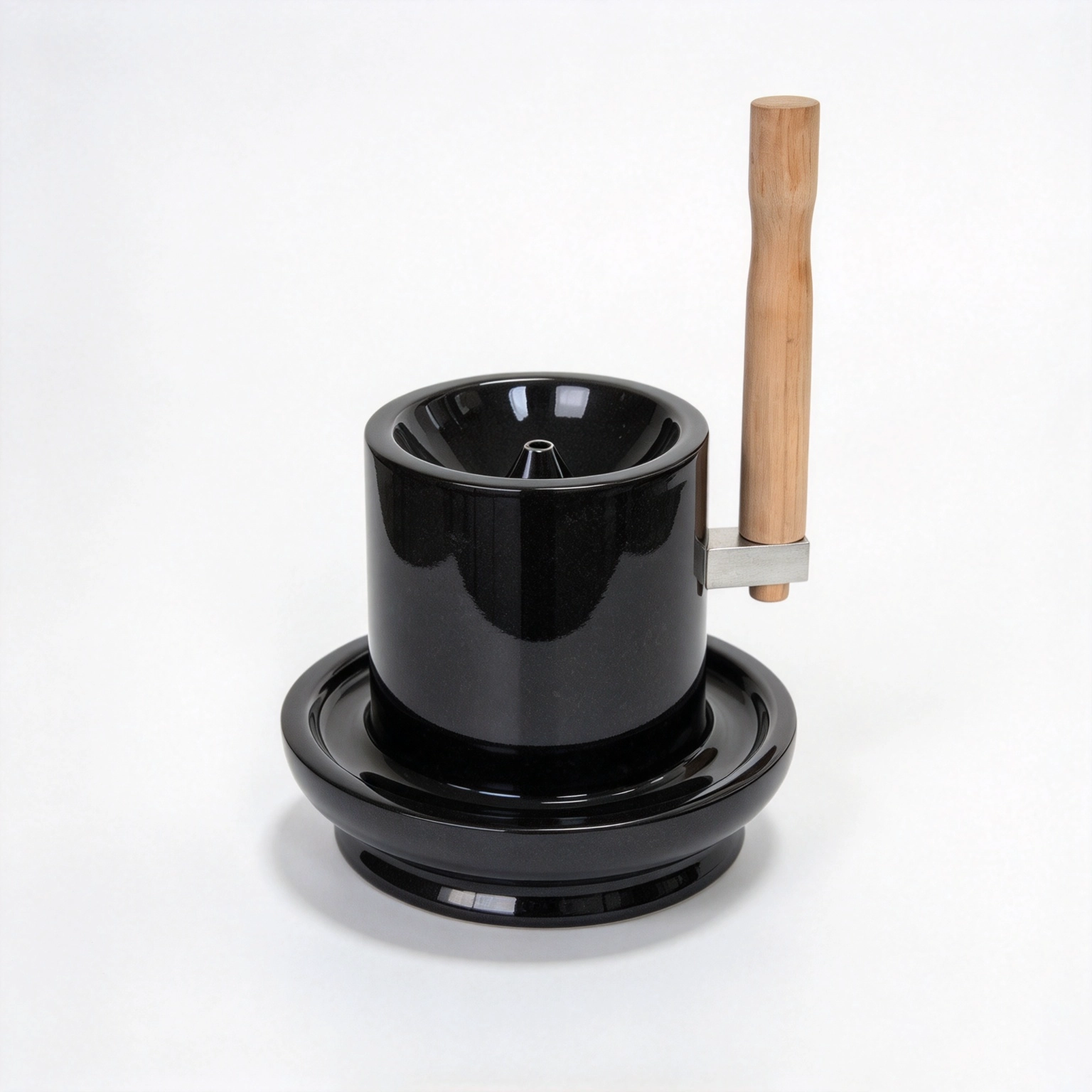
Experience the true flavor of freshly ground matcha. Our mini black stone manual matcha mill brings traditional Japanese stone grinding craft to your home, hand-cranked for fine, aromatic matcha powder.
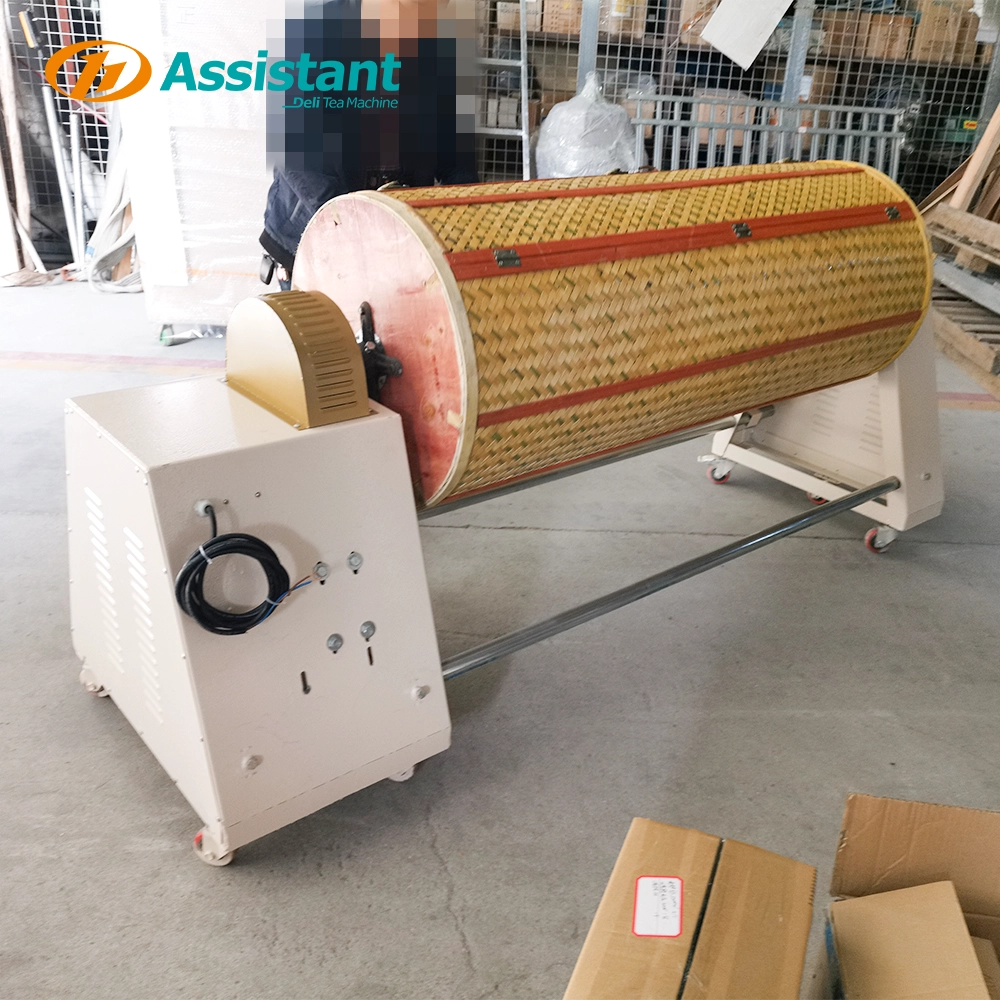
Our bamboo drum oolong tea shaking machine, also known as tea leaf shaker, simulates manual tea shaking to achieve uniform leaf oxidation. Multiple models available for small & large tea factories, stable speed control for premium oolong tea production.

Our DL-6CYMJ-32W stone mill grinder is specially designed for processing matcha and tea leaves. It adopts natural stone plates & SUS304 stainless steel frame, capable of producing ultra-fine tea powder up to ≤15μm (800 mesh). With adjustable rotating speed and automatic operation, it is ideal for tea factories and food workshops. We will introduce its specifications, core advantages, operation workflow and daily cleaning tips below.
There used to be a widely circulated concept: handmade must be better. Hand-pressed tea cakes are more "humane", with less strength, better preservation of tea strips, and less loss of inner quality. Is that really true?
To put it simply: of course, handcraft is good, and there is also a unique place in machinery. There is no difference between good and bad. Generally speaking, machine-pressed Pu-erh tea cakes are more tightly pressed by gravity than manual stone mills, but in fact, tea cake forming machines can also be loosely pressed, and stone mills can also be pressed tightly (as long as the stone mills are heavy enough). Generally speaking, 14.15 kg presses 357 grams of cake, and about 10 kg presses 200 grams of cake.
For the same Pu-erh tea, pressing or loosening has a certain influence on the transformation of tea cakes: although the transformation is slower, the rhythm of the throat will be more abundant; Each has its own merits. The medium and small leaf species are suitable for compacting, and the large leaf species are suitable for loosening. The wild type is suitable for loosening, and the cultivated type is suitable for pressing. Pressing is more suitable for areas with high humidity and high temperature. If the muffins are not stored properly, it is easy to mildew. Loose pressing is relatively more suitable for areas with low humidity and dryness, and the transformation of tea cakes is relatively slow. If you want to transform faster, you can store loose pressed tea cakes.